Биография художника
Пионер Светоносности и Точности: Жизнь и Искусство Жоржа Сера
Жорж Пьер Серат, родившийся в Париже 2 декабря 1859 года, стал ключевой фигурой в переходе от импрессионизма к современному искусству. Его короткая, но невероятно насыщенная творческая карьера совершила революцию в живописи благодаря разработке пуантилизма – техники, основанной на научных принципах и неуклонном стремлении к оптической истине. История Сера – это история кропотливого наблюдения, интеллектуальной строгости и глубокой чувствительности к нюансам света и цвета – качества, которые отличали его от современников и продолжают восхищать зрителей по всему миру. Его ранние годы, хотя и казались вполне обыденными, заложили основу для будущих художественных поисков. Семья переехала на бульвар Магента вскоре после его рождения, и его отец, Антуан Хризостом Серат, бывший юридический чиновник, ставший спекулянтом недвижимости, обеспечил молодому Жоржу комфортное детство с доступом к художественному образованию. Он начал формальное обучение в Муниципальной школе скульптуры и рисования под руководством скульптора Жюстина Лекена, а затем поступил в престижную Школу изящных искусств в 1878 году, где учился у Анри Лемэна. Эти годы заложили прочный фундамент традиционных техник, но даже тогда формировалась уникальная художественная личность – сочетание тонкой чувствительности и зарождающейся увлеченности систематическим анализом.
От Академических Корней к Хромолюминизму
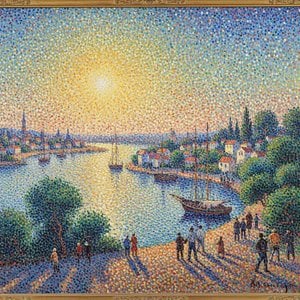
Художественное развитие Сера не было внезапным скачком в инновации, а скорее постепенной эволюцией, подпитываемой интеллектуальной любознательностью и строгими экспериментами. Изначально его работы отражали академические стандарты того времени, демонстрируя мастерство рисунка и уважение к устоявшимся композиционным принципам. Однако вскоре он начал сомневаться в этих конвенциях, стремясь к более научному подходу к живописи. Он погрузился в развивающуюся область теории цвета, изучая труды ученых, таких как Мишель Эжен Шеварель и Огден Руд, которые исследовали оптические эффекты сопоставленных цветов. Эти исследования стали краеугольным камнем его революционной техники – хромолюминизма – науки о цвете – и ее практического применения, пуантилизма. Основная идея была обманчиво простой: наносить небольшие, отчетливые точки чистого цвета на холст, полагаясь на глаз зрителя для оптического смешивания их и создания яркого, светящегося эффекта. Это было не просто о достижении более ярких цветов; это было о понимании того, как человеческая зрительная система воспринимает свет и цвет, и использовании этих знаний для создания более динамичного и увлекательного опыта живописи. Он тщательно готовился к своим крупномасштабным композициям с помощью рисунков угольным карандашом на грубой бумаге, тщательно планируя размещение каждой точки, демонстрируя почти математическую точность в своем художественном процессе.
Вехи Инноваций: Основные Работы и Художественное Видение
Кульминацией исследований и экспериментов Сера можно считать, пожалуй, "Воскресенье на острове Гранд-Жатт" (1884–1886) – монументальное произведение, которое ознаменовало начало неоимпрессионизма. Эта знаковая картина, изображающая парижан, наслаждающихся безмятежным днем у Сены, в полной мере демонстрирует его пуантилистскую технику. Фигуры, выполненные из тщательно расположенных точек цвета, словно мерцают и вибрируют от света, создавая атмосферу спокойной тишины. "Обед на траве, Сен-Дени" (1886–1887) демонстрирует применение теории цвета к сельскому пейзажу, в то время как более ранние работы, такие как "Пейзаж в Сент-Уан" (1882–1883), раскрывают его развивающийся стиль и растущий интерес к улавливанию эффектов света и атмосферы. Даже изображения современной парижской жизни, такие как "Эйфелева башня" (1889), были преобразованы благодаря его уникальной технике, демонстрируя гармоничное сочетание промышленной современности и художественных инноваций. "Купающиеся в Аньере" (1884) – еще одна значительная работа, исследующая темы досуга и современной жизни с помощью его отличительного стиля, предвещая более утонченный подход, видимый в *Гранд-Жатт*. Эти картины были не просто представлениями сцен; это были тщательно сконструированные визуальные эксперименты, предназначенные для изучения возможностей цвета и восприятия.
Наследие: Влияние и Историческое Значение
Несмотря на трагически короткую жизнь – Серат умер в возрасте 31 года в 1891 году – его влияние на мир искусства было глубоким и далеко идущим. Его работа бросала вызов традиционным художественным условностям, прокладывая путь для многочисленных последующих движений. Акцент на субъективном выражении и исследовании новых техник нашел отклик у художников, стремящихся освободиться от академических ограничений. Влияние Сера можно увидеть в работах Фовистов, которые приняли смелые цвета и экспрессивную манеру письма; Кубистов, деконструировавших формы в геометрические фигуры; и Абстрактных экспрессионистов, которые отдавали приоритет эмоциональной интенсивности и спонтанному жесту. Его научный подход к живописи, хотя изначально и вызывал споры, в конечном итоге расширил определение художественной возможности. Он продемонстрировал, что искусство может быть одновременно интеллектуально строгим и эмоционально выразительным – синтез, который продолжает вдохновлять художников сегодня. Наследие Сера выходит за рамки его технических инноваций; он оставил после себя корпус работ, который улавливает сущность современной жизни с беспрецедентной точностью и красотой, закрепляя свое место в качестве истинного пионера современного искусства. Его картины остаются свидетельством силы наблюдения, экспериментов и неугасимого человеческого стремления понять окружающий мир через призму художественного выражения.



 Предпросмотр
 Перейти к печати
 Поделиться
 Поделиться
 Детали произведения

 Скачать
 Похожие работы
 Рентгенография
 Слайд-шоу
 Статистика


 Читать далее






































 Вариант со стеклом доступен только для размеров менее 110 см