Примерить в интерьере Примерить в AR Заказать репродукцию ручной работы Перейти к цифровым изображениям Отправить
Подробнее Руководство Добавить в избранное Скачать Похожие объекты Рентгенография Слайд-шоу Статистика

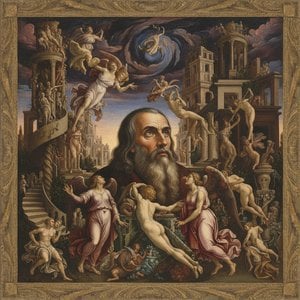
St. Francis praying

Explore El Greco’s poignant 'St. Francis Praying' (1595). A dramatic Baroque masterpiece featuring intense emotion & profound devotion. Discover this iconic work!

Погрузитесь в мир Э Греко! Драматичные картины, длинные фигуры и экспрессивное использование света – гений испанского маньеризма вдохновил художников XX века и продолжает восхищать зрителей.

Жикле / Арт-принты

Печать (жикле) или холст музейного качества с быстрыми сроками изготовления и широким выбором вариантов отделки. ( Заказать репродукцию ручной работы Перейти к цифровым изображениям)

P118B $10
P118H $10
P118W $10
P438Z $10
P508JH $12
P508YH $12
P805H $10
P805Z $10
P919BZ $10
P919G $10
P919XJ $10
P959ZH $10
P968JZ $12
W106C $8
W218G $10
W218JH $8
W218Y $10
W307PJ $10
W316G $10
W316PJ $8
W316Y $10
W398PJ $8
W4111J $10
W500HY $15
W500JH $15
W692G $12
W849H $8
W940BG $15
W953PJ $8

Стандартный размер
индивидуальный заказ
CM
INCH

Выберите один из наших стандартных размеров, соответствующих оригинальным пропорциям произведения искусства.

ширина
высота

Вы можете указать свои собственные размеры, чтобы репродукция идеально подошла под конкретную раму или пространство. Если выбранный вами размер не будет соответствовать пропорциям оригинала, мы либо обрежем произведение, либо дополним изображение зеркальным отражением краев или однотонной заливкой. Перед началом производства вам будет отправлен цифровой макет для утверждения.
Пожалуйста, обратите внимание, что предварительный просмотр на экране не отображает фактическую обрезку или расширение изображения. Только макет точно покажет финальную композицию.
Несмотря на возможность заказа индивидуальных размеров, мы рекомендуем выбирать размер из предопределенного списка, чтобы сохранить оригинальные пропорции.

Доставка по всему миру () за 2 недели вместо стандартных 4–5 недель. (26 Сентябрь)

why_choose_icon
Бесплатная экспресс-доставка по всему миру
why_choose_icon
Высококачественный льняной холст
why_choose_icon
Полное страхование при транспортировке
why_choose_icon
Гарантия возврата таможенных пошлин
why_choose_icon
Гарантия точного цветового соответствия
why_choose_icon
100-дневный период возврата (только при обнаружении дефектов)
why_choose_icon
Гарантия возврата 100% средств
why_choose_icon
Скидка при заказе нескольких работ

Итоговая стоимость

$ 68

reproduction

St. Francis praying

Жикле / Арт-принты

Размер репродукции

-

Итоговая стоимость

$ 68

Краткая справка

  • Artistic style: Baroque
  • Influences: Byzantine art
  • Location: Museo de El Greco, Toledo
  • Medium: Oil on canvas
  • Dimensions: 147 x 105 cm
  • Artist: El Greco
  • Subject or theme: Religious devotion

Викторина по искусству

В каждом вопросе только один правильный ответ.

Вопрос 1:
What is the primary subject depicted in El Greco’s ‘St. Francis Praying’?
Вопрос 2:
The dramatic lighting and intense emotion characteristic of ‘St. Francis Praying’ are hallmarks of which artistic movement?
Вопрос 3:
What symbolic element is represented by the skull in ‘St. Francis Praying’?
Вопрос 4:
In what year was El Greco’s ‘St. Francis Praying’ painted?
Вопрос 5:
The composition of ‘St. Francis Praying’ is characterized by a flattened perspective, typical of which artistic style?

The Soul’s Embrace: An Exploration of El Greco's ‘St. Francis Praying’

Domenico Theotokopoulos, universally known as El Greco, possessed a singular ability to distill the essence of faith into visual form – an ability powerfully demonstrated in his 1595 painting, “St. Francis Praying.” More than simply a portrait of a revered saint, this work is a profound meditation on humility, devotion, and the enduring struggle between earthly desires and spiritual yearning. Painted during his time in Toledo, Spain, El Greco masterfully blends elements of Mannerism with Byzantine influences, creating an intensely emotive scene that continues to resonate centuries later. The painting isn’t merely observed; it's felt – a visceral experience rooted in the artist’s profound understanding of human emotion and religious iconography.

  • Subject Matter: The central figure is Saint Francis of Assisi, renowned for his radical poverty and dedication to Christ. He kneels in deep contemplation before a stark tableau of mortality – a skull representing the inevitability of death, and a crucifix symbolizing redemption through sacrifice.
  • Composition: El Greco employs a tightly framed composition, drawing the viewer’s eye directly to Francis. The use of dramatic perspective and strong diagonals creates a sense of dynamism within the otherwise somber scene. The placement of the skull behind the saint isn't jarring; it’s integrated seamlessly into the overall narrative, serving as a constant reminder of the spiritual battle being waged.

A Symphony of Color and Texture: El Greco’s Technique

El Greco’s distinctive style is immediately recognizable through his masterful manipulation of color and texture. He utilizes a muted palette dominated by grays, browns, ochres, and deep blues – colors that evoke a sense of solemnity and introspection. However, within this restrained scheme, he introduces vibrant highlights, particularly in the folds of Francis' robe and the delicate details of the skull, drawing attention to key elements. The artist’s technique is characterized by layered brushstrokes, building up texture with remarkable precision. You can almost feel the rough weave of the fabric, the cold smoothness of the stone, and the weight of the crucifix through the application of paint.

The layering of oil paints creates a rich, three-dimensional effect, contributing significantly to the painting’s emotional impact. El Greco's use of chiaroscuro – the dramatic contrast between light and shadow – further intensifies the scene, highlighting Francis’s face and emphasizing his posture of profound humility.

Symbolism Woven into the Fabric of Faith

“St. Francis Praying” is replete with symbolic meaning. The skull represents *memento mori* – a reminder of mortality, urging viewers to contemplate their own fleeting existence. The crucifix embodies Christ’s sacrifice and offers hope for salvation. The leafy branch above the saint symbolizes divine grace and renewal, suggesting that even in the face of death, faith can flourish. Francis' posture—kneeling with hands clasped in prayer—is a universal gesture of supplication and devotion, inviting viewers to join him in his spiritual quest.

  • The Skull: Represents mortality and the need for repentance.
  • The Cross: Symbolizes Christ’s sacrifice and redemption.
  • The Branch: Signifies hope, divine grace, and new life.

A Legacy of Emotion: El Greco's Enduring Impact

El Greco’s “St. Francis Praying” stands as a testament to his extraordinary artistic vision and his ability to capture the complexities of human emotion within a religious context. His elongated figures, dramatic lighting, and emotionally charged compositions foreshadowed the Expressionist movement centuries later. The painting continues to move viewers with its profound sense of humility, devotion, and the eternal struggle between earthly desires and spiritual longing. Reproductions of this iconic work offer a powerful opportunity to experience El Greco’s genius firsthand, bringing a touch of timeless beauty and contemplation into any space.


Биография художника

Doménikos Theotokópoulos, Known As El Greco – A Pioneer Of Expressionism And Cubism

Doménikos Theotokópoulos, universally recognized as El Greco – “the Greek” – stands apart in the annals of Western art history. Born in Crete, Greece, around 1541, his artistic journey traversed Venice and Rome before finding its definitive expression in the spiritual crucible of Toledo, Spain. He wasn’t merely a product of these locations; he synthesized their diverse influences into an unparalleled style that foreshadowed the emotional fervor of Expressionism and the fragmented forms of Cubism centuries ahead of time. His formative years within the Byzantine tradition instilled in him meticulous attention to detail and a profound understanding of religious iconography – principles that would permeate his entire oeuvre.

Early Training And Venetian Influence

El Greco’s artistic education began in Crete, where he absorbed the stylistic conventions of Byzantium—characterized by serene compositions, stylized figures, and luminous colors. However, his relocation to Venice around 1567 irrevocably altered his trajectory. Immersed in the bustling artistic milieu of the Serenissima Republic, he encountered titans of Venetian painting – Titian, Tintoretto, Veronese – absorbing their mastery of color palettes, compositional strategies, and dramatic lighting techniques. He deliberately loosened his brushwork, embracing the sensual qualities of oil paint and experimenting with dynamic poses that departed from traditional Byzantine conventions. This Venetian influence is palpable in early masterpieces like *St. Sebastian* (1600), where anatomical accuracy harmoniously blends with theatrical illumination—a testament to El Greco’s ability to synthesize disparate artistic traditions.

Roman Exposure And Mannerist Style

A subsequent pilgrimage to Rome exposed him to Mannerism, a stylistic movement that prioritized elongated figures, distorted perspectives, and sophisticated compositional arrangements. While he demonstrated considerable talent within the Roman art world – attracting commissions from prominent patrons – El Greco struggled to gain widespread acclaim amidst the competitive landscape of Florentine artistic circles. Despite facing challenges in establishing himself as a celebrated artist during his formative years, his unwavering dedication to experimentation and innovation would ultimately propel him toward his singular artistic vision.

Toledo And Spiritual Expression

El Greco’s final artistic home was Toledo, Spain—a city steeped in religious fervor during the Counter-Reformation. This environment fostered both patronage and an atmosphere conducive to exploring themes of spirituality and transcendence. It was here that he achieved his most profound artistic breakthroughs, producing works imbued with a palpable sense of emotional intensity and visionary grandeur. His distinctive style – characterized by elongated figures bathed in ethereal light—became synonymous with the expressive power of Mannerism and foreshadowed the stylistic innovations of Expressionism and Cubism. Consider *The Burial of the Count of Orgaz* (1586-1588), a monumental painting that exemplifies El Greco’s masterful blending of Byzantine tradition and Venetian realism. The depiction of a miraculous event—the descent of saints to bury a nobleman—captures the sublime beauty of religious devotion while simultaneously conveying an overwhelming sense of spiritual awe.

Legacy And Recognition

El Greco's artistic legacy extends far beyond his lifetime, resonating powerfully with artists across subsequent eras. His pioneering use of elongated figures and dramatic lighting captivated contemporaries like Picasso and Braque, who recognized him as a precursor to modern art—particularly Cubism—admiring his unconventional perspectives and stylistic boldness. Furthermore, El Greco’s emotive style found kinship with Expressionist painters who sought to convey profound psychological states through vibrant colors and forceful brushstrokes. Today, El Greco is revered as one of the most influential figures in Western art history—a visionary painter whose oeuvre continues to inspire awe and contemplation, securing his place among the titans of artistic innovation and spiritual expression. His paintings remain enduring symbols of faith, emotion, and the boundless capacity of human imagination.
Эль Греко

Эль Греко

1541 - 1614 , Греция

Краткая справка

  • Artistic Movement Or Style: Маньеризм, Барокко
  • Artists Or Movements Influenced By This Artist:
    • Экспрессионизм
    • Кубизм
  • Artists Who Influenced This Artist:
    • Тициан
    • Тинторетто
  • Date Of Birth: 1541 г.
  • Date Of Death: 1614 г.
  • Full Name: Доминикс Феотокóпулос
  • Nationality: Греко-Испанский
  • Notable Artworks:
    • Положение Графа Оргаза
    • Вид Толедо
    • Одевание Христа
  • Place Of Birth: Крета, Греция
Откройте для себя произведения искусства, распределенные по темам, стилям и характеристикам.