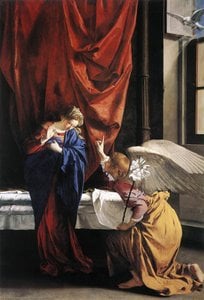
Domenico Beccafumi (The J. Paul Getty Museum Collection)
Domenico di Pace Beccafumi, a name that resonates less immediately than those of his Florentine contemporaries, nonetheless occupies a pivotal position in the narrative of Italian Renaissance art. Born around 1486 in Montaperto, near Siena, Beccafumi’s artistic journey was one of remarkable development, culminating in a style that bridged the High Renaissance and the burgeoning complexities of Mannerism. His story isn't simply about technical skill; it is about a deeply individual vision—a sensibility steeped in the traditions of his Sienese heritage yet boldly reaching towards new expressive possibilities. His origins were humble: the son of Giacomo di Pace, a peasant who worked on the estate of Lorenzo Beccafumi. Seeing his talent for drawing, Lorenzo adopted him and commended him to learn painting from Mechero, a local Sienese artist. This early grounding in the Sienese school would prove foundational, even as he ventured beyond its established conventions. The Sienese tradition, already diverging from the classical ideals embraced elsewhere in Italy, fostered an environment where emotional intensity and decorative detail were valued, qualities that would become hallmarks of Beccafumi’s unique style.
Rome and the Forging of a Unique Style
Around 1509, Beccafumi journeyed to Rome, a transformative moment exposing him to the artistic ferment of the papal city. He encountered the groundbreaking works of Raphael and Michelangelo, absorbing their innovations in composition, anatomy, and dramatic expression. However, unlike many artists who sought to directly emulate these masters, Beccafumi synthesized these influences through his own distinct lens. He didn’t simply *copy* the Roman style; he filtered it through a pre-existing Sienese aesthetic—one characterized by a certain provincialism, an emphasis on decorative detail, and a lingering medieval sensibility. Upon returning to Siena, this synthesis began to manifest in a style increasingly his own. It was a style marked by irrationality, emotional intensity, and a captivating visual experience achieved through discordant colors and hallucinatory settings. His paintings weren’t merely representations of reality; they were explorations of inner states, imbued with a sense of unease and psychological depth. This departure from the harmonious balance of High Renaissance ideals signaled his embrace of Mannerism, though he remained distinctly apart from its more widespread trends. He skillfully blended the decorative elements and emotional intensity of the Sienese school with the emerging stylistic features of Mannerism—a fusion that would define his artistic legacy.
Masterworks and Artistic Innovations
Beccafumi’s output was diverse, encompassing painting, sculpture, mosaic design, and printmaking. Among his most celebrated achievements are the frescoes in the Oratory of St. Benedict in Siena, a testament to his narrative skill and expressive power. The
Trinity Triptych, housed in the Pinacoteca Nazionale di Siena, showcases his mastery of oil painting and his ability to convey religious devotion with both grandeur and intimacy.
The Annunciation, also at the Pinacoteca Nazionale, exemplifies his distinctive use of color and composition, creating a scene that is both serene and subtly unsettling. However, perhaps his most ambitious undertaking was his direction of the pavement for Siena Cathedral between 1517 and 1544. This monumental project involved intricate designs inlaid with marble and mosaics, depicting scenes from biblical stories—Ahab, Elijah, Melchisedec, Abraham, and Moses among them. Beccafumi not only designed these scenes but also innovated the technical processes used in their creation, demonstrating his remarkable versatility as an artist and craftsman. His skill extended to printmaking, where he excelled in both engraving and woodcut, furthering disseminating his style and ideas beyond Siena’s borders. These prints allowed for wider dissemination of his style and ideas, influencing artists across Italy.
Critical Assessment and Legacy
Compared to the equilibrated compositions favored by Raphael and Michelangelo, Beccafumi's paintings stand apart—embracing instead a sense of emotional tension, instability, and expressive distortion. This willingness to challenge conventional norms foreshadowed later trends in art, influencing subsequent generations with its innovative techniques and psychological depth. He remains a compelling figure, a testament to the enduring power of individual vision within the broader currents of art history. His work is characterized by misty, non-linear quality—forms appearing to dissolve into a hazy atmosphere—jagged lines and primal coloration—bold, unconventional use of color that departed from the more balanced palettes of his contemporaries—and emotional tension—a pervasive sense of unease reflecting a departure from classical ideals. Domenico Beccafumi’s contribution to Italian Renaissance art is undeniable; he solidified Sienese artistic traditions while simultaneously pushing boundaries toward Mannerist innovation. He died in Siena in 1551, marking the symbolic end of his era and cementing his place as one of the last undiluted representatives of the Sienese school—a legacy that continues to inspire admiration and scholarly study today.
- Key Characteristics of Beccafumi’s Style:
- Misty, Non-Linear Quality: His paintings often possess an ethereal quality, with forms appearing to dissolve into a hazy atmosphere.
- Jagged Lines and Primal Coloration: Beccafumi favored sharp, angular lines and a bold, unconventional use of color that departed from the more balanced palettes of his contemporaries.
- Emotional Tension and Instability: A pervasive sense of unease and psychological complexity characterizes his work, reflecting a departure from classical ideals of harmony and proportion.
- Sienese Tradition with Mannerist Influences: He skillfully blended the decorative elements and emotional intensity of the Sienese school with the emerging stylistic features of Mannerism.



 Предпросмотр
 Купить картину ручной работы
 Поделиться
 Поделиться
 Детали произведения

 Скачать
 Похожие работы
 Рентгенография
 Слайд-шоу
 Читать далее






































 Вариант со стеклом доступен только для размеров менее 110 см