


Произведение искусства, представленное на этой странице, защищено законом об авторском праве, что исключает возможность законного создания или продажи его точной репродукции. Данная защита обеспечивается международными соглашениями, такими как Бернская конвенция и национальным законодательством, включая положения, изложенные в Закон США об авторском праве — Раздел 17.
Этот метод полностью соответствует нормам авторского права, так как он не предполагает копирования или дублирования защищенного произведения. Напротив, это творческая реинтерпретация — создание новой картины, которая вдохновлена оригиналом, но не является его точной копией.
Печать (жикле) или холст музейного качества с быстрыми сроками изготовления и широким выбором вариантов отделки. ( Купить картину ручной работы Перейти к цифровым изображениям)





























Выберите один из наших стандартных размеров, соответствующих оригинальным пропорциям произведения искусства.

Введите необходимую ширину и высоту, чтобы репродукция подошла к вашей раме или стене. При печати изображение можно только уменьшить, но нельзя увеличить больше оригинала, поэтому при выборе другого формата часть изображения может быть обрезана. Перед печатью мы отправим вам цифровой макет на утверждение. Изображение на этой странице не отображает реальную обрезку — ее можно увидеть только на макете.
Доставка по всему миру () за 2 недели вместо стандартных 4–5 недель. (17 Ноябрь)
Cuenca
Размер репродукции
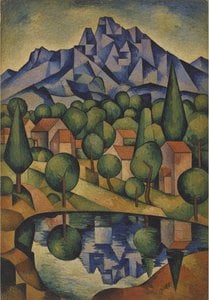
In his 1934 masterpiece, Cuenca, David Bomberg invites the viewer into a profound meditation on solitude and the enduring resilience of life amidst the overwhelming grandeur of nature. This oil on canvas transcends a mere topographical record of a Spanish hillside; it is an evocative window into a landscape where human presence and geological majesty exist in a delicate, poetic tension. The painting captures a panoramic view of a town nestled precariously yet harmoniously upon a rugged slope, where humble dwellings are scattered like quiet thoughts across the vast, undulating terrain. Through his masterful command of the medium, Bomberg distills the essence of this mountainous vista, offering an experience that is as much about emotional depth as it is about visual splendor.
The composition is anchored by a sense of monumental scale, with towering mountains dominating the horizon and creating a backdrop of immense power. In the foreground, trees punctuate the view, providing essential textural contrast and guiding the eye into the expansive scene. The sky, draped in soft, cloudy layers, lends an atmospheric weight to the work, suggesting the shifting moods of a mountain climate. This deliberate framing creates a captivating dialogue between the intimacy of the human settlement and the infinite scale of the natural world, fostering a contemplative space where themes of permanence and vulnerability intertwine.
Rooted in the transformative principles of Modernism, Cuenca showcases Bomberg’s sophisticated engagement with the legacies of Cubism and the structural insights of Cézanne. The artist employs a technique that prioritizes geometric simplification and multiple perspectives to sculpt spatial depth within the landscape. Rather than relying on rigid outlines, he utilizes loose, expressive brushstrokes that capture the very dynamism of the mountain air, imbuing the scene with a palpable sense of movement and life. This fluid application of paint allows the forms of the mountains and buildings to emerge organically from the canvas.
The color palette is masterfully restrained, leaning toward muted, earthy tones—predominantly rich browns and deep greens—that reflect the subdued, soulful hues characteristic of an autumnal landscape. Bomberg’s skillful use of tonal gradations allows him to define mass and volume, creating a sense of "the artist's consciousness of mass." This approach ensures that every element, from the smallest stone structure to the most distant peak, possesses a physical presence that feels both grounded and ethereal. For the discerning collector or interior designer, this work offers a sophisticated interplay of texture and tone, making it a timeless addition to any curated space.
To understand Cuenca is to understand a pivotal moment in Bomberg’s artistic evolution. Created during a period when the artist was moving away from the radical, fractured geometries of his earlier Cubo-Futurist years, this work represents a return to an aesthetic rooted in nature and organic form. The trauma of the First World War and the subsequent shift toward a more figurative, landscape-driven style are palpable here; there is a search for the sublime within the natural world that replaces the mechanical fervor of his youth. The painting reflects a period of profound transition, where the artist sought to realize the poetry found in mankind's contemplation of nature.
The emotional impact of the piece lies in its ability to evoke a sense of quiet awe. It is a work that speaks to the heart of anyone moved by the beauty of the untamed world and the quiet strength of those who inhabit it. Whether viewed as a study of light and shadow or as a symbolic representation of human endurance, Cuenca remains a visually arresting composition. For those seeking to bring a sense of historical depth and tranquil majesty into their surroundings, this reproduction serves as a powerful testament to Bomberg’s ability to capture the very breath of the landscape.
Нет — произведение находится за пределами страны проживания художника. Дэвид Бомберг родился в Великобритания, а музей, где хранится оригинал произведения «Cuenca», находится в Соединенное Королевство.
Статус авторского права на произведение «Cuenca» — находится под защитой авторского права — определяется датой смерти автора в 1957.
Рекомендуемый размер печати для «Cuenca», Дэвид Бомберг — Small.

Рожденный в семье польских еврейских иммигрантов, Абрахама и Ребекки Бомберг, Дэвид начал свой путь в Технической художественной школе Сити и Гильдий, прежде чем освоить профессию литографа в Бирмингеме.
Его становление продолжилось под руководством Уолтера Сикерта в Вестминстерской школе искусств (1908–1910), где на него оказало глубокое влияние внимание мастера к форме и городской жизни. Важнейшим этапом стало знакомство с творчеством Поля Сезанна благодаря выставке Роджера Фрая «Мане и постимпрессионисты» в 1910 году. Позже, обучаясь в Слэйде (1911), он был удостоен премии Тонкса за мастерский портрет своего сокурсника Исаака Розенберга.
Опыт службы рядовым во время Первой мировой войны коренным образом изменил его художественное видение, подтолкнув к отказу от абстракции.
В 1920-е годы Бомберг перешел к более фигуративному стилю, сосредоточившись на портретах и пейзажах, написанных непосредственно с натуры. Его техника становилась все более экспрессионистской, отличаясь фактурным импасто и эмоциональной напряженностью.
Обширные путешествия по Ближнему Востоку (особенно по Палестине) и Европе оказали значительное влияние на его поздние работы. Его изображения Иерусалима заслуживают особого внимания.

1890 - 1957 , Великобритания

Explore the profound transition from Cézanne’s structural Post-Impressionism to the revolutionary fractured forms of Cubism. A sophisticated journey through the evolution of modern art for the discerning collector and connoisseur of fine art history.

Discover how to curate emotionally resonant spaces with our expert guide on selecting romantic artworks. From Impressionist light to Romanticist passion, learn to choose masterpieces that evoke love and legacy through premium, hand-painted oil reproductions.

Explore the profound connection between landscape painting and the sublime through art history. Discover the masters of awe today.

Experience the magic of Jacques Villedieu's top 25 artworks. Explore a stunning fusion of modern life and classical mastery through premium art reproductions. From impressionist light to contemporary scenes, find museum-quality decor for your space. Discover all masterpieces on WahooArt.com
Explore the profound legacy of Paul Cézanne. Discover how his mastery of geometric forms and vibrant color bridged Impressionism and Cubism, offering timeless inspiration for fine art collectors and enthusiasts seeking to understand the foundations of modern art.
 Предпросмотр
 Поделиться
 Поделиться
 Детали произведения
 Руководство

 Скачать
 Похожие предметы
 Рентгенография
 Слайд-шоу
 Вопросы и ответы
 Статистика просмотров


 Читать далее









 Вариант со стеклом доступен только для размеров менее 110 см


