The Two Coaches: A Baroque Tableau of Urban Life
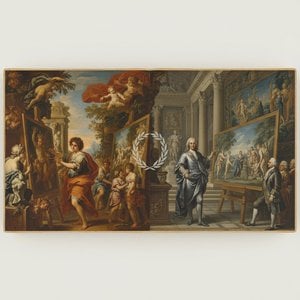
Claude Gillot’s “The Two Coaches,” painted in 1707, is more than just a depiction of a Parisian street scene; it's a vibrant snapshot of an era, brimming with the energy and social dynamics of 18th-century France. This oil on canvas, currently residing within the hallowed halls of the Louvre Museum, immediately draws the viewer into a bustling tableau – a chaotic yet meticulously rendered representation of public life unfolding amidst the city’s cobblestone streets. Gillot masterfully captures not just what was seen, but also the feeling—the movement, the noise, and the underlying tension inherent in a crowded urban space. The painting isn't merely illustrating an event; it’s conveying a mood, a sense of immediacy that transcends its historical context.
The composition itself is a key element of the work’s impact. Gillot employs a dynamic diagonal thrust created by the central cart and the figures pulling it, propelling the eye across the canvas with remarkable force. This movement is counterbalanced by the triangular arrangement of the principal figures – the executed man at the center and the executioners surrounding him – creating a compelling visual rhythm. The artist’s use of perspective subtly flattens the scene, emphasizing the action and drawing attention to the drama unfolding before us. It's a deliberate choice that prioritizes the narrative over strict realism, aligning with the theatrical sensibilities prevalent in Gillot’s work.
A Masterclass in Baroque Technique
Gillot’s skill as an artist is immediately apparent in his masterful handling of oil paint. The texture is rich and impastoed – thick layers of pigment applied directly to the canvas, creating a palpable sense of physicality. Notice particularly the rough surface of the executed man's skin, rendered with expressive brushstrokes that convey both vulnerability and brutality. The clothing of the executioners is equally detailed, showcasing the artist’s ability to capture the folds and textures of fabric with remarkable precision. The color palette leans heavily into warm tones – deep reds, browns, and golds—contrasted by the cooler shadows, creating a dramatic interplay of light and dark that intensifies the scene's emotional impact.
The use of line is equally significant. Gillot employs both thick, expressive lines to define the figures’ musculature and clothing, and thinner, more delicate lines to delineate architectural details in the background. This combination creates a sense of depth and dimensionality, while simultaneously emphasizing the key elements of the composition. The overall effect is one of controlled chaos—a carefully orchestrated scene that nevertheless feels utterly authentic.
Historical Context and Symbolic Weight
“The Two Coaches” depicts a public execution – a grim but not uncommon occurrence in 18th-century France. These executions served as stark reminders of the power of the monarchy and the consequences of defying its authority. Gillot’s painting isn't simply documenting an event; it’s engaging with the complex social and political realities of the time. The scene speaks to themes of justice, mortality, and the precariousness of life under a strict regime.
Furthermore, the inclusion of figures engaged in a quarrel – the “Two Coaches” themselves – suggests a broader commentary on social conflict and the tensions that simmered beneath the surface of Parisian society. The painting’s theatricality—its dramatic lighting, dynamic composition, and heightened emotional intensity—reflects the influence of the burgeoning opera and theatre scene of the period. Gillot was not only a painter but also a designer for the stage, bringing his artistic sensibilities to both visual and performing arts.
A Timeless Image: Reproduction and Beyond
Reproducing “The Two Coaches” today offers a unique opportunity to experience the power and artistry of this remarkable Baroque masterpiece. Whether as a large-scale canvas or a smaller print, the painting’s dramatic composition and evocative imagery continue to captivate viewers centuries after its creation. The rich textures and vibrant colors are faithfully recreated in high-quality reproductions, allowing art lovers to appreciate Gillot's skill and vision from the comfort of their own homes. Consider framing this piece within your interior design—its dynamic energy will add a touch of historical drama and artistic sophistication to any space.



 Предпросмотр
 Купить принт
 Поделиться
 Поделиться
 Детали произведения

 Скачать
 Похожие работы
 Рентгенография
 Слайд-шоу


 Читать далее






































 Вариант со стеклом доступен только для размеров менее 110 см