Перейти к печати Перейти к цифровым изображениям Поделиться
Детали произведения Руководство Добавить в избранное Скачать Похожие работы Слайд-шоу Статистика

St Mark

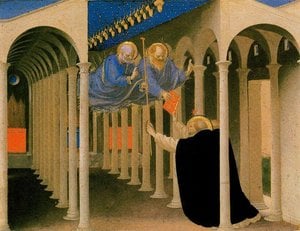
Andrea del Castagno’s ‘St Mark,’ painted in 1442, showcases Saint Mark holding a book on a boat, symbolizing faith and contemplation amidst Venetian culture. This fresco exemplifies early Renaissance artistic style, influenced by Masaccio and Giotto.

Мета описание: Изучите мир Ренессанса вместе с Андреа де Кастаньо! От драматических фресок до знаменитой Последней Вечери и его влияние на искусство Флоренции. Мастер реализма и эмоций.

Масляная репродукция ручной работы

Картина маслом на холсте в выбранном вами размере и раме, написанная на заказ нашими художниками. ( Перейти к печати Перейти к цифровым изображениям)

Стандартный размер
на заказ
CM
INCH

Выберите один из наших стандартных размеров, соответствующих оригинальным пропорциям произведения искусства.

ширина
высота

Вы можете указать собственные размеры, чтобы картина идеально вписалась в выбранную раму или пространство. Если выбранный вами размер не соответствует пропорциям оригинала, мы либо обрежем полотно, либо расширим его за счет дополнительных элементов, написанных вручную. Цифровой макет будет отправлен вам на утверждение перед началом производства.
Обратите внимание, что предварительный просмотр на экране не отражает фактическую обрезку или расширение. Только макет точно покажет окончательную композицию.
Хотя доступны индивидуальные размеры, мы рекомендуем выбирать вариант из предопределенного списка, чтобы сохранить исходные пропорции.

Примеры того, что можно изменить: заменить лицо на фото клиента; добавить домашнее животное (например, заменить кошку на собаку); добавить скрытое послание на фон; изменить пейзаж или детали фона.
После оформления заказа команда WahooArt.com свяжется с клиентом по электронной почте для уточнения деталей и предоставит предварительный макет

Доставка по всему миру () за 3–4 недели вместо стандартных 5 недель. (22 Сентябрь). Без компромиссов в качестве.

why_choose_icon
Бесплатная экспресс-доставка по всему миру
why_choose_icon
Высококачественный льняной холст
why_choose_icon
Полное страхование доставки
why_choose_icon
Гарантия возмещения таможенных пошлин
why_choose_icon
Гарантия точного соответствия цветов
why_choose_icon
100-дневная политика возврата (только при обнаружении дефектов)
why_choose_icon
Гарантия возврата 100% средств
why_choose_icon
Предложение оптовых скидок

Общая стоимость

$ 272

reproduction

St Mark

Техника репродукции

Размер репродукции

-

Итоговая стоимость

$ 272

Основные сведения

  • Artist: Andrea del Castagno
  • Subject or theme: Religious iconography
  • Title: St Mark
  • Year: 1442
  • Artistic style: Realistic
  • Medium: Fresco
  • Notable elements or techniques: Perspective construction

Тест по искусству

В каждом вопросе только один правильный ответ.

Вопрос 1:
What is the primary subject matter depicted in Andrea del Castagno’s painting, ‘St Mark’?
Вопрос 2:
In what year was Andrea del Castagno commissioned to paint portraits of citizens executed after the Battle of Anghiari?
Вопрос 3:
The fresco ‘St Mark’ utilizes a technique known for its pioneering use of perspective, influenced by Masaccio. What is this technique called?
Вопрос 4:
According to historical records, Andrea del Castagno’s nickname ‘Andrea degli Impiccati’ refers to...
Вопрос 5:
What is one notable characteristic of Mark’s depiction of the Crucifixion compared to other artistic representations of similar themes?

A Vision of Venetian Faith: The Divine Presence in St Mark

In the heart of the Early Renaissance, amidst the salt-misted air of Venice, Andrea del Castagno breathed life into a vision of spiritual fortitude that continues to captivate the modern soul. His 1442 fresco, St Mark, is far more than a mere religious depiction; it is a profound meditation on the human journey toward the divine. As the patron saint of Venice, Mark is presented not as a distant icon, but as a palpable, commanding presence seated upon a boat, his gaze directed upward in a moment of celestial connection. The scene unfolds with a sense of movement and purpose, as pilgrims navigate the waters, their very existence a metaphor for the Christian quest for salvation and the arduous pilgrimage toward Jerusalem.

To behold this work is to witness the transformative power of naturalism. Heavily influenced by the revolutionary techniques of Masaccio, Castagno moved away from the ethereal, flattened aesthetics of the Gothic era to embrace a rugged, anatomical realism. Every muscle, every fold of fabric, and every gesture is rendered with an unprecedented precision that lends the figures a sculptural weight. This mastery of form is paired with an innovative use of perspective, creating a spatial depth that draws the viewer into the boat alongside the saint. The artist’s command over the fresco technique—applying pigment to wet plaster—has preserved a luminous vibrancy in the blues and reds, ensuring that the emotional intensity of the scene remains as striking today as it was in the fifteenth century.

Symbolism and the Renaissance Spirit

Every element within Castagno’s composition serves a higher narrative purpose, weaving a complex tapestry of meaning for the observant viewer. The book held aloft by Saint Mark is not merely an object of study but a potent symbol of divine revelation and the enduring power of sacred knowledge. As the figures surround him, their presence underscores the communal nature of faith, suggesting that the path to holiness is one traveled by many. This interplay between the individual saint and the collective group of pilgrims creates a rhythmic tension between solitude and community, much like the historical tensions Venice faced regarding papal authority and humanist progress.

For the collector or the interior designer, a reproduction of St Mark offers more than just aesthetic beauty; it brings a sense of historical gravity and intellectual depth to a space. The painting’s ability to evoke solemn reverence through its masterful use of light and shadow makes it an ideal centerpiece for environments that value contemplation and classical elegance. It is a piece that invites conversation, bridging the gap between the turbulent politics of the 1440s and the contemporary desire for art that possesses both physical presence and spiritual resonance. To display this work is to invite a fragment of the Renaissance spirit—a testament to resilience, faith, and the eternal human search for meaning—into the modern home.


Биография художника

Andrea del Castagno: A Florentine Renaissance Master

Andrea del Castagno, a pivotal figure in the Early Renaissance, emerged from the Tuscan countryside near Florence around 1419 to leave an indelible mark on the artistic landscape. His life, though shrouded in some mystery, was one of innovation, dramatic realism, and a departure from the more stylized conventions that preceded him. Born in Castagnoli, not far from Monte Falterona, young Andrea’s early years were touched by conflict; his family resided in Corella during periods of war between Florence and Milan before returning home. It was under the patronage of Bernardo de' Medici in 1440 that he truly entered the Florentine art world, an entry marked by a rather grim commission – painting portraits of citizens executed after the Battle of Anghiari on the facade of the Palazzo del Podestà. This act earned him the chilling nickname "Andrea degli Impiccati" (Andrea of the Hanged), a testament to the political turbulence and stark realities of the era, and a shadow that followed him throughout his career. While details regarding his formal training remain scarce, it is widely believed he studied under both Fra Filippo Lippi and Paolo Uccello, absorbing their techniques while forging his own distinct path. His early works, such as the fresco of the Crucifixion and Saints in the Ospedale di Santa Maria Nuova (1440-1441), already demonstrate a keen interest in perspective and figures that bear the clear influence of Masaccio’s groundbreaking naturalism.

Life: Early Years and Artistic Beginnings

Andrea del Castagno's life began in Castagnoli, a village nestled amongst the hills of Tuscany—a location that would profoundly shape his artistic sensibilities. Born around 1419, he descended from a family rooted in pastoral traditions, where his father practiced husbandry and cultivated chestnut woods. The turbulent political climate of the time – marked by protracted conflicts between Florence and Milan – saw his family temporarily displaced to Corella during periods of siege. This formative experience instilled in him an awareness of human vulnerability and resilience—themes that would permeate his artistic output. Little is known about Andrea’s formal education, though scholarly consensus suggests he honed his skills under the tutelage of Fra Filippo Lippi and Paolo Uccello – masters who championed the revolutionary principles of Masaccio's naturalism. These influences would prove instrumental in shaping Castagno’s distinctive style, propelling him away from the decorative conventions of Gothic art towards a more profound engagement with human anatomy and psychological realism. The fresco of *Crucifixion and Saints* executed at the Ospedale di Santa Maria Nuova (1440-1441) stands as an early testament to this burgeoning artistic vision—a work characterized by masterful perspective and figures imbued with palpable emotion, mirroring Masaccio’s pioneering approach.

The Battle of Anghiari and Artistic Recognition

Andrea del Castagno's career gained considerable renown thanks to a commission that simultaneously challenged him artistically and politically: the fresco cycle adorning the Palazzo Vecchio commemorating the Battle of Anghiari—a decisive victory for Florence over Milan in 1440. This monumental undertaking demanded an uncompromising commitment to realism, forcing Castagno to confront the brutal realities of warfare with unflinching honesty. The resulting depiction – a visceral portrayal of carnage and heroism—earned him the unsettling moniker “Andrea degli Impiccati” (“Andrea of the Hanged”), reflecting the pervasive atmosphere of fear and retribution that gripped Florence following the battle. This commission solidified his reputation as an artist capable of capturing both grandeur and terror, cementing his place within the artistic landscape of his time. Furthermore, it underscored the importance of art as a vehicle for conveying moral and political messages—a conviction that would inform his subsequent artistic endeavors.

Style Evolution: Masaccio’s Influence and Venetian Horizons

Castagno's artistic style underwent a significant transformation throughout his career, driven by an unwavering pursuit of naturalism and psychological depth. His early frescoes – notably *Crucifixion* and *Saint Julian*—demonstrate the indelible imprint of Masaccio’s groundbreaking innovations in perspective and anatomical accuracy. Castagno skillfully adopted these techniques, elevating his art to new heights of expressive power. Simultaneously, he cultivated connections with Venetian artists like Domenico Veneziano and Piero della Francesca, absorbing their stylistic refinements and broadening his artistic horizons. This fusion of Florentine idealism and Venetian realism resulted in a distinctive aesthetic characterized by dramatic chiaroscuro—the interplay of light and shadow—that heightened emotional impact and conveyed profound psychological nuance. The *Last Supper*, completed around 1447 for the Ospedale di Santa Maria Nuova, exemplifies this stylistic synthesis with unparalleled brilliance—a masterpiece that continues to captivate audiences centuries later due to its masterful depiction of human emotion and its innovative use of perspective.

Major Achievements: Equestrian Monument and Venetian Legacy

Andrea del Castagno’s artistic legacy extends far beyond his frescoes and portraits; he achieved lasting fame through the ambitious equestrian statue commissioned for Florence Cathedral—a monumental undertaking that showcased his technical prowess and artistic vision. Completed in 1456, this sculpture represents a pinnacle of Florentine Renaissance art—a testament to Castagno's ability to convey dignity and grandeur through sculpted form. Moreover, his frescoes within St Mark’s Basilica – including *Death of the Virgin* – stand as enduring symbols of Venetian artistic excellence, reflecting his engagement with the vibrant cultural milieu of Venice during his formative years. Andrea del Castagno died suddenly in 1457 at the young age of 38—a premature end to a remarkable artistic life that nevertheless left an indelible mark on Florentine art and beyond. His influence resonated throughout Italy, inspiring subsequent generations of artists who embraced his commitment to naturalism and psychological realism—solidifying his place as one of the most important figures in Renaissance art history.
Андреа дел Кастаньо

Андреа дел Кастаньо

1419 - 1457 , Италия

Основные сведения

  • Artistic Movement Or Style: Ренессанс
  • Artists Who Influenced This Artist:
    • Мазаччо
    • Джованни Дукрети
    • Филиппо Липпи
  • Date Of Birth: c. 1419
  • Date Of Death: 19 August 1457
  • Full Name: Andrea del Castagno
  • Nationality: Итальянский
  • Notable Artworks:
    • Последний Суппер
    • Крестус и Святые
    • Воскресение
  • Place Of Birth: Castagnoli, Italy
Откройте для себя произведения искусства, подобранные по темам, стилям и характеристикам.