БЕСПЛАТНАЯ КОНСУЛЬТАЦИЯ ПО ВОПРОСАМ ИСКУССТВА

x
Заказать принт Заказать принтЗаказать репродукцию Заказать репродукцию ПоделитьсяПоделиться
ПодробнееПодробнее Добавить в избранное Добавить в избранное СкачатьСкачать Похожие работыПохожие работы РентгенографияРентгенография Слайд-шоуСлайд-шоу

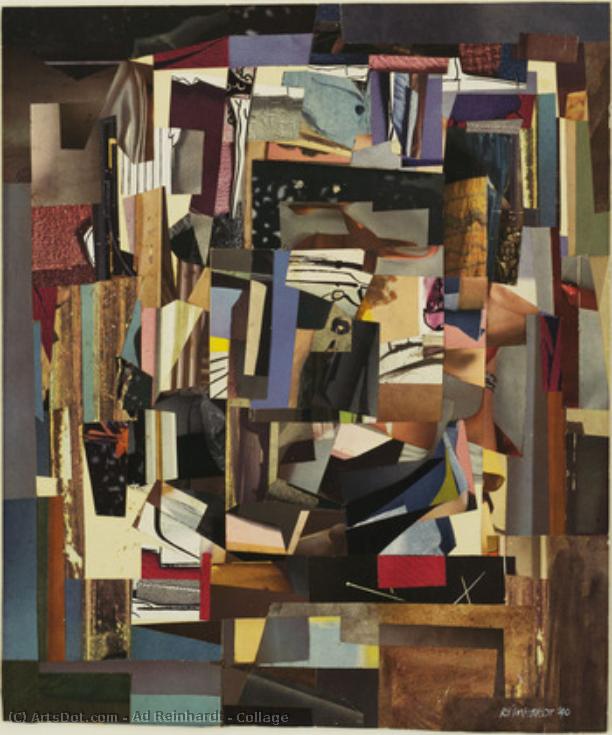
Collage

Explore Ad Reinhardt's 1940 abstract collage featuring muted geometric forms; discover this seminal piece of early modern art for your collection.

Ад Рейнхардт – американский художник, известный своими минималистичными и монохромными картинами, особенно «черными». Его философия «Искусство ради искусства» повлияла на развитие концептуального искусства и заставила переосмыслить роль живописи в современном мире.

Приобретите цифровое изображение высокого разрешения в улучшенном качестве, которое значительно превосходит онлайн-превью.

Каждый файл тщательно подготавливается нашими специалистами с использованием передовых инструментов и экспертной ручной ретуши. Мы гарантируем исключительную четкость, точную цветопередачу и детальную проработку каждого изображения.

Финальный файл доставляется по электронной почте в течение 72 часов и оптимизирован для немедленного использования в профессиональной среде, при верстке и печати. Это тот же уровень качества, которому доверяют ведущие дизайнерские студии, издательства и галереи.

Цифровое изображение

Скачайте файл высокого разрешения для личного использования, печати и творческих проектов.

Итоговая стоимость

$9.99

Включено в каждый заказ цифровых изображений

Гарантия экспертной цифровой доставки

Выбирая WahooArt.com, вы получаете не просто изображение — вы приобретаете профессионально обработанное цифровое произведение искусства, созданное с безупречной точностью и под защитой гарантии качества. Вот всё, что автоматически входит в ваш заказ:

shipping_icon
Мгновенная доставка по e-mail

Ваш цифровой файл в высоком разрешении будет отправлен вам по электронной почте в течение 72 часов после оформления заказа — и сразу станет доступен для использования.

canvas_icon
Цифровой файл с ИИ-улучшением

Ваше произведение искусства проходит профессиональную оптимизацию с использованием передовых инструментов ИИ и ручной обработки, что гарантирует максимальную детализацию, четкость и точность цветопередачи.

insurance_icon
Бессрочная бесплатная повторная доставка

Случайно удалили или потеряли файл? Не беспокойтесь — мы отправим его вам повторно в любое время и совершенно бесплатно.

tax_icon
Без импортных пошлин — навсегда

Наслаждайтесь вашим произведением искусства мгновенно без таможенных пошлин, сборов или затрат на доставку — цифровые загрузки всегда не облагаются налогом.

color_icon
Гарантия точности цветопередачи

Мы гарантируем, что ваше цифровое изображение максимально точно передает оригинальные цвета благодаря использованию профессиональных инструментов и систем управления цветом.

return_icon
Гарантия удовлетворения в течение 60 дней

Если вы останетесь не удовлетворены покупкой цифрового изображения, мы внесем в него правки или вернем 100% стоимости в течение 60 дней — без лишних вопросов.

guarantee_icon
100% Гарантия возврата средств

Не удовлетворены покупкой? Мы гарантируем полный возврат средств в течение 60 дней после получения вашего цифрового файла — без лишних вопросов.

discount_icon
Скидки на оптовые заказы

Купите 3 изображения, сэкономьте 10% — Купите 5, сэкономьте 15% — Купите 10+, сэкономьте 20%. Отличное решение для творческих проектов, галерей и агентств.

Основные сведения

  • Subject or theme: None discernible.
  • Influences:
    • Pablo Picasso
    • Georges Braque
  • Movement: Synthetic Cubism
  • Title: Collage
  • Artist: Ad Reinhardt
  • Medium: Collage
  • Location: Museum of Modern Art (MoMA)

Тест по искусству

В каждом вопросе только один правильный ответ.

Вопрос 1:
What artistic movement is Ad Reinhardt’s ‘Collage’ primarily associated with?
Вопрос 2:
The color palette of 'Collage' predominantly features:
Вопрос 3:
What is the dominant geometric shape used in ‘Collage’?
Вопрос 4:
'Collage' exemplifies a technique characterized by:
Вопрос 5:
According to the description, what is the overall impression conveyed by the composition?

Описание коллекции

The Architecture of Abstraction: Ad Reinhardt's "Collage"

To stand before Ad Reinhardt’s Collage from 1940 is to encounter an intellectual puzzle rendered in paper and pigment. This work does not whisper; it asserts a complex, almost architectural dialogue with the viewer. It is a composition that refuses singular focus, instead inviting the eye on a meandering journey across its surface. Reinhardt masterfully employs the collage technique—the careful assemblage of disparate elements—to build an environment where structure and apparent chaos coexist in delicate tension. The overall impression is one of profound meditation, a visual field built from overlapping planes that suggest depth without ever committing to illusionistic space.

A Study in Muted Geometry

The formal language of Collage is dominated by the rectangle. These geometric forms, varying wildly in size and orientation, are layered one upon another like strata of memory or geological time. The palette itself speaks volumes about its era and its intent: it is restrained, earthy, and deeply considered. Browns, grays, beiges, and blacks form a somber foundation, occasionally punctuated by whispers of muted pink, blue, or orange. These colors are not meant to dazzle; rather, they absorb the light, encouraging the viewer to look closer, to discern the subtle shifts in tone where one piece meets another. The lines defining these shapes are sharp, unwavering vectors that impose a grid-like order over what might otherwise dissolve into pure randomness.

Historical Resonance and Intellectual Depth

Created at a pivotal moment in art history, this piece sits at the fascinating intersection of early abstraction and the burgeoning modernist impulse. While it shares some visual vocabulary with Abstract Expressionism, its cool, calculated arrangement distinguishes it. Reinhardt was always concerned with defining the very essence of painting—what could remain when all narrative and representation were stripped away? This collage is a testament to that rigorous inquiry. It suggests an art that is self-referential, focusing not on depicting the world outside, but on exploring the possibilities inherent within the medium itself. For the collector or designer, this piece offers a sophisticated anchor of intellectual weight for any space.

Symbolism and Emotional Echoes

What does such an arrangement of non-objective shapes evoke? One might interpret the fragmentation as a reflection of modern life—a sense of being composed of many disparate, yet necessary, parts. The quietude emanating from the muted tones can settle over a room, bringing a sense of contemplative calm or even poignant melancholy. It is art that demands patience; it rewards the viewer who slows their breath and allows their gaze to wander without expectation. Owning a reproduction of Collage is not merely acquiring decoration; it is curating an atmosphere of thoughtful engagement.

Похожие произведения


Биография художника

A Life Dedicated to the Essence of Art

Ad Reinhardt, born Adolph Dietrich Friedrich Reinhardt in Buffalo, New York, on December 24, 1913, was a figure who dedicated his life not merely to creating art, but to defining what art *could* be. His early years were marked by a familial mobility—his father’s work led the family to Queens, New York—and a close bond with his cousin Otto. Even as a child, Reinhardt displayed an exceptional talent for drawing and painting, winning accolades in school that hinted at the rigorous artistic journey ahead. He wasn't simply interested in *making* images; he was driven by a need to understand the very foundations of visual expression. This intellectual curiosity led him to Columbia University where he studied art history under the influential Meyer Schapiro, an experience that profoundly shaped his thinking about aesthetics and the role of the artist. Further training at Columbia’s Teachers College, the American Artists School with Carl Holty and Francis Criss, and portraiture studies at the National Academy of Design under Karl Anderson solidified his technical skills—skills he would later deliberately attempt to transcend. Reinhardt believed he had mastered traditional techniques early on, freeing him to pursue a more conceptual path.

From Geometric Beginnings to the “Ultimate” Black

Reinhardt’s artistic evolution was far from linear. He began with works rooted in geometric abstraction, exploring form and color with a precision that demonstrated his technical mastery. However, this early work served as a stepping stone toward something more radical. His involvement with the WPA Federal Art Project during the 1930s provided him with crucial support and exposure, allowing him to hone his craft while contributing to public art initiatives. The 1940s saw Reinhardt become an active member of American Abstract Artists (AAA), a group he considered pivotal to his development. He found kinship with fellow artists who shared a commitment to non-representational art, exhibiting regularly alongside them and engaging in lively debates about the future of painting. His association with Betty Parsons Gallery further cemented his place within the burgeoning New York art scene. Throughout the 1950s, Reinhardt embarked on a series of paintings exploring subtle variations within single hues—all red, all blue, all white—a deliberate reduction that foreshadowed his most iconic works. It was in the 1960s, however, that he achieved what many consider his defining achievement: the “black” paintings. These weren’t simply black canvases; they were meticulously crafted explorations of near-black shades, subtle gradations and textures designed to challenge perception and push the boundaries of painting itself. He referred to them as his "ultimate" paintings, suggesting a culmination of artistic endeavor—a point beyond which further progress was impossible.

Art-as-Art: A Philosophy of Pure Aestheticism

Central to understanding Reinhardt’s work is his philosophy of *Art-as-Art*. He vehemently believed in the autonomy of art, rejecting any notion that it should serve political, social, or narrative purposes. For Reinhardt, the value of a painting lay solely in its aesthetic qualities—its form, color, composition, and the way it engaged with the viewer on a purely visual level. This conviction led him to critique what he saw as problematic tendencies within the art world, particularly artists who prioritized messaging over aesthetics. He expressed these critiques through satirical cartoons and writings, often challenging prevailing artistic norms with wit and intellectual rigor. His friendships with Robert Lax and Thomas Merton, both of whom explored themes of simplicity in their respective fields, further informed his aesthetic principles. Reinhardt’s work resonated with a growing interest in minimalism and conceptual art, influencing artists who sought to strip away extraneous elements and focus on the essential qualities of their medium. He wasn't merely creating paintings; he was articulating a theoretical position about the nature of art itself.

The “Black Paintings” and Their Significance

Reinhardt’s “black” paintings represent perhaps his most enduring legacy. These works, created between 1954 and 1967, are not simply devoid of color; they are intensely layered with subtle variations in tone, texture, and reflectivity. He meticulously applied thin washes of paint to create a sense of depth and ambiguity, inviting the viewer to engage with the surface of the canvas on a purely tactile level. The paintings were often described as “silent,” reflecting Reinhardt’s belief that art should not impose itself upon the viewer but rather stimulate contemplation and sensory experience. They challenged conventional notions of representation and color theory, demonstrating that painting could exist without reference to external reality. The series was met with both acclaim and controversy, with some critics dismissing them as mere exercises in monochrome, while others recognized their profound philosophical implications. Despite the criticism, Reinhardt maintained that his black paintings represented the ultimate expression of abstract art—a distillation of form and color to its purest essence.

A Lasting Legacy: Minimalism, Conceptualism, and Beyond

Ad Reinhardt’s influence extends far beyond his own body of work. His “black” paintings are now recognized as seminal contributions to minimalist and monochrome painting, challenging conventional notions of representation and pushing the boundaries of visual perception. His writings on *Art-as-Art* continue to be studied by artists and critics alike, sparking debate about the role of art in society and the relationship between form and content. Though he was a key figure within Abstract Expressionism through his association with AAA and Betty Parsons Gallery, Reinhardt ultimately transcended categorization, paving the way for subsequent generations of conceptual and minimalist artists. He taught at numerous institutions—Brooklyn College, California School of Fine Arts, University of Wyoming, Yale University, and Hunter College—imparting his rigorous intellectual approach to aspiring artists. Even his involvement in protests – against MoMA in the 1940s, with “The Irascibles” against the Metropolitan Museum of Art in the 1950s, and through a lithograph for Artists and Writers Protest Against the Vietnam War in 1967—demonstrated a commitment to artistic freedom and social responsibility. Ad Reinhardt died on August 30, 1967, in New York City, leaving behind a legacy that continues to inspire and provoke. His work remains a powerful testament to the enduring power of abstract art and the importance of questioning fundamental assumptions about the nature of creativity itself. The Ad Reinhardt Estate is currently represented by David Zwirner Gallery, ensuring his continued presence within the contemporary art world.
Ад Рейнхардт

Ад Рейнхардт

1913 - 1967 , США

Основные сведения

  • Artistic Movement Or Style: Абстракционизм, Минимализм
  • Artists Or Movements Influenced By This Artist:
    • Концептуальное искусство
    • Минимализм
  • Artists Who Influenced This Artist:
    • Майер Шapiro
    • Роберт Лакс
    • Томас Мёртон
  • Date Of Birth: 24 декабря 1913
  • Date Of Death: 30 августа 1967
  • Full Name: Адольф Фридрих Рейнхарт
  • Nationality: Американский
  • Notable Artworks:
    • Черные картины
    • Красный и серый
    • Число - (107)
  • Place Of Birth: Буффало, США