A Symphony of Abundance: The Baroque Brilliance of Abraham Brueghel
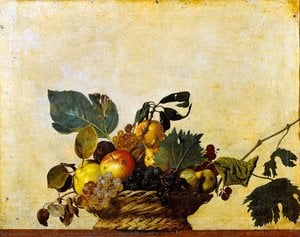
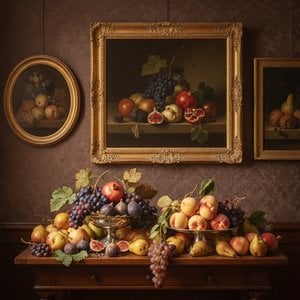
In the quiet theater of 17th-century still life, few artists commanded the stage with as much sensory richness as Abraham Brueghel. His Fruit Still-Life, painted around 1670, serves as a breathtaking testament to the Flemish Baroque tradition, capturing a moment of suspended animation where nature’s bounty is elevated to high art. At first glance, the viewer is greeted by a lush arrangement of apples, oranges, grapes, and plums, each piece rendered with such tactile precision that one can almost sense the cool skin of the fruit and the sweet, heavy scent of ripeness hanging in the air. This is not merely a depiction of food; it is a carefully choreographed dance of color and light, designed to evoke a sense of profound prosperity and the fleeting nature of earthly delights.
The composition is anchored by a deep, masterful use of chiaroscuro, a hallmark of the era. Brueghel utilizes dramatic contrasts between deep, velvety shadows and brilliant, focused highlights to sculpt the rounded forms of the fruit, giving them a three-dimensional presence that leaps from the canvas. This technique, heavily influenced by the tenebrism of Caravaggio and the Neapolitan school, creates a sense of theatrical depth. A gleaming knife rests on the right side of the frame, its metallic sheen catching a stray beam of light, acting as a sharp, man-made counterpoint to the organic softness of the fruit. The placement of a heavy bowl in the bottom left corner provides a structural foundation, guiding the eye through a rhythmic arrangement of textures—from the matte surface of a plum to the translucent glow of a grape.
A Legacy of Color and Light
To understand the soul of this masterpiece, one must look to Brueghel’s unique artistic lineage. Born into the legendary Brueghel dynasty in Antwerp, Abraham was a scion of a family that defined European painting. While his ancestors often focused on sweeping landscapes and peasant life, Abraham turned his gaze toward the intimate and the opulent. His travels through Italy allowed him to fuse the meticulous observational skills of his Flemish heritage with the dramatic, emotive lighting of the Italian Renaissance. This synthesis is palpable in Fruit Still-Life; there is a Northern precision in how every bruise on an apple or droplet of moisture is captured, yet the overall atmosphere possesses a Mediterranean warmth and grandeur.
For the discerning collector or interior designer, this painting offers more than just visual beauty; it provides a focal point of timeless elegance. The vibrant palette of citrus oranges, deep purples, and verdant greens creates a sophisticated energy that can anchor a room, whether placed in a contemporary minimalist setting or a classic, richly appointed study. As a reproduction, this work brings the prestige of the Baroque era into the modern home, offering an invitation to contemplate the beauty of the natural world through the lens of a master. It is a piece that speaks of luxury, stability, and the enduring allure of life's most simple, yet magnificent, offerings.



 Предпросмотр
 Перейти к печати
 Поделиться
 Поделиться
 Детали произведения
 Guide
Guide

 Скачать
 Похожие работы
 Рентгенография
 Слайд-шоу
 Статистика


 Читать далее






































 Вариант со стеклом доступен только для размеров менее 110 см