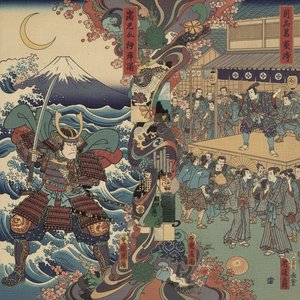
A Bridge Between Worlds: The Life and Art of Yasuo Kuniyoshi
Yasuo Kuniyoshi’s story is one of remarkable artistic fusion, a life lived at the intersection of two cultures during a period of immense social and political upheaval. Born in Okayama, Japan, in 1889, his journey to becoming a pivotal figure in American Modernism began with an unexpected departure from tradition. At seventeen, Kuniyoshi defied expectations by choosing emigration over military service, setting sail for the United States with the initial intention of mastering English and pursuing a career as a translator. Fate, however, had other plans. The vibrant art scene of early 20th-century America swiftly captivated his imagination, leading him to abandon linguistic pursuits in favor of artistic expression. He initially studied at the Los Angeles School of Art and Design before relocating to New York City, where he honed his skills under the tutelage of Kenneth Hayes Miller at the Art Students League. This foundational period established Kuniyoshi as a rising talent, poised to contribute uniquely to the evolving landscape of American art. Early Influences and Artistic Exploration Kuniyoshi’s formative years were steeped in Japanese artistic traditions—a deep appreciation for calligraphy, printmaking (particularly woodblock prints), and the serene beauty of landscapes. These influences would permeate his subsequent work, shaping his stylistic choices and informing his thematic concerns. However, it was upon arriving in America that Kuniyoshi encountered the transformative force of Cubism. Immediately drawn to Picasso’s fragmented perspectives and geometric forms, he embraced this revolutionary movement as a springboard for his own artistic experimentation. Paintings like “Little Joe with Cow” (1923) exemplify this early engagement with Cubist principles—a deliberate rejection of representational accuracy in favor of conveying emotion and capturing the essence of subject matter through abstracted shapes and planes. This stylistic shift wasn’t merely an imitation of European trends; it represented a conscious effort to synthesize Eastern and Western artistic vocabularies, resulting in a distinctive visual language that would characterize Kuniyoshi's oeuvre for decades to come. The Parisian Years: Embracing Impressionism and Refining Technique Kuniyoshi’s subsequent travels to Paris proved instrumental in further expanding his artistic horizons. During this period, he immersed himself in the bustling atmosphere of Impressionist studios, encountering artists like Monet and Renoir who championed a radically different approach to painting—one prioritizing fleeting impressions of light and color over meticulous detail. This exposure profoundly impacted Kuniyoshi’s technique, encouraging him to adopt looser brushstrokes and explore tonal variations that captured the subtleties of natural phenomena. He meticulously studied the works of Eugène Boudin and Frédéric Bazille, absorbing their mastery of plein air painting and honing his observational skills. The influence of Impressionism is palpable in pieces such as “Self-Portrait as a Photographer,” where Kuniyoshi skillfully renders light and shadow to convey mood and atmosphere—a testament to his dedication to mastering the art of capturing visual experience. From Memory to Observation: A Shift Towards Realism Despite his initial embrace of Cubist abstraction, Kuniyoshi never abandoned his fundamental belief in the importance of direct observation. As he matured as an artist, he increasingly favored painting from life—capturing scenes and subjects with uncompromising accuracy. This stylistic evolution is particularly evident in “Daily News,” where Kuniyoshi meticulously renders the textures and colors of newspaper print, demonstrating a remarkable ability to translate visual information onto canvas. He achieved this feat through painstaking layering of glazes and meticulous blending techniques—a deliberate contrast to the fragmented forms of Cubism. Yet, even within his realist paintings, Kuniyoshi retained an underlying sensitivity to Japanese aesthetics—a preference for harmonious compositions and subtle tonal gradations that evoked a sense of tranquility and contemplation. Recognition Amidst Adversity: A Patriot’s Paradox Despite facing prejudice as an immigrant and being classified as an “enemy alien” during World War II, Kuniyoshi achieved significant recognition throughout his career. In 1935, he was awarded a prestigious Guggenheim Fellowship, providing crucial financial support for his artistic endeavors. This acknowledgment solidified his position within the American art world. However, it was in 1948 that Kuniyoshi reached an unprecedented milestone: becoming the first living artist to have a retrospective exhibition at the Whitney Museum of American Art. This landmark event cemented his legacy as one of the most important artists of his generation. Further international acclaim followed with his inclusion in the Venice Biennale in 1952. Perhaps the most poignant aspect of Kuniyoshi’s story is his unwavering patriotism during wartime. Despite facing suspicion and discrimination, he dedicated himself to creating propaganda art for the United States government, using his artistic talents to denounce Japanese aggression and rally support for the American cause. This act of loyalty, born from a deep love for his adopted country—a testament to his resilience and determination—underscores the complex identity that defined Kuniyoshi’s life and work. A Lasting Legacy: Bridging East and West Yasuo Kuniyoshi's historical significance extends far beyond his individual achievements. He stands as a pivotal figure in bridging Eastern and Western art traditions, seamlessly blending Japanese aesthetics with the innovations of European modernism. His work challenged conventional notions of identity and belonging, resonating deeply within the context of American immigration history. He mentored numerous artists, including Nan Lurie and Irene Krugman, nurturing the next generation of creative talent. In his later years, as he battled cancer, Kuniyoshi returned to his Japanese roots, embracing the simplicity and expressiveness of sumi-e ink drawings—a final artistic phase reflecting on his life’s journey—solidifying his place within the canon of 20th-century American art.Întrebări și răspunsuri
Unde pot vedea toate operele create de Yasuo Kuniyoshi?
Toate lucrările lui Yasuo Kuniyoshi de pe acest site web pot fi explorate în pagina Toate operele de artă a artistului.
Ce stări exprimă operele lui Yasuo Kuniyoshi?
Lucrările lui Yasuo Kuniyoshi pot fi explorate în funcție de starea de spirit pe pagina Galerie pe stări de spirit a artistului, unde operele sunt organizate după stările lor de spirit.
Unde și când s-a născut Yasuo Kuniyoshi?
Yasuo Kuniyoshi s-a născut în Okayama, în anul 1893.