William Philip Barns Freeman: A Norfolk Visionary
William Philip Barns Freeman (born circa 1860, died 1937) stands as a singular figure in British landscape art of the late Victorian and Edwardian eras. Primarily celebrated for his meticulous depictions of Norfolk’s coastline and rural interiors—particularly Costessey Weir and Cromer—Freeman achieved renown not merely for capturing picturesque vistas but for imbuing them with profound psychological depth and an unwavering commitment to artistic realism. He remains a testament to the enduring power of observation combined with emotional resonance, cementing his place as one of Norfolk’s most beloved artistic voices.
Early Life & Education
Freeman's formative years were spent in Norwich, where he received a robust classical education at Norwich Cathedral School. This grounding in humanist scholarship instilled within him a lifelong fascination with mythology and literature—influences that would profoundly shape his artistic sensibilities. Recognizing his aptitude for sculpture, Freeman pursued formal training at the Royal Academy Schools in London, mastering techniques honed by masters like Auguste Rodin. His sculptural output during this period showcased an impressive command of form and material—primarily executed in bronze—reflecting the stylistic conventions prevalent at the time. Notable sculptures include “The Shepherdess,” a poignant portrayal of rural life imbued with tenderness, and “Saint George and the Dragon,” demonstrating both anatomical precision and expressive dynamism – a masterful depiction capturing the heroic spirit against formidable opposition.
Sculpture Training & Initial Works
Freeman’s sculptural training solidified his understanding of anatomy and form, equipping him with invaluable skills for translating visual impressions onto three-dimensional surfaces. His early sculptures demonstrated an unwavering dedication to realism—a hallmark that would characterize his artistic endeavors throughout his career. The influence of sculptors such as Auguste Rodin is palpable in Freeman's oeuvre – particularly “Saint George and the Dragon,” which embodies Rodin’s commitment to conveying psychological complexity through anatomical accuracy, mirroring Freeman’s own stylistic approach.
Transition to Landscape Painting
Despite his considerable sculptural accomplishments, Freeman’s artistic passion ultimately steered him toward landscape painting—a deliberate decision driven by an ambition to capture the intangible essence of Norfolk's landscapes. Around 1890, he embarked on a systematic exploration of the region’s vistas—guided by a desire to distill their emotional impact onto canvas with unparalleled fidelity. This transformative shift reflected Freeman’s belief that landscape painting could transcend mere visual representation—serving as a conduit for conveying profound psychological truths.
Norfolk Landscapes: A Synthesis of Observation & Emotion
Freeman's artistic technique was rooted in the principles of Academic Impressionism, blending meticulous observation with expressive brushwork. He painstakingly studied the effects of light on landscape surfaces—employing a palette knife to build up textured layers that captured the subtle nuances of atmospheric conditions. His canvases are characterized by remarkable detail—rendered with painstaking brushstrokes—yet simultaneously infused with an underlying current of feeling – mirroring Freeman’s own artistic vision.
Costessey Weir & Costessey Hall
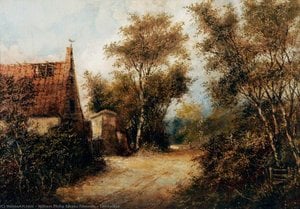
Freeman's depictions of Costessey Weir and Costessey Hall exemplify his artistic prowess—capturing the grandeur of the estate alongside the tranquil beauty of the riverbank, conveying a harmonious balance between architectural majesty and natural serenity. The inclusion of figures—often rendered with understated grace—further enriched the narrative dimension of these paintings – skillfully portraying human presence within the landscape’s embrace.
Cromer from the East
Cromer from the Evening stands as Freeman's most celebrated landscape masterpiece—a luminous portrayal capturing the ethereal glow of twilight over Cromer Pier, creating an immersive experience for the viewer. The composition—characterized by masterful perspective—effectively conveys the drama and beauty of this iconic coastal scene – reflecting Freeman’s profound engagement with Romantic literature and its exploration of sublime grandeur.
Technique & Artistic Influences
Freeman's artistic technique was firmly anchored in Classical Sculpture, mirroring Rodin’s dedication to anatomical realism and psychological depth. He meticulously studied the interplay of light and shadow—employing a palette knife to build up textured layers that captured the subtleties of atmospheric conditions – demonstrating his unwavering commitment to artistic precision. Furthermore, Freeman drew inspiration from Romantic poets like Wordsworth and Coleridge—embracing their vision of nature as a source of spiritual revelation.
Classical Sculpture
Freeman’s sculptural training instilled within him an understanding of anatomical form and expressive dynamism—skills that would inform his artistic endeavors throughout his career. His sculptures embody Rodin's commitment to conveying psychological complexity through anatomical accuracy – mirroring Freeman’s own stylistic approach.
Romantic Literature
Freeman’s engagement with Romantic literature fostered a deep appreciation for the sublime—the awe-inspiring grandeur of nature that transcends rational comprehension—reflecting Freeman’s humanist sensibilities. This sensibility permeated his landscape paintings, imbuing them with an emotional intensity characteristic of the era – cementing Freeman's legacy as a pioneer of psychological landscape painting.
Legacy & Historical Significance
William Philip Barns Freeman’s contribution to British landscape art remains profoundly significant—his unwavering dedication to artistic realism coupled with his ability to evoke powerful emotions establishing him as a visionary artist. Today, Freeman's canvases continue to captivate audiences worldwide – serving as enduring emblems of Norfolk’s pastoral charm and the transformative power of artistic vision – securing his place in art history as a champion of Romantic ideals and meticulous observation.