Willem van Herp (1614 - 1677): A Flemish Baroque Pioneer
Willem van Herp the Elder, born around 1614 in Antwerp, Belgium, stands as a pivotal figure within the artistic panorama of the seventeenth century—a period dominated by monumental ambition and stylistic innovation. While overshadowed by titans like Rubens and Van Dyck, his contribution to Flemish Baroque art deserves careful consideration, offering insights into the broader currents shaping European visual culture. Initial scholarship erroneously attributed him to Rubens’ workshop, yet meticulous research has unveiled a more nuanced portrait of an independent artist who skillfully navigated the artistic landscape of Antwerp, fostering connections with prominent dealers and disseminating his distinctive style across Europe.
Early Training and Influences: Shaping Artistic Vision
Van Herp's formative years were marked by instruction under Damiaan Wortelmans II and Hans Biermans—artists whose stylistic sensibilities undoubtedly instilled in him a foundational understanding of Baroque principles. These mentors imparted techniques emphasizing dramatic lighting, dynamic composition, and expressive rendering of human emotion—elements that would become hallmarks of his oeuvre. Furthermore, Van Herp’s gaze turned towards Italian masters like Raphael and Guido Reni, absorbing their refined elegance and humanist ideals. This exposure broadened his artistic horizons and fueled his desire to synthesize diverse influences into a cohesive visual language. The operation of a large workshop suggests a prolific output—a characteristic feature of the era aimed at satisfying burgeoning demand for decorative art.
Genre Scenes: Capturing Everyday Life with Baroque Flair
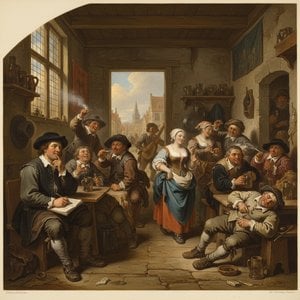
Van Herp’s artistic reputation rests primarily on his genre paintings—scenes depicting ordinary life, imbued with a captivating blend of realism and theatrical flair. Works such as “A Poor Company at Table in a Rustic Kitchen” exemplify this approach, presenting humble settings populated by relatable characters rendered with meticulous detail and infused with palpable emotion. Unlike the grand narratives favored by many contemporaries, Van Herp’s genre scenes prioritized psychological depth and observational acuity—demonstrating his remarkable ability to convey human experience through visual storytelling. His masterful use of chiaroscuro—the dramatic interplay between light and shadow—further amplified the expressive power of these compositions, aligning perfectly with Baroque aesthetics.
Religious Paintings: Dramatic Narratives Illuminated by Baroque Genius
Alongside his genre explorations, Van Herp produced a substantial body of religious paintings—interpretations of biblical stories characterized by grandeur, dynamism, and profound spiritual resonance. “Daniel in the Lion’s Den,” for instance, exemplifies his stylistic prowess, portraying a heroic figure confronting adversity with unwavering courage—a motif frequently revisited throughout Baroque art. Like Rubens and other masters, Van Herp skillfully employed theatrical staging and luminous color palettes to heighten the emotional impact of his narratives, transporting viewers into the heart of sacred drama. His meticulous attention to detail—particularly in depicting drapery folds and facial expressions—underscored his commitment to artistic excellence.
International Reach and Legacy: Disseminating Flemish Baroque Style
Van Herp’s influence extended far beyond Antwerp’s artistic confines. He collaborated extensively with fellow artists like Jan van Kessel the Elder, Lambert de Hondt the elder, Guillam Forchondt, and Artus Wolffort—often contributing figures to landscape paintings—a practice that maximized efficiency and facilitated stylistic consistency across multiple projects. Notably, many of his smaller works—particularly copper paintings destined for export—were strategically targeted towards discerning patrons in Spain, bolstering the propagation of Flemish Baroque style internationally. His involvement in creating “paradise landscapes”—idyllic depictions of Eden teeming with animals—further showcased his versatility and responsiveness to prevailing tastes. Willem van Herp’s legacy endures as a testament to the transformative power of artistic adaptation and collaboration—a cornerstone of Baroque art's success in shaping European visual culture for generations to come. He died in 1677, leaving behind an impressive oeuvre that continues to inspire admiration and scholarly study.