Václav Špála: A Pioneer of Vibrant Czech Modernism
Václav Špála (1885-1946), born in the small village of Žlunice near Nový Bydžov, stands as a pivotal figure in the development of modern art within Czechoslovakia. His journey, marked by both critical acclaim and periods of relative obscurity, reveals an artist deeply influenced by European avant-garde movements while simultaneously forging a uniquely Czech visual language. Špála’s legacy extends far beyond his own lifetime, with his evocative landscapes and dynamic still lifes continuing to captivate audiences worldwide – a testament to the enduring power of color, form, and emotional resonance in his work.
Early Influences and Artistic Formation
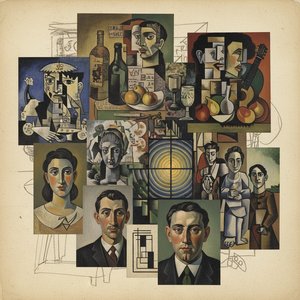
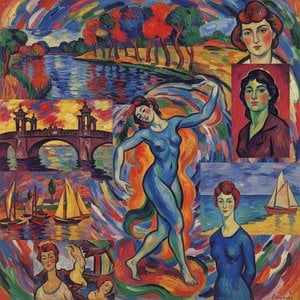
Špála's artistic education began at the Prague Academy, where he was exposed to a diverse range of styles and techniques. Initially, his early works demonstrated a clear debt to Fauvism – a movement characterized by its bold, non-naturalistic colors and energetic brushstrokes. This vibrant palette and expressive approach laid the groundwork for his later explorations. Simultaneously, Špála found himself drawn to the revolutionary ideas of Cubism, an influence that profoundly shaped his compositional strategies. He began experimenting with fragmented forms, geometric abstractions, and multiple perspectives – techniques he skillfully integrated into his evolving artistic vocabulary. Crucially, Špála’s early career coincided with a period of intense artistic ferment in Prague, leading him to join the “Tvrdošíjní” (The Obstinate) group, a collective dedicated to pushing the boundaries of contemporary art and challenging established norms. This association provided a vital platform for his work and fostered a spirit of experimentation and collaboration.
Membership and Association: A Hub of Czech Modernism
Špála’s artistic trajectory gained further momentum through his active membership in several prominent artistic organizations. In 1909, he joined the Manes Association, a group that championed new artistic approaches and promoted Czech art on an international stage. Subsequently, from 1911 onwards, he became a member of the Group of Fine Artists in Prague – a particularly influential collective comprised of leading figures like Vincenc Beneš, Josef Čapek, Emil Filla, and Otto Gutfreund. This group played a significant role in shaping the artistic landscape of Prague during this period, organizing groundbreaking exhibitions that showcased innovative works and fostered dialogue among artists. The 1912 exhibitions held at the newly opened Municipal House were particularly notable, establishing Špála’s work within the broader context of Czech modernism. These affiliations provided invaluable opportunities for collaboration, exchange of ideas, and exposure to diverse artistic perspectives – all contributing to Špála's ongoing development as an artist.
Evolution and Artistic Style: Landscapes and Still Lifes
Following World War I, Špála’s artistic focus shifted primarily towards landscape painting and still life compositions. While retaining elements of his earlier influences—particularly the vibrant color palette inherited from Fauvism—his work during this period developed a distinct character marked by a heightened sense of emotional intensity and formal dynamism. He skillfully employed color not merely to represent reality, but to evoke mood, atmosphere, and subjective experience. His landscapes are often characterized by bold brushstrokes, layered colors, and an expressive use of light and shadow – capturing the essence of the Czech countryside with remarkable immediacy. Similarly, his still lifes—featuring arrangements of fruit, flowers, or everyday objects—were imbued with a sense of movement and vitality, achieved through dynamic compositions and carefully considered color harmonies. Špála’s ability to translate complex emotions and ideas into visual form solidified his reputation as one of the most important artists of his generation.
Legacy and Recognition
Václav Špála's contributions to Czech art are undeniable. His paintings, now housed in museums and private collections across the country and internationally, continue to be celebrated for their originality, emotional depth, and technical mastery. Despite periods of critical neglect during his lifetime, Špála’s work gained increasing recognition after 1946, culminating in him being awarded the title of National Artist – a testament to his enduring influence on Czech art and culture. The Václav Špála Gallery in Prague, established in 1959, serves as a lasting tribute to his artistic legacy, ensuring that his work remains accessible to future generations. Špála’s impact extends beyond the confines of the Czech Republic, with his paintings admired for their vibrant colors and expressive qualities by art enthusiasts worldwide. His exploration of color, form, and emotion continues to resonate deeply, solidifying his place as a true pioneer of modernism.