Jacob Philippe Hackert, 1737 – 1807

Picturi de Jacob Philippe Hackert: Cele 100 de opere cele mai faimoase, clasificate

Cea mai celebră pictură a lui Jacob Philippe Hackert este View of the Copper-Mill in Vietri (1773). Alături de Saint Francis’ Grotto on Monte Verna (1801) și Landscape with a Waterfall and a Cowherd (1755), acestea completează cele trei opere pe care toată lumea le recunoaște. Catalogul nostru include 161 lucrări ale lui Jacob Philippe Hackert; cele 100 de mai jos sunt cele mai apreciate în lume, fiecare fiind însoțită de anul creației, muzeul care o păstrează și semnificația sa.

Clasate în funcție de scorul nostru de popularitate, care combină numărul de căutări, vizite și comenzi pentru fiecare operă. Actualizat Octombrie 2026. Fiecare capodoperă de pe această pagină poate fi comandată ca o reproducere pictată manual în ulei, de calitate muzeală, sau ca o printare de artă fină, la dimensiunea aleasă de dumneavoastră.

Portretul lui Jacob Philippe Hackert
Jacob Philippe Hackert · 1737 – 1807
Născut · Decedat
1737 – 1807, Prenzlau
Mișcare
Romanticism
Lucrări din catalogul nostru
161
Cele mai celebre
View of the Copper-Mill in Vietri (1773)
Cele mai multe lucrări la
Muzeul Ermitaj

Cele mai 10 celebre picturi ale lui Jacob Philippe Hackert

View of the Copper-Mill in Vietri (1773) de Jacob Philippe Hackert
1

View of the Copper-Mill in Vietri

1773 · Oil On Canvas

The scene unfolds in View of the Copper-Mill in Vietri, a work painted by Jacob Philipp Hackert in 1773. This landscape captures a specific corner of the Italian coast, situated in Vietri, south of Naples, nestled between the towns of Amalfi and Salerno. The air seems to hold the quiet rhythm of a rural existence, frozen in a moment of midday stillness.

Saint Francis’ Grotto on Monte Verna (1801) de Jacob Philippe Hackert
2

Saint Francis’ Grotto on Monte Verna

1801 · Oil On Canvas · Städel Museum, Frankfurt pe Main

In the quietude of the Italian landscape, Saint Francis’ Grotto on Monte Verna emerges from the shadows of history. Painted about 1801, this work captures a sacred space within the province of Arezzo. The artist, Jacob Philipp Hackert, directs our gaze toward a rugged cave that served as a hermitage, where the heavy presence of stone meets the soft reach of the wild. It is a scene where the physical…

Jacob Philippe Hackert, picturi de la 11 la 100

Great Cascades at Tivoli (1783) de Jacob Philippe Hackert
#27

Great Cascades at Tivoli

1783 · Muzeul Ermitaj

In the grand tapestry of late eighteenth-century landscape painting, few works capture the breathtaking intersection of classical order and burgeoning Romantic emotion as masterfully as Jacob Philipp Hackert’s…

Comandă o copie pictată manual →
Landscape with River (1778) de Jacob Philippe Hackert
#30

Landscape with River

1778 · Muzeul de Artă Fine din Budapesta

Jacob Philipp Hackert's “Landscape with River,” painted in 1778, isn’t merely a depiction of a picturesque scene; it’s an invitation to step into a world of tranquility and…

Adu-l acasă →
View of Caserta (1784) de Jacob Philippe Hackert
#32

View of Caserta

1784 · Muzeul Ermitaj

Jacob Philipp Hackert's "View of Caserta," painted in 1784 and currently residing within the esteemed halls of the Hermitage Museum in St. Petersburg, offers a captivating glimpse into…

Adu-l acasă →

Subiectele pe care Jacob Philippe Hackert le-a pictat cel mai des

Cele patru teme care se regăsesc cel mai des printre aceste capodopere, cu cel mai fin exemplu pentru fiecare.

Unde puteți vedea picturile lui Jacob Philippe Hackert

Cele 8 muzee care dețin cele mai multe dintre picturile de pe această pagină.

Muzeu Oraș Lucrări lui Jacob Philippe Hackert Picturi din această listă
Muzeul Ermitaj, Sankt PetersburgMuzeul Ermitaj Sankt Petersburg 10 Temple Ruins in Sicily, Great Cascades at Tivoli, Landscape with a ancient Festival
Attingham ParkAttingham Park 10 Imaginary Landscape with the River Volturno, Two Views of a Dead Boar with a Mastiff and two other Dogs, Landscape with a Bridge, with a View of Monte Sarchio
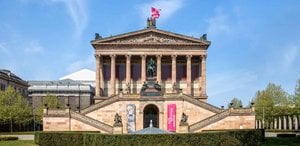
Alte Nationalgalerie, BerlinAlte Nationalgalerie Berlin 6 Two Warriors in a Landscape of Trees and Rocks, River Landscape, Arcadian Landscape
Colecția Regală, LondraColecția Regală Londra 4 Landscape in Switzerland, La Perdita del Liri a Anatrelle, River Landscape with Women Playing with a Child
Germanisches Nationalmuseum, NurembergGermanisches Nationalmuseum Nuremberg 3 The Seasons: Summer, The Seasons: Winter, Ideal Landscape with Juno Temple of Agrigento
Nationalmuseum, StockholmNationalmuseum Stockholm 4 French Landscape, River Landscape with Ruins
Städel Museum, Frankfurt pe MainStädel Museum Frankfurt pe Main 2 Saint Francis’ Grotto on Monte Verna, View of Saint Peter’s in Rome
Muzeul de Artă Fine din Budapesta, BudapestaMuzeul de Artă Fine din Budapesta Budapesta 2 Landscape with River, The Lake of Nemi

Cea mai celebră pictură a lui Jacob Philippe Hackert din fiecare deceniu

  1. 1750s
  2. 1760s
  3. 1770s
    View of the Copper-Mill in Vietri (1773) de Jacob Philippe Hackert
    Locul 1 din 100

    View of the Copper-Mill in Vietri

    Vârsta 33 – 42

    The scene unfolds in View of the Copper-Mill in Vietri, a work painted by Jacob Philipp Hackert in 1773. This landscape captures a specific corner of the Italian…

  4. 1780s
  5. 1790s
  6. 1800s
    Saint Francis’ Grotto on Monte Verna (1801) de Jacob Philippe Hackert
    Nr. 2 din 100

    Saint Francis’ Grotto on Monte Verna

    Vârsta 63 – 70 · Städel Museum

    In the quietude of the Italian landscape, Saint Francis’ Grotto on Monte Verna emerges from the shadows of history. Painted about 1801, this work captures a sacred space…

Întrebări despre picturile lui Jacob Philippe Hackert

Care este cea mai celebră pictură a lui Jacob Philippe Hackert?Afișează răspunsul

View of the Copper-Mill in Vietri (1773). Urmează Saint Francis’ Grotto on Monte Verna (1801) și Landscape with a Waterfall and a Cowherd (1755).

Ce vârstă avea Jacob Philippe Hackert când a fost pictată View of the Copper-Mill in Vietri?Afișează răspunsul

36 ani: View of the Copper-Mill in Vietri datează din 1773, iar Jacob Philippe Hackert s-a născut în 1737.

Care sunt cele mai importante 10 picturi ale lui Jacob Philippe Hackert?Afișează răspunsul

View of the Copper-Mill in Vietri, Saint Francis’ Grotto on Monte Verna, Landscape with a Waterfall and a Cowherd, River Landscape with Lovers, From the Banks of Arques, The Tiber in Rome, View of ruins by a river (the Seine), View of Château Gaillard and the Seine, Travellers resting beside a river, with a town și Temple Ruins in Sicily. Clasamentul de mai sus indică anul și muzeul pentru fiecare.

Câte picturi a realizat Jacob Philippe Hackert?Afișează răspunsul

Catalogul nostru include 161 lucrări ale lui Jacob Philippe Hackert, datate între 1755 și 1805.

Unde se află cele mai celebre picturi ale lui Jacob Philippe Hackert?Afișează răspunsul

Majoritatea acestora se află în Muzeul Ermitaj (Sankt Petersburg), Attingham Park și Alte Nationalgalerie (Berlin). Tabelul de mai sus enumeră muzeele pe rând.

Când a pictat Jacob Philippe Hackert cele mai faimoase opere?Afișează răspunsul

În 1770s: 31 dintre cele 100 lucrări de pe această pagină datează de atunci, printre acestea View of the Copper-Mill in Vietri.

Care sunt cele mai vechi și cele mai recente picturi celebre ale lui Jacob Philippe Hackert?Afișează răspunsul

Cea mai veche lucrare de pe această pagină este din Landscape with a Waterfall and a Cowherd (1755), iar cea mai recentă este din Forest Landscape with the Sleeping Boy Horaz Protected by Pigeons (1805).

Ce a pictat cel mai des Jacob Philippe Hackert?Afișează răspunsul

Landscape (5), Mountains (3) și Trees (3), printre cele 100 opere de pe această pagină.

Ce tehnică a folosit cel mai des Jacob Philippe Hackert?Afișează răspunsul

Oil On Canvas: 7 din cele 100 lucrări de pe această pagină.

Din ce mișcare artistică face parte Jacob Philippe Hackert?Afișează răspunsul

Romanticism, așa cum demonstrează picturile de pe această pagină.

Pe care dintre picturile lui Jacob Philippe Hackert le pot vedea la Muzeul Ermitaj?Afișează răspunsul

Temple Ruins in Sicily, Great Cascades at Tivoli și Landscape with a ancient Festival sunt printre cele 9 opere de pe această pagină păstrate de Muzeul Ermitaj, Sankt Petersburg.

Pot să cumpăr o reproducere a unei picturi a lui Jacob Philippe Hackert?Afișează răspunsul

Da. Orice pictură de pe această pagină poate fi comandată ca o reproducere pictată manual în ulei, de calitate muzeală, sau ca o print de artă fină, în dimensiunea aleasă de dumneavoastră, direct de pe pagina propriei picturi.

Despre Jacob Philippe Hackert

Early Life and Artistic Foundations

Jacob Philipp Hackert emerged onto the artistic landscape in 1737, born in Prenzlau, Brandenburg – a region now nestled within Germany. His upbringing was steeped in artistry; his father, Philipp Hackert, practiced as both a portraitist and an animal painter, laying the initial groundwork for young Jacob’s creative journey. This familial influence extended to his uncle, under whose guidance he further honed his skills. Formal training followed at the prestigious Prussian Academy of Arts in Berlin beginning in 1758, where he diligently developed the technical foundations that would later define his style. However, Hackert's early career wasn’t confined to studio walls. His travels took him through Swedish Pomerania and eventually to Stockholm, where a pivotal commission from Baron Adolf Friedrich von Olthof – decorative murals for the baron’s estate – broadened his artistic horizons and exposed him to diverse aesthetic sensibilities. These formative years were crucial in shaping Hackert's eye and preparing him for the grander stages of his career.

The Italian Awakening: Paris, Rome, and Naples

A defining chapter unfolded with Hackert’s relocation to Paris between 1765 and 1768 alongside fellow Swiss artist Balthasar Anton Dunker. This period proved transformative, immersing him in a vibrant artistic milieu. He found himself profoundly influenced by Claude Joseph Vernet, the celebrated painter of landscapes and seascapes, absorbing elements of Vernet’s dramatic compositions and atmospheric effects into his own burgeoning style. Simultaneously, studies under German engraver Johann Georg Wille refined his precision and attention to detail. In 1768, Hackert embarked on a journey that would irrevocably alter his artistic trajectory – he moved to Italy with his brother Georg, establishing himself primarily in Rome and Naples. This move marked the beginning of an extraordinarily prolific period fueled by numerous commissions for views of the Italian countryside, most notably from Sir William Hamilton. He traversed the length and breadth of Italy, meticulously documenting its beauty and gaining recognition as a master landscape painter. The light, the colors, the very essence of the Italian peninsula captivated him, becoming the defining characteristic of his work.

Patronage, Recognition, and Artistic Flourishing

Hackert’s artistic career ascended to new heights through a combination of talent and strategic patronage. His ability to capture the sublime beauty of Italy resonated with prominent figures across Europe. A landmark commission arrived from Catherine the Great of Russia – a cycle of paintings depicting the pivotal Battle of Chesma, solidifying his reputation on an international scale. Further bolstering his standing was a fruitful relationship with Pope Pius VI, resulting in significant artistic projects that showcased his skill and versatility. In 1786, Hackert reached the pinnacle of his career when he was appointed court painter to Ferdinand I of the Two Sicilies in Naples. This prestigious role extended beyond mere painting; he was entrusted with advising on the creation of a painting restoration laboratory at the Museo di Capodimonte and overseeing the transfer of the esteemed Farnese collections from Rome to Naples, demonstrating his deep understanding of art history and conservation. He produced notable paintings depicting Caserta and the Royal Palace of Caserta, as well as a series illustrating the Bourbon ports. Intriguingly, Hackert also served as a secret informant for Russia during this time, maintaining contact with Andrey Razumovsky – a testament to the complex political landscape in which he operated. A particularly cherished connection blossomed between Hackert and Johann Wolfgang von Goethe during the latter’s visit to Naples in 1786, forging a friendship that further elevated his intellectual standing.

Style, Legacy, and Historical Significance

Jacob Philipp Hackert's artistic style represents a compelling synthesis of classical landscape painting and an emerging Romantic sensibility. Heavily influenced by the works of Claude Lorrain, his compositions are characterized by carefully balanced arrangements that blend observed reality with an idealized aesthetic vision. However, Hackert distinguished himself through an unwavering commitment to botanical accuracy and a desire for recognizable depictions of place. His paintings are marked by sharp renderings of natural details and realistic portrayals of Italian scenery, often bathed in a warm, golden light. He is rightfully considered one of the greatest interpreters of the *vedutismo* genre – paintings that meticulously depict city views and landscapes with topographical precision. Hackert’s historical significance extends beyond his artistic contributions; he served as a vital cultural ambassador between Germany and Italy during the late 18th century, bridging artistic traditions and fostering cross-cultural exchange. He passed away on April 28, 1807, in San Pietro di Careggi near Florence, leaving behind a substantial body of work that continues to inspire awe and admiration for its beauty, technical mastery, and enduring historical importance. His landscapes are not merely representations of scenery; they are windows into a world imbued with both classical grace and Romantic emotion.

Toate cele 161 de lucrări ale lui Jacob Philippe Hackert →