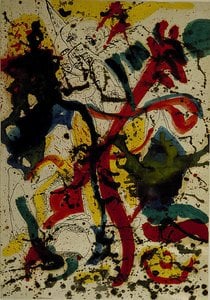
Jackson Pollock, 1912 – 1956

Jackson Pollock: The 100 Most Famous Paintings

Ritmul Toamnei Nr. 30 is the most famous painting by Jackson Pollock. Numărul 1, 1949 (1950) and Convergența are the next two works the world knows best. From the 186 works of Jackson Pollock in our catalogue, here are the 100 that collectors and museum visitors look at most, with the year, the museum and the story of each.

Clasate în funcție de scorul nostru de popularitate, care combină numărul de căutări, vizite și comenzi pentru fiecare operă. Actualizat Octombrie 2026. Every masterpiece on this page can be ordered as a museum-quality, hand-painted oil reproduction or a fine art print, at the size you choose.

Portretul lui Jackson Pollock
Jackson Pollock · 1912 – 1956
Născut · Decedat
1912 – 1956, Cody
Mișcare
Abstract expressionism
Lucrări din catalogul nostru
186
Cele mai celebre
Ritmul Toamnei Nr. 30
Cele mai multe lucrări la
MoMA - Museum of Modern Art

Top 10: Jackson Pollock's best-known paintings

Ritmul Toamnei Nr. 30 de Jackson Pollock
1

Ritmul Toamnei Nr. 30

Ulei pe pânză

„Autumn Rhythm. Number 30, 1950” se impune ca o operă de cotitură în contribuția revoluționară a lui Jackson Pollock la Expresionismul Abstract. Această pânză de mari dimensiuni nu este doar o simplă pictură; este o experiență imersivă – o înregistrare vizuală a energiei, a gestului și a implicării profund personale a artistului în procesul creativ.

Numărul 1, 1949 (1950) de Jackson Pollock
2

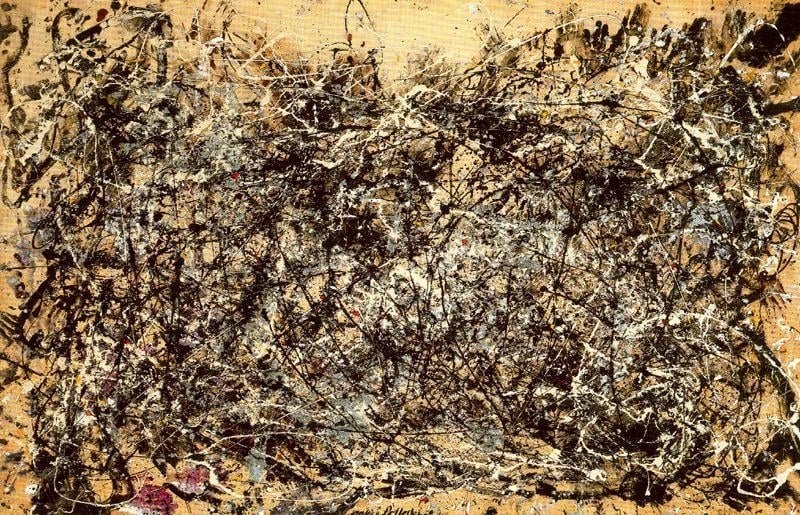
Numărul 1, 1949

1950 · Ulei pe pânză · Private collection, New York City

Creată în anul 1950, această lucrare captivantă întruchipează spiritul revoluționar al Expresionismului Abstract și se impune ca un exemplu primordial al tehnicii iconice „picurare” a lui Jackson Pollock. Cu dimensiunile sale impresionante de 240 x 120 cm, atrage atenția nu doar prin amploarea sa, ci și prin energia pură care radiază din suprafața sa complexă. Nu este o simplă pânză; este un dialog vizual cu emoțiile brute, cu gesturile spontane…

Convergența de Jackson Pollock
3

Convergența

Ulei pe pânză

Opera Convergence a lui Jackson Pollock nu este pur și simplu o pictură; este o experiență viscerală—un testament monumental al puterii expresionismului abstract și o lucrare definitorie a artei americane de după război. Creată într-un moment crucial al istoriei artei, această piesă întruchipează inovația, provocând noțiunile tradiționale de reprezentare și invitând privitorii într-o lume dinamică de culoare și energie.

Numărul 1A de Jackson Pollock
4

Numărul 1A

Ulei pe pânză

Esența Expresionismului Abstract „Number 1A” de Jackson Pollock este un exemplu quintesențial al Expresionismului Abstract, un movement care a redefinit arta americană la mijlocul secolului XX. Această piesă captivantă întruchipează energia brută și spontaneitatea pentru care Pollock este renumit, devenind o achiziție indispensabilă pentru orice colecție de artă contemporană sau interior modern. Un Dans între Haos și Control Opera prezintă o compoziție abstractă, caracterizată prin percuții energice și haotice ale…

Lumini albe (1954) de Jackson Pollock
5

Lumini albe

1954 · Ulei pe pânză · MoMA - Museum of Modern Art, New York City

„White Light”, pictată în 1954, nu este doar o pânză acoperită cu vopsea; este o fereastră către un univers interior tumultuos, o declarație viscerală a spiritului abstract expresionist. Această lucrare, realizată de Paul Jackson Pollock, se abate de la convențiile tradiționale ale reprezentării, oferind în schimb o experiență senzorială intensă și profundă. Imaginea dominată de mișcare, culoare și textură, invită privitorul să se abandoneze într-o lume a spontaneității și a…

One. Number 31, 1950 de Jackson Pollock
6

One. Number 31, 1950

Painting

In the pantheon of modern art, few works command the room with such raw, unbridled intensity as Paul Jackson Pollock’s “One: Number 31, 1950.” To stand before this canvas is to witness a moment of pure, unfiltered creation captured in time. As a cornerstone of the Abstract Expressionist movement, this painting transcends the boundaries of traditional composition, offering instead a dense, rhythmic web of energy that seems to pulse with…

Number 5 (1948) de Jackson Pollock
7

Number 5

1948 · Oil On Canvas

A Universe Unfurled: Decoding Jackson Pollock’s No. 5, 1948 Jackson Pollock’s *No. 5, 1948* isn't simply a painting; it is an event frozen in time – a visual record of energy, gesture, and the very act of creation. This monumental work stands as perhaps the most iconic example of Abstract Expressionism, captivating viewers for decades with its complex layering and seemingly chaotic beauty. It’s a piece that demands attention, sparking…

Mural (1943) de Jackson Pollock
8

Mural

1943 · Acrylic On Canvas

Jackson Pollock's "Mural," completed in 1943, isn't merely a painting; it’s an immersive experience, a visceral embodiment of the burgeoning abstract expressionist movement. Commissioned by Peggy Guggenheim as a centerpiece for her Manhattan townhouse, this monumental work – measuring a commanding 247 x 605 cm – immediately announces Pollock’s arrival as a revolutionary force in the art world. The sheer scale invites contemplation, drawing the viewer into a swirling vortex…

Number 5 (1948) de Jackson Pollock
9

Number 5

1948 · Oil On Canvas

Jackson Pollock’s *No. 5*, created in 1948, stands as an emblem of Abstract Expressionism—a movement that irrevocably altered the landscape of modern art. More than just a painting; it's a visceral embodiment of emotion, intellect, and revolutionary technique, captivating viewers with its mesmerizing complexity and enduring legacy. This monumental canvas, measuring eight by four feet on fiberboard, transcends mere visual representation, inviting contemplation about the very nature of artistic expression…

Alchemy (1947) de Jackson Pollock
10

Alchemy

1947 · Acrylic On Canvas

A Dance of Chaos and Transformation: Exploring Jackson Pollock’s Alchemy The Genesis of Spontaneity Decoding the Drip Technique Historical Resonance and Symbolic Weight A Legacy of Innovation Jackson Pollock’s *Alchemy*, a monumental work from 1947, isn't merely a painting; it’s an immersive experience, a visceral embodiment of the burgeoning Abstract Expressionist movement. Created during a pivotal moment in American art history, this piece captures the raw energy and revolutionary spirit…

The rest of the Jackson Pollock ranking, 11 to 100

Number 6 (1949) de Jackson Pollock
#12

Number 6

1949

Number 6 stands as a pivotal work within Jackson Pollock's oeuvre and the broader movement of Abstract Expressionism. Emerging in post-World War II America, this style rejected traditional…

Commission a hand-painted copy →
Number 23, 1951 de Jackson Pollock
#13

Number 23, 1951

Chrysler Museum of Art

Paul Jackson Pollock's "Number 23, 1951" isn’t merely a painting; it’s an immersion. Created during a pivotal period of his artistic evolution – the “black pourings” – this…

Bring it home →
Number 1 (1948) de Jackson Pollock
#14

Number 1

1948 · MoMA - Museum of Modern Art

Jackson Pollock's "Number 1, 1948," housed within the hallowed halls of the Museum of Modern Art in New York, isn’t merely a painting; it’s an immersion. It’s a…

Bring it home →
There Were Seven in Eight (1945) de Jackson Pollock
#15

There Were Seven in Eight

1945 · MoMA - Museum of Modern Art

A Descent Into Chaotic Beauty The canvas of Jackson Pollock’s 1945 masterpiece, "There Were Seven in Eight," serves as a visceral gateway into the turbulent heart of Abstract…

Bring it home →
Saint de Jackson Pollock
#16

Saint

Jackson Pollock is widely regarded as one of the most influential artists of the 20th century, and his painting Saint is a quintessential example of his unique style.…

Order a reproduction →
The She Wolf (1943) de Jackson Pollock
#17

The She Wolf

1943

Jackson Pollock's “The She Wolf,” completed in 1943, is more than just an abstract canvas; it’s a visceral plunge into the heart of early Abstract Expressionism and a…

Bring it home →
Composition with Pouring II (1943) de Jackson Pollock
#18

Composition with Pouring II

1943

Created in 1943, "Composition with Pouring II" stands as a pivotal work in Jackson Pollock's career and the broader development of Abstract Expressionism. While often considered an early…

Bring it home →
Blue poles (Number 11) (1952) de Jackson Pollock
#19

Blue poles (Number 11)

1952

Jackson Pollock’s “Blue Poles (Number 11),” completed in 1952, isn’t merely a painting; it’s an explosion of controlled chaos, a visceral embodiment of the abstract expressionist movement. Measuring…

Commission a hand-painted copy →
Yellow Islands de Jackson Pollock
#21

Yellow Islands

A Symphony of Chaos: Exploring Jackson Pollock’s ‘Yellow Islands’ Jackson Pollock's ‘Yellow Islands’, painted in 1952, stands as a pivotal work within the Abstract Expressionist movement – a…

Bring it home →
The Flame (1938) de Jackson Pollock
#23

The Flame

1938

The painting The Flame consists of oil on fiberboard, measuring 51 x 76 cm. The surface features a central motif of an incandescent blaze that moves through an…

Commission a hand-painted copy →
Portrait and a Dream de Jackson Pollock
#24

Portrait and a Dream

Jackson Pollock’s Portrait and a Dream (1953) isn’t merely a painting; it’s an immersion into the very heart of Abstract Expressionism, a visceral embodiment of the artist’s process…

Order a reproduction →
Number 3 (1948) de Jackson Pollock
#25

Number 3

1948

Jackson Pollock: A Revolutionary in Abstract Expressionism Jackson Pollock (1912-1956) stands as a monumental figure within the abstract expressionist movement, forever altering the trajectory of modern art. His…

Commission a hand-painted copy →
Ocean Greyness de Jackson Pollock
#26

Ocean Greyness

Ocean Greyness is an oil painting created by Jackson Pollock in 1953. This work measures 229 x 146.7 cm and is currently held in the Solomon R. Guggenheim…

Bring it home →
Lucifer (1947) de Jackson Pollock
#28

Lucifer

1947

Jackson Pollock’s “Lucifer,” painted in 1947, isn’t merely a painting; it’s an immersion. Measuring a substantial 268 x 104 cm, this work embodies the raw energy and profound…

Commission a hand-painted copy →
Woman de Jackson Pollock
#29

Woman

Jackson Pollock's “Woman,” completed in 1945 and currently residing within the hallowed halls of the Museum of Modern Art in New York City, isn’t merely a painting; it’s…

Commission a hand-painted copy →
Untitled (Naked Man) de Jackson Pollock
#30

Untitled (Naked Man)

A Figure Forged in Turmoil: Exploring Pollock’s ‘Untitled (Naked Man)’ This powerful painting by Jackson Pollock plunges the viewer into a vortex of emotion and raw energy. Depicting…

Order a reproduction →
Lavender Mist_Number 1 de Jackson Pollock
#31

Lavender Mist_Number 1

Jackson Pollock’s “Lavender Mist_Number 1” isn't merely a painting; it’s an immersion, a visceral experience captured on canvas. This seminal work from the late 1940s embodies the revolutionary…

Order a reproduction →
Birth de Jackson Pollock
#32

Birth

A Tempestuous Birth: Decoding Pollock’s Abstract Vision Jackson Pollock's *Birth* (1948-51) is a pivotal work within his mature “drip” period and a cornerstone of Abstract Expressionism. More than…

Bring it home →
Blue (Moby Dick) de Jackson Pollock
#33

Blue (Moby Dick)

Jackson Pollock's “Blue (Moby Dick),” painted in 1943, isn’t merely a canvas splashed with color; it’s an immersive experience, a visual embodiment of the anxieties and primal forces…

Bring it home →
The key (1946) de Jackson Pollock
#34

The key

1946 · Art Institute of Chicago

A Dance Across Canvas: Exploring Jackson Pollock’s ‘The Key’ Subject Matter & Composition The artwork depicts a group of individuals engaged in various postures—seated on chairs, standing upright,…

Commission a hand-painted copy →
Untitled II de Jackson Pollock
#35

Untitled II

To stand before an Untitled II by Paul Jackson Pollock is not merely to observe paint on canvas; it is to witness an event. It is a raw,…

Order a reproduction →
Cathedral de Jackson Pollock
#36

Cathedral

Introduction to Jackson Pollock and Abstract Expressionism Paul Jackson Pollock, known professionally as Jackson Pollock, was an American painter and a major figure in the abstract expressionist movement.…

Bring it home →
Number 27, 1950 de Jackson Pollock
#38

Number 27, 1950

Jackson Pollock’s ‘Number 27, 1950’: A Symphony of Controlled Chaos Number 27, 1950 is a landmark achievement in the history of Abstract Expressionism, embodying the movement's radical departure…

Commission a hand-painted copy →
Circumcision January (1946) de Jackson Pollock
#40

Circumcision January

1946

Jackson Pollock, a titan of 20th-century art, remains synonymous with abstract expressionism. His painting, Circumcision January, exemplifies his groundbreaking approach and continues to captivate viewers with its dynamic…

Bring it home →
Sheet of Studies (1941) de Jackson Pollock
#41

Sheet of Studies

1941

A Window into Pollock’s Subconscious: “Sheet of Studies” (1941) This intensely energetic work on paper, created in 1941, offers a fascinating glimpse into the formative period of Jackson…

Bring it home →
Number 12, 1949 de Jackson Pollock
#42

Number 12, 1949

A Universe Within: Decoding Jackson Pollock’s “Number 12, 1949” Jackson Pollock's "Number 12, 1949" isn't simply a painting; it’s an event frozen in time – a visual record…

Order a reproduction →
War de Jackson Pollock
#43

War

War: A Descent into Chaos – Jackson Pollock’s Post-Traumatic Masterpiece Jackson Pollock's *War*, painted in 1947, isn’t merely a canvas splashed with color; it’s a visceral embodiment of…

Bring it home →
Marrón y plata de Jackson Pollock
#44

Marrón y plata

A Symphony of Shadow and Silver: Exploring Jackson Pollock’s “Marrón y plata” Jackson Pollock's "Marrón y plata" ("Brown and Silver") stands as a pivotal work within his celebrated…

Bring it home →
Number 10 (1949) de Jackson Pollock
#46

Number 10

1949

A Tempestuous Vision: Exploring Jackson Pollock’s ‘Number 10’ Number 10, created in 1949, stands as a monumental example of Jackson Pollock's revolutionary drip painting technique and the apex…

Commission a hand-painted copy →
Untitled 28 de Jackson Pollock
#47

Untitled 28

A Visceral Encounter: Decoding Jackson Pollock’s “Untitled 28” This intensely compelling work by Jackson Pollock, known simply as “Untitled 28,” offers a raw and unsettling glimpse into the…

Order a reproduction →
Number 25 (1950) de Jackson Pollock
#48

Number 25

1950

To stand before Number 25 is to confront pure, unmediated action. This canvas does not merely depict an image; it records an event—a moment of intense physical and…

Untitled (1939) de Jackson Pollock
#49

Untitled

1939 · Art Institute of Chicago

The canvas known as Untitled emerges from 1939, a moment when Jackson Pollock begins to navigate the turbulent currents of his own creative impulses. This abstract expressionist work…

Commission a hand-painted copy →
Untitled 6 de Jackson Pollock
#50

Untitled 6

A Tempest of Emotion: Exploring Jackson Pollock’s Untitled 6 This captivating work by Jackson Pollock plunges viewers into a dynamic world of abstract expressionism. *Untitled 6* is not…

Order a reproduction →
Full Fathom Five de Jackson Pollock
#51

Full Fathom Five

In the annals of American art history, few works capture the raw, unbridled energy of a movement quite like Paul Jackson Pollock’s Full Fathom Five. Painted in 1947,…

Bring it home →
Figures in a Landscape (1937) de Jackson Pollock
#52

Figures in a Landscape

1937

To encounter Jackson Pollock’s "Figures in a Landscape" is to step into a realm where the boundaries between reality and the subconscious begin to dissolve. Created in 1937,…

Bring it home →
Cut out de Jackson Pollock
#54

Cut out

Jackson Pollock, born on January 28, 1912, was an American painter who played a significant role in the abstract expressionist movement. He is renowned for his unique style…

Commission a hand-painted copy →
Masked Image de Jackson Pollock
#55

Masked Image

The canvas breathes with a restless energy, presenting a singular, stylized visage that seems to emerge from a thicket of overlapping shapes. This is not a portrait in…

Order a reproduction →
Untitled de Jackson Pollock
#56

Untitled

A Glimpse into Pollock’s Preparatory Process: An Early Study in Motion This captivating work on paper offers a rare look into Jackson Pollock's artistic development *before* his iconic…

Order a reproduction →
Portrait of H.M de Jackson Pollock
#57

Portrait of H.M

Paul Jackson Pollock's “Portrait of H.M.”, a work shrouded in mystery and brimming with raw energy, isn’t merely a painting; it’s an immersive experience. Created during a turbulent…

Commission a hand-painted copy →
Summertime: Number 9A (1948) de Jackson Pollock
#58

Summertime: Number 9A

1948 · Tate Modern

Jackson Pollock’s “Summertime: Number 9A,” painted in 1948, isn't merely a canvas splashed with color; it’s an immersive experience, a visceral representation of the artist’s state of mind…

Order a reproduction →
Untitled (1941) de Jackson Pollock
#59

Untitled

1941

A Moment Suspended: Exploring Jackson Pollock’s 1941 Untitled Work This striking work by Jackson Pollock, created in 1941, offers a fascinating glimpse into the artist's formative years –…

Order a reproduction →
Untitled (Silkscreen I) de Jackson Pollock
#60

Untitled (Silkscreen I)

In the realm of Abstract Expressionism, few works capture the raw, unbridled tension of human struggle as poignantly as Paul Jackson Pollock’s “Untitled (Silkscreen I).” This striking black…

Bring it home →
Grayed Rainbow de Jackson Pollock
#61

Grayed Rainbow

Art Institute of Chicago

Jackson Pollock was a revolutionary figure in the abstract expressionist movement, reshaping artistic perception and challenging conventional notions of painting. His groundbreaking drip technique—characterized by pouring and splattering…

Commission a hand-painted copy →
The Water Bull (1946) de Jackson Pollock
#62

The Water Bull

1946 · Stedelijk Museum

Subject and Composition This captivating abstract masterpiece immerses viewers in a whirlwind of vibrant colors and dynamic forms. While its subject remains open to interpretation, the energetic interplay…

Bring it home →
Totem Lesson 2 (1945) de Jackson Pollock
#63

Totem Lesson 2

1945

Totem Lesson 2: An Exploration of Abstract Expressionism’s Chaotic Harmony Paul Jackson Pollock's "Totem Lesson 2," painted in 1945, stands as a cornerstone of Abstract Expressionism—a movement that…

Bring it home →
Figure de Jackson Pollock
#64

Figure

Jackson Pollock, a name synonymous with Abstract Expressionism and the revolutionary ‘drip’ technique, also harbored a period of intensely focused figuration that often goes unacknowledged. The work simply…

Bring it home →
Untitled 9 de Jackson Pollock
#65

Untitled 9

A Tempest of Emotion: Decoding Jackson Pollock’s “Untitled 9” This intensely evocative work by Jackson Pollock, designated “Untitled 9,” plunges the viewer into a swirling vortex of color…

Commission a hand-painted copy →
Stenographic Figure (1942) de Jackson Pollock
#66

Stenographic Figure

1942

Jackson Pollock's 'Stenographic Figure,' painted in 1942, isn’t merely a depiction of a horse and rider; it’s a visceral embodiment of the anxieties and burgeoning freedom defining Abstract…

Order a reproduction →
Number 3 (1949) de Jackson Pollock
#67

Number 3

1949

A Revolution in Paint: Exploring Jackson Pollock’s ‘Number 3’ Jackson Pollock's 'Number 3', created in 1949, stands as a monumental achievement within the Abstract Expressionist movement. Measuring 157…

Bring it home →
Untitled 8 de Jackson Pollock
#68

Untitled 8

The air feels heavy with the restless energy of Jackson Pollock as he confronts the vastness of "Untitled 8." This monumental painting emerges from a period of profound…

Order a reproduction →
Number 8 de Jackson Pollock
#69

Number 8

Jackson Pollock's "Number 8," created in 1949, stands as a pivotal work within the Abstract Expressionist movement. This piece exemplifies Pollock’s revolutionary “drip technique,” where paint was poured…

Bring it home →
Head de Jackson Pollock
#70

Head

A Visceral Exploration of the Human Condition Jackson Pollock’s *Head*, a work shrouded in some mystery due to its lack of definitive dating and detailed documentation, presents a…

Commission a hand-painted copy →
Circle (1941) de Jackson Pollock
#72

Circle

1941

Jackson Pollock’s Circle: A Dance of Color and Chaos Jackson Pollock's “Circle,” painted in 1941, isn’t merely a depiction of a circle; it’s an embodiment of the burgeoning…

Order a reproduction →
Untitled 23 de Jackson Pollock
#73

Untitled 23

A Chaotic Symphony in Black and White: Deconstructing Pollock’s “Untitled 23” Jackson Pollock's "Untitled 23" isn’t merely an ink drawing; it’s a visceral exploration of energy, anxiety, and…

Commission a hand-painted copy →
Easter and the Totem (1953) de Jackson Pollock
#74

Easter and the Totem

1953

Unveiling Jackson Pollock’s “Easter and the Totem” A Masterpiece of Abstract Expressionism: Jackson Pollock's 1953 painting, Easter and the Totem, stands as a pivotal work within the Abstract…

Bring it home →
Untitled (Composition with Pouring I) de Jackson Pollock
#75

Untitled (Composition with Pouring I)

A Revolution in Paint: Exploring Jackson Pollock’s “Untitled (Composition with Pouring I)” This captivating work embodies the raw energy and groundbreaking innovation that defined Jackson Pollock's contribution to…

Bring it home →
Untitled 13 de Jackson Pollock
#76

Untitled 13

In the pantheon of twentieth-century art, few names command as much visceral respect and intrigue as Jackson Pollock. His work Untitled 13 serves as a profound testament to…

Order a reproduction →
Male and Female (1942) de Jackson Pollock
#78

Male and Female

1942

Jackson Pollock: A Pioneer of Abstract Expressionism Jackson Pollock (1912–1956) stands as one of the most transformative figures in 20th-century art, irrevocably altering perceptions of painting and establishing…

Commission a hand-painted copy →
Miners de Jackson Pollock
#79

Miners

Paul Jackson Pollock: A Pioneer of Abstract Expressionism Paul Jackson Pollock (1912-1956) stands as one of the most influential figures in 20th-century art, irrevocably shaping the trajectory of…

Bring it home →
GREETINGS de Jackson Pollock
#80

GREETINGS

Paul Jackson Pollock's “Greetings” stands as a testament to the radical spirit of Abstract Expressionism, encapsulating the movement’s core tenets within a deceptively simple composition. This artwork, created…

Bring it home →
Number 23 (1948) de Jackson Pollock
#82

Number 23

1948

Jackson Pollock’s “Number 23,” completed in 1948, stands as an undeniable cornerstone of Abstract Expressionism—a movement that fundamentally challenged artistic conventions and prioritized emotional expression over representational accuracy.…

Bring it home →
Untitled (Silkcreen no. VI) de Jackson Pollock
#83

Untitled (Silkcreen no. VI)

A Dance of Chaos and Connection: Exploring Jackson Pollock’s “Untitled (Silkcreen no. VI)” Paul Jackson Pollock's "Untitled (Silkcreen no. VI)" stands as an emblem of Abstract Expressionism, a…

Order a reproduction →
Untitled 27 de Jackson Pollock
#84

Untitled 27

Jackson Pollock's “Untitled 27,” a monumental drip painting from 1950, stands as an emblem of Abstract Expressionism—a movement that irrevocably altered the course of twentieth-century art. More than…

Order a reproduction →
Silver and Black I de Jackson Pollock
#85

Silver and Black I

A Symphony of Chaos: Exploring Jackson Pollock’s “Silver and Black I” “Silver and Black I” is a powerful example of Jackson Pollock's revolutionary contribution to Abstract Expressionism, created…

Commission a hand-painted copy →
Untitled 4 de Jackson Pollock
#86

Untitled 4

In the realm of Abstract Expressionism, few works capture the raw, unbridled energy of the human psyche quite like Paul Jackson Pollock’s Untitled 4. This mesmerizing monochrome composition…

Bring it home →
Shimmering Substance (1946) de Jackson Pollock
#87

Shimmering Substance

1946

Shimmering Substance: A Dance of Chaos and Control Jackson Pollock’s “Shimmering Substance,” completed in 1946, stands as a cornerstone of Abstract Expressionism—a movement that irrevocably altered the landscape…

Order a reproduction →
Composition de Jackson Pollock
#88

Composition

Jackson Pollock executed the painting titled Composition in 1949. This work emerged during a period when the artist was developing a specific approach to the canvas, moving away…

Order a reproduction →
Gothic de Jackson Pollock
#89

Gothic

The canvas known as Gothic emerges from the creative mind of Paul Jackson Pollock. Created in 1944, this work exists within the permanent collection of The Museum of…

Order a reproduction →
Untitled (Cut-out) de Jackson Pollock
#91

Untitled (Cut-out)

In the pantheon of Abstract Expressionism, few works capture the raw, visceral energy of the mid-century avant-garde quite like Paul Jackson Pollock’s "Untitled (Cut-out)." Created in 1954, a…

Bring it home →
Going West (1935) de Jackson Pollock
#92

Going West

1935

Jackson Pollock's "Going West," painted in 1935, isn’t merely a depiction of a winter landscape; it’s a deeply personal narrative woven into the fabric of American pioneering spirit.…

Order a reproduction →
Number 2 (1951) de Jackson Pollock
#93

Number 2

1951

A Symphony of Chaos and Color: Decoding Jackson Pollock’s “Number 2” Jackson Pollock's "Number 2," completed in 1951, stands as a cornerstone of Abstract Expressionism—a movement that irrevocably…

Commission a hand-painted copy →
Number 3, 1950 de Jackson Pollock
#94

Number 3, 1950

A Universe of Color: Exploring Jackson Pollock’s Number 3, 1950 Jackson Pollock's *Number 3, 1950* is arguably one of the most iconic and significant works of Abstract Expressionism.…

Bring it home →
Untitled 1 de Jackson Pollock
#95

Untitled 1

Paul Jackson Pollock (1912-1956), a titan of Abstract Expressionism, remains one of the most enigmatic figures in twentieth-century art. His monumental canvases—like “Untitled 1”—are not merely splashes of…

Commission a hand-painted copy →
Echo de Jackson Pollock
#96

Echo

Jackson Pollock’s “Echo,” Number 25, 1951, stands as a testament to the fervor of Abstract Expressionism—a movement that sought to liberate art from representational constraints and delve into…

Order a reproduction →
Composition with Woman de Jackson Pollock
#97

Composition with Woman

A Vortex of Emotion: Decoding Jackson Pollock’s Abstract Expressionism This captivating painting embodies the raw energy and emotional intensity that define Jackson Pollock's revolutionary contribution to 20th-century art.…

Commission a hand-painted copy →
Untitled (1941) de Jackson Pollock
#98

Untitled

1941

Jackson Pollock's "Untitled," painted in 1941, stands as a cornerstone of Abstract Expressionism—a movement that fundamentally challenged artistic conventions and prioritized spontaneous gesture over meticulous representation. This monumental…

Order a reproduction →
Capul Portocaliu de Jackson Pollock
#99

Capul Portocaliu

În inima artei moderne, 'Orange Head' de Jackson Pollock nu este doar o pânză colorată; este o declarație viscerală, un punct culminant al mișcării abstracte expresioniste. Aparținând vârstei…

Bring it home →
Untitled (13) (1943) de Jackson Pollock
#100

Untitled (13)

1943

Jackson Pollock: A Pioneer of Abstract Expressionism Jackson Pollock (1912-1956) stands as one of the most influential figures in 20th-century art, irrevocably altering the landscape of painting and…

Bring it home →

Jackson Pollock's paintings by period

Drip Period

1948 · 3 lucrări în această listă

The subjects Jackson Pollock painted most

The four subjects that return most often among these masterpieces, with the finest example of each.

Where to see Jackson Pollock's paintings

Cele 6 muzee care dețin cele mai multe dintre picturile de pe această pagină.

Muzeu Oraș Lucrări lui Jackson Pollock Picturi din această listă
MoMA - Museum of Modern Art, New York CityMoMA - Museum of Modern Art New York City 4 Lumini albe, Number 1, There Were Seven in Eight
Art Institute of Chicago, ChicagoArt Institute of Chicago Chicago 3 The key, Untitled, Grayed Rainbow
Private collection, New York CityPrivate collection New York City 1 Numărul 1, 1949
Chrysler Museum of Art, NorfolkChrysler Museum of Art Norfolk 1 Number 23, 1951
Tate Modern, LondraTate Modern Londra 1 Summertime: Number 9A
Stedelijk Museum, AmsterdamStedelijk Museum Amsterdam 1 The Water Bull

Jackson Pollock through the decades: one masterpiece for each

  1. 1930s
    The Flame (1938) de Jackson Pollock
    No. 23 of 100

    The Flame

    Vârsta 18 – 27

    The painting The Flame consists of oil on fiberboard, measuring 51 x 76 cm. The surface features a central motif of an incandescent blaze that moves through an…

  2. 1940s
    Number 5 (1948) de Jackson Pollock
    No. 7 of 100

    Number 5

    Vârsta 28 – 37

    A Universe Unfurled: Decoding Jackson Pollock’s No. 5, 1948 Jackson Pollock’s *No. 5, 1948* isn't simply a painting; it is an event frozen in time – a visual…

  3. 1950s
    Numărul 1, 1949 (1950) de Jackson Pollock
    No. 2 of 100

    Numărul 1, 1949

    Vârsta 38 – 44 · Private collection

    Creată în anul 1950, această lucrare captivantă întruchipează spiritul revoluționar al Expresionismului Abstract și se impune ca un exemplu primordial al tehnicii iconice „picurare” a lui Jackson Pollock.…

Jackson Pollock's paintings: frequently asked questions

What is the most famous Jackson Pollock painting?Show the answer

Ritmul Toamnei Nr. 30. Next come Numărul 1, 1949 (1950) and Convergența.

Which are the 10 most famous Jackson Pollock paintings?Show the answer

Ritmul Toamnei Nr. 30, Numărul 1, 1949, Convergența, Numărul 1A, Lumini albe, One. Number 31, 1950, Number 5, Mural, Number 5 și Alchemy. The ranking above gives the year and the museum of each.

How many paintings by Jackson Pollock are there?Show the answer

Our catalogue lists 186 works by Jackson Pollock, dated from 1935 to 1954.

Where can I see the most famous Jackson Pollock paintings?Show the answer

Most of them are in MoMA - Museum of Modern Art (New York City), Art Institute of Chicago (Chicago) și Private collection (New York City). The table above lists the museums one by one.

In which period did Jackson Pollock paint the best-known works?Show the answer

In 1940s: 29 of the 100 works on this page date from then, among them Number 5.

What is the earliest famous Jackson Pollock painting, and the latest?Show the answer

The earliest on this page is Going West (1935), the latest Lumini albe (1954).

What subjects did Jackson Pollock paint?Show the answer

Drip painting (43), Color field (31) și Chaos (25), among the 100 works on this page.

What did Jackson Pollock paint on, and with what?Show the answer

Acrylic On Canvas: 39 of the 100 works on this page.

Which movement does Jackson Pollock's art belong to?Show the answer

Abstract expressionism, as the paintings on this page show.

What Jackson Pollock paintings does the MoMA - Museum of Modern Art hold?Show the answer

Lumini albe, Number 1 și There Were Seven in Eight are among the 3 works on this page held by the MoMA - Museum of Modern Art, New York City.

Where can I buy a Jackson Pollock reproduction?Show the answer

Yes. Every painting on this page can be ordered as a museum-quality, hand-painted oil reproduction or a fine art print, in the size you choose, from the painting's own page.

Jackson Pollock: biography

Viața timpurie, familia și formarea artistică

Povestea lui Paul Jackson Pollock începe în peisajul aspre din Cody, Wyoming, unde s-a născut pe 28 ianuarie 1912. Fiind cel mai tânăr dintre cinci frați, născut de Stella May McClure și LeRoy Pollock, viața sa a fost marcată de dinamismul vieții de familie. Tatăl său lucra ca geodez, o profesie ce impunea o mișcare constantă prin vastul Vest American. Această existență nomadă a făcut ca primii ani ai tinărului să fie definiți de relocări frecvente, o neliniște care părea să oglindească orizonturile schimbătoare ale muncii tatălui său. Aceste călătorii timpurii prin Vest i-au oferit o întâlnire directă, nemediată, cu lumea naturală și cu rezonanța spirituală a artei Native Americane, impresii care s-ar fi instalat silențios în subconștientul său cu mult înainte de a ține în mână o pensulă.

Pe măsură ce creștea, căutarea unui sentiment de apartenență l-a condus spre energia urbană a coastelor. S-a înscris la Manual Arts High School din Los Angeles, căutând o structură formală pentru impulsurile sale emergente. Totuși, adevărata modelare a stilului său a avut loc mult mai târziu, când s-a mutat la New York City. Acolo, la Art Students League, a început o perioadă lungă și transformatoare de studiu. Între 1929 și 1942, a învățat sub îndrumarea lui Thomas Hart Benton. În timp ce Benton punda accent pe compoziții ritmice și pe greutatea narativă a vieții americane, tânărul student începea deja să se îndepărteze spre propriile sale adevăruri interioare, mult mai abstracte.

Evoluția unei tehnici unice

Până în anul 1947, o schimbare profundă se instalase în modul în care aborda pânza. El s-a îndepărtat de easelul tradițional, alegând în schimb să așeze pânzele direct pe podea. Această transformare i-a permis să stea deasupra operei sale, devenind parte integrantă a actului creativ în sine. Nu se limita doar la aplicarea vopselei; ea picura, stălpăia și arunca culoarea de deasupra, lăsând lichidul să cadă în modele imprevizibile. Această metodă a transformat actul picturii într-o performanță fizică, în care gravitația și gestul dictau forma finală.

Instrumentele sale erau la fel de neconvenționale ca metodele sale. Recurgea la bețe, cuțite și chiar seringi pentru a manipula mediul fluid. Uneori utiliza tiare sau vopsea lichidă pentru a obține texturi specifice. Într-un mod repetat, zgâria suprafața sau folosea obiecte neobișnuite pentru a construi un strat gros de vopsea, adăugând lucrării o calitate tactilă, sculpturală. Acest proces nu era despre un brushwork controlat, ci mai degrabă despre o eliberare ritmică, aproape primordială, de energie pe suprafața picturii.

Opere Cheie și Expresii Artistice

Pe măsură ce se îndepărta de constrângerile easelului, pânzele sale au început să reflecte o interacțiune mult mai viscerală cu mediul pictural. În 1943, a realizat Mural, o operă monumentală ce măsoară aproximativ 2,4 de 6,1 metri, care i-a demonstrat capacitatea de a stăpâni o suprafață vastă. În această perioadă, explorările sale în profunzimile subconștientului și actul de a picta în sine au dat naștere unor lucrări precum Eyes in the Heat, creată în jurul anului 1946. Aceste piese nu erau simple imagini, ci adevărate înregistrări ale unei prezențe fizice, unde mișcarea întregului său corp dicta plasarea fiecărei stropi și a fiecărei acumulări de culoare.

Anii care au urmat l-au purtat spre perfecționarea compozițiilor ritmice de tip „all-over”, care i-ar fi definit renumele. Paul Jackson Pollock a căutat să creeze un sentiment de spațiu nelimitat, unde nicio zonă nu deținea dominanța asupra restului suprafeței. Această abordare este evidentă în Number 1, 1949, o lucrare care surprinde o evacuare brută de energie, și în Lavender Mist, Number 1, 1950, care rămâne o piesă semnificativă a creației sale. În aceste opere, jocul dintre control și hazard creează un echilibru delicat, de parcă vopseaua ar fi fost eliberată, mai degrabă decât aplicată.

Experimentele sale ulterioare au continuat să forțeze limitele modului în care vopseaua poate fi manipulată pe o suprafață orizontală. Folosea adesea bețe, cuțite sau chiar cutiile de vopsea pentru a arunca pigmentul, rezultând în rețele complexe de linii. Această metodă este vizibilă cu claritate în Blue Poles, Number 11, 1952 și în plină energie în Convergence. Prin aceste lucrări, el a atins o stare în care pictura părea să posede propria viață, emergând dintr-o imersie profundă în propria sa imaginație.

Patroni, Atelierul și Comenziile

Triectoria carierei sale a fost modelată atât de necesitățile publice, cât și de generozitatea câtorva susținători vitali. Între 1938 și 1942, a găsit un activitate constantă în calitate de pictor pentru WPA Federal Art Project, o perioadă care i-a oferit ritmul necesar pentru practica sa în continuă evoluție. Această stabilitate a lăsat loc unei alianțe mai personale și transformatoare atunci când Peggy Guggenheim i-a oferit un contract de galerie în iulie 1943. Sprijinul ei s-a dovedit a fi mult mai mult decât unul profesional; în 1945, ea i-a oferit o avans de 2.000 de dolari pentru a-l ajuta să își asigure o locuință, un gest care i-a împletit profund viața personală cu supraviețuirea sa artistică.

Viața sa creativă și-a găsit, în cele din urmă, centrul în East Hampton, New York. Acolo, în cadrul Pollock-Krasner House and Studio, a trăit și a lucrat alături de soția sa, Lee Krasner. Atelierul era un loc al unei mișcări fizice intense, unde granițele dintre artist și pânză se dizolvau. De multe ori, acesta renunța la easelul tradițional, preferând să își așeze pânzele direct pe podea pentru a interacționa cu vopseaua din toate părțile. Acest spațiu de lucru nu era doar o cameră de producție, ci un loc al unei energii profunde și neliniștite, unde au avut loc cele mai radicale experimente ale sale.

Anii de la sfârșit și moartea

Viața personală a artistului era profund împletită cu luptele sale creative. În 1945, acesta s-a căsătorit cu artista Lee Krasner, o uniune care a oferit o prezență semnificativă în viața sa în cei mai transformatori ani ai săi. Totuși, sub suprafața ascensiunii sale profesionale, o umbră persistentă continua să îi pătrulească existența. A luptat cu dependența de alcool pe parcursul întregii sale vieți, o bătălie care i-a complicat adesea existența și capacitatea de a naviga printre presiunile unei celebrități în continuă expansiune.

Această turbulență, atât internă, cât și externă, a atins un sfârșit tragic în East Hampton, New York, SUA. Pe 11 august 1956, la vârsta de 44 de ani, viața sa a fost tăiată de la rădăcină într-un accident violent și neașteptat. În timp ce conducea, a fost implicat într-o coliziune cu un singur vehicul, cauzată de consumul de alcool. Accidentul s-a dovedit a fi fatal, lăsând în urmă o moștenire la fel de tulburătoare ca vopseaua pe care o arunca peste canevasurile sale.

Moștenirea și influența asupra artei moderne

Ecourile metodelor sale radicale au depășit cu mult pereții studioului din East Hampton. Prin ruperea legăturii tradiționale dintre pensulă și easel, Paul Jackson Pollock a devenit o figură centrală a mișcării Expresionismului Abstract, o schimbare care a alterat fundamental traiectoria creativității americane. Prezența sa a ajutat la consolidarea poziției New York-ului ca centru global al artei moderne, mutând inima avangardei departe de dominanța europeană. El a fost printre primii pictori americani recunoscuți ca egali ai marilor maeștri europeni ai secolului XX, demonstrând că un limbaj nou, visceral, putea emana direct din solul Statelor Unite.

Influența sa a acționat ca un catalizator pentru numeroase mișcări artistice ulterioare care au urmat urmele sale. Modul în care a interacționat cu pânza — tratând-o ca pe o arenă pentru acțiunea fizică, mai degrabă decât ca pe o simplă suprafață de reprezentare — a deschis porțile pentru mulți care au căutat să exprime subconștientul prin gest. Această accentuare a procesului de creație în sine a lăsat o amprentă permanentă în istoria artei moderne, asigurându-se că spontaneitatea și neplanificatul vor ocupa pentru totdeauna un loc în arsenalul artistului.

Unde pot fi admirate operele astăzi

Pentru a fi martori ai amprentelor fizice ale mișcării sale, trebuie să călătorim către marile instituții care i-au păstrat energia radicală. În New York, Museum of Modern Art găzduiește mai multe dintre pânzele sale, permițând privitorilor să stea în fața compozițiilor vaste și necentrate care au definit epoca sa. National Gallery of Art din Washington D.C. păstrează, de asemenea, lucrările sale, oferind un spațiu pentru a observa rețelele complexe de culoare pe care le-a realizat prin metodele sale unice. Dincolo de Atlantic, Tate Gallery din Londra îi menține prezența vie în colecțiile sale, asigurându-se că influența sa depășește mult țărmurile americane.

Pentru cei care caută o conexiune mai intimă cu procesul său creativ, Pollock-Krasner House and Studio din East Hampton oferă un sentiment profund de autenticitate. Acest loc, desemnat Monument Istoric Național, a fost spațiul în care el și soția sa, Lee Krasner, au trăit și au lucrat. Proprietatea rămâne o legătură vitală cu viața sa, păstrând mediul care i-a hrănit tranziția de la formele tradiționale la metodele spontane, executate direct pe podea, care au schimbat cursul picturii moderne. Parcurgerea acestor spații oferă o perspectivă asupra dimensiunii și a realității fizice a luptei sale creative.

  • Number 1, 1949
  • Blue Poles: Number 11, 1952
  • Mural (1943)
  • Convergence

Toate cele 186 de lucrări ale lui Jackson Pollock →