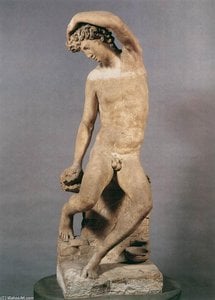
Benvenuto Cellini, 1500 – 1571

Picturi de Benvenuto Cellini: Cele 80 de opere cele mai faimoase, clasificate

Cea mai celebră pictură a lui Benvenuto Cellini este Solanier (1540), din Muzeul Kunsthistorisches din Viena, Viena. Alături de Jupiter (1545) și Crucifix (detail) (1562), acestea completează cele trei opere pe care toată lumea le recunoaște. Catalogul nostru include 80 lucrări ale lui Benvenuto Cellini; cele 80 de mai jos sunt cele mai apreciate în lume, fiecare fiind însoțită de anul creației, muzeul care o păstrează și semnificația sa.

Clasate în funcție de scorul nostru de popularitate, care combină numărul de căutări, vizite și comenzi pentru fiecare operă. Actualizat Octombrie 2026. Fiecare capodoperă de pe această pagină poate fi comandată ca o reproducere pictată manual în ulei, de calitate muzeală, sau ca o printare de artă fină, la dimensiunea aleasă de dumneavoastră.

Portretul lui Benvenuto Cellini
Benvenuto Cellini · 1500 – 1571
Născut · Decedat
1500 – 1571, Florența
Mișcare
Manierism
Lucrări din catalogul nostru
80
Cele mai celebre
Solanier (1540)
Cele mai multe lucrări la
Museo Nazionale del Bargello

Cele mai 10 celebre picturi ale lui Benvenuto Cellini

Solanier (1540) de Benvenuto Cellini
1

Solanier

Saliera, realizată din aur laminat, a fost creată de Benvenuto Cellini pentru Francis I al Franței între anii 1540 și 1543. De la descendentul său, Carol IX, această piesă a trecut Arhiducului Ferdinand al II-lea. Celă de sare prezintă o alegorie a Pământului și a interacțiunii dintre uscat și mare. Partea sa dreaptă înscenstrează un bărbat cu un trident și o navă, simbolizând apa, în timp ce partea stângă prezintă…

Jupiter (1545) de Benvenuto Cellini
2

Jupiter

1545 · Bronze · Museo Nazionale del Bargello, Florența

To stand before this magnificent depiction of Jupiter is to confront raw, untamed power rendered in the enduring majesty of bronze. This sculpture does not merely represent a god; it embodies the very force of nature—the thunderous authority that commands the skies. The figure dominates the space with an undeniable gravitas, his musculature meticulously articulated as if carved by the passing winds themselves. Observe the dynamic tension captured in his…

Crucifix (detail) (1562) de Benvenuto Cellini
3

Crucifix (detail)

1562 · Marble · Monasterio de San Lorenzo, El Escorial

Benvenuto Cellini’s 1562 marble sculpture, “Crucifix (detail),” is not merely a depiction of Christ’s suffering; it’s an immersive experience. Within the dimly lit confines of El Escorial, this intimate piece draws you into a world of profound emotion and technical mastery – a testament to Cellini's genius as both goldsmith and sculptor. The sculpture immediately commands attention with its stark realism and the palpable sense of agony radiating from the…

Morion for Francesco I de' Medici (1570) de Benvenuto Cellini
4

Morion for Francesco I de' Medici

1570 · Metalwork · Staatliche Kunstsammlungen, Dresden

In the grand tapestry of the Italian Renaissance, few objects capture the intersection of martial prestige and artistic virtuosity as profoundly as the Morion for Francesco I de' Medici. Created in 1570 by the legendary polymath Benvenuto Cellini, this is far more than a mere piece of protective headgear; it is a sculptural triumph rendered in metal. As a quintessential example of Mannerism, the Morion rejects the tranquil equilibrium of…

Danae and her Son Perseus (1545) de Benvenuto Cellini
5

Danae and her Son Perseus

1545 · Bronze · Museo Nazionale del Bargello, Florența

The bronze sculpture Danae and her Son Perseus by Benvenuto Cellini captures a moment of divine intersection. Created between 1545 and 1553 for Cosimo I de' Medici, the work depicts the mythological event where Zeus visits Danae in the form of golden rain. This Renaissance Mannerist piece resides within the Museo Nazionale del Bargello in Florence, Italy.

Nymph of Fontainebleau (1542) de Benvenuto Cellini
6

Nymph of Fontainebleau

1542 · Bronze · Muzeul Luvru, Paris

To stand before the Nymph of Fontainebleau is to step directly into the languid, sun-dappled world of the Italian Renaissance. This magnificent bronze sculpture by Benvenuto Cellini does more than merely depict a figure; it captures an ephemeral moment—a breath held between slumber and awakening. The central subject, the reclining nymph, embodies a timeless confluence of nature’s grace and mythological mystery. Her pose is one of exquisite repose, her body…

Perseus (1540) de Benvenuto Cellini
7

Perseus

1540 · Bronze · Museo Nazionale del Bargello, Florența

In the heart of Florence’s Piazza della Signoria, amidst the architectural grandeur of the Loggia dei Lanzi, stands a masterpiece that captures the very essence of Mannerist tension and heroic triumph. Benvenuto Cellini’s Perseus is not merely a sculpture; it is a dramatic performance frozen in bronze. Created between 1545 and 1554, this monumental work depicts the legendary hero Perseus at the climactic moment of his mythic journey. He stands…

Bust of Cosimo I (detail) (1546) de Benvenuto Cellini
8

Bust of Cosimo I (detail)

1546 · Bronze · Museo Nazionale del Bargello, Florența

In the heart of the Italian Renaissance, where the pursuit of beauty met the raw ambition of political power, Benvenuto Cellini forged a masterpiece that transcends mere portraiture. The Bust of Cosimo I is not simply a likeness of the Grand Duke of Tuscany; it is a profound meditation on authority, captured in the enduring medium of bronze. To gaze upon this work is to step into the vibrant, often…

Bust of Bindo Altoviti (1549) de Benvenuto Cellini
9

Bust of Bindo Altoviti

Benvenuto Cellini's “Bust of Bindo Altoviti,” crafted in 1549, isn’t merely a sculpted likeness; it’s a meticulously constructed window into the heart of Renaissance Florence. This bronze masterpiece, now residing within the Isabella Stewart Gardner Museum in Boston, transcends simple portraiture to become a profound meditation on wealth, power, and the very essence of human representation. The subject, Bindo Altoviti, a prominent Florentine banker and astute political player, is rendered…

Perseus (1540) de Benvenuto Cellini
10

Perseus

1540 · Bronze · Museo Nazionale del Bargello, Florența

In the heart of Florence, amidst the architectural grandeur of the Loggia dei Lanzi, stands a masterpiece that captures the very essence of human struggle and divine victory. Benvenuto Cellini’s Perseus is not merely a sculpture; it is a breathtaking moment frozen in bronze, a dramatic climax of Greek mythology brought to life through the virtuosity of the Mannerist style. As the light dances across its aged patina, the figure…

Benvenuto Cellini, picturi de la 11 la 80

Crucifix (1562) de Benvenuto Cellini
#11

Crucifix

1562 · Monasterio de San Lorenzo

Benvenuto Cellini's 1562 bronze sculpture, “Crucifix,” stands as a profoundly moving testament to the Renaissance spirit—a collision of technical mastery, religious fervor, and deeply personal emotion. More than…

Nymph of Fontainebleau (detail) (1542) de Benvenuto Cellini
#12

Nymph of Fontainebleau (detail)

1542 · Muzeul Luvru

To encounter a detail of Benvenuto Cellini’s Nymph of Fontainebleau is to step directly into the languid, sun-dappled world of the High Renaissance. This exquisite bronze sculpture, cast…

Minerva (1545) de Benvenuto Cellini
#13

Minerva

1545 · Museo Nazionale del Bargello

Benvenuto Cellini's "Minerva," crafted in 1545 during the twilight of the High Renaissance, isn't merely a bronze sculpture; it’s a meticulously constructed embodiment of Roman virtue and strategic…

Mercury (1545) de Benvenuto Cellini
#14

Mercury

1545 · Museo Nazionale del Bargello

In the quiet presence of this bronze, one senses the shifting tides of the sixteenth century. Completed in 1545, Benvenuto Cellini’s Mercury marks a departure from the balanced…

Nymph of Fontainebleau (detail) (1542) de Benvenuto Cellini
#15

Nymph of Fontainebleau (detail)

1542 · Muzeul Luvru

The bronze surface holds a quiet tension, as if the figure might stir at any moment. In this close view, we find ourselves pressed against the smooth, cool…

Perseus (15) (1545) de Benvenuto Cellini
#16

Perseus (15)

1545 · Loggia dei Lanzi

To stand before Benvenuto Cellini's monumental bronze, Perseus with the Head of Medusa, is to be arrested by a moment of sublime, violent apotheosis. This sculpture does not…

Salt Cellar (1540) de Benvenuto Cellini
#17

Salt Cellar

1540 · Muzeul Kunsthistorisches din Viena

To behold Benvenuto Cellini’s Saliera is to step into the opulent heart of the Italian Renaissance, where the boundaries between functional object and profound sculpture dissolve entirely. This…

Salt Cellar (detail) (1540) de Benvenuto Cellini
#18

Salt Cellar (detail)

1540 · Muzeul Kunsthistorisches din Viena

In the hallowed halls of the Kunsthistorisches Museum in Vienna, there exists a treasure that transcends the boundaries of mere functional objecthood to become a profound meditation on…

Ganymede (1548) de Benvenuto Cellini
#19

Ganymede

1548 · Museo Nazionale del Bargello

To stand before Benvenuto Cellini's bronze depiction of Ganymede is to encounter a moment suspended between divine beauty and youthful vulnerability. This masterful sculpture, executed in the vibrant…

Salt Cellar (detail) (1540) de Benvenuto Cellini
#20

Salt Cellar (detail)

1540 · Muzeul Kunsthistorisches din Viena

In the grand tapestry of the Italian Renaissance, few objects capture the audacious spirit of Mannerism as vibrantly as Benvenuto Cellini’s Salt Cellar. Created around 1543 for the…

Bust of Cosimo I (detail) (1546) de Benvenuto Cellini
#21

Bust of Cosimo I (detail)

1546 · Museo Nazionale del Bargello

To gaze upon this detail from Benvenuto Cellini's Bust of Cosimo I is to encounter not merely a portrait, but a monumental declaration of power and Renaissance ambition.…

Juno (1540) de Benvenuto Cellini
#22

Juno

1540 · Muzeul Luvru

To stand before Benvenuto Cellini's depiction of Juno is to encounter a moment suspended in the golden haze of the Renaissance. This work, executed around 1540, transcends mere…

Adu-l acasă →
Salt Cellar (1540) de Benvenuto Cellini
#23

Salt Cellar

1540 · Muzeul Kunsthistorisches din Viena

Benvenuto Cellini's Salt Cellar, a shimmering testament to the heights of Renaissance goldsmithing, isn’t merely a container for salt; it’s a miniature cosmos, a meticulously crafted allegory brimming…

Perseus (1545) de Benvenuto Cellini
#24

Perseus

1545 · Loggia dei Lanzi

In the heart of Florence’s sun-drenched Loggia dei Lanzi, where the shadows of history dance against classical stone, stands one of the most arresting spectacles of the Mannerist…

Medallion with Leda and the Swan (1520) de Benvenuto Cellini
#25

Medallion with Leda and the Swan

1520 · Museo Nazionale del Bargello

In the delicate, shimmering expanse of Benvenuto Cellini’s Medallion with Leda and the Swan, we find a moment suspended in the amber of the Italian Renaissance. Created around…

Cope pin (front and back) (1520) de Benvenuto Cellini
#26

Cope pin (front and back)

1520 · British Museum

Benvenuto Cellini's "Cope Pin (Front and Back)," crafted in 1520 for Pope Clement VII, transcends the boundaries of a mere decorative object. It’s a potent emblem of Renaissance…

Perseus (1545) de Benvenuto Cellini
#27

Perseus

1545 · Loggia dei Lanzi

In the heart of Florence, within the sun-drenched, open-air majesty of the Loggia dei Lanzi, stands a masterpiece that captures the very essence of human struggle and divine…

Salt Cellar (8) (1540) de Benvenuto Cellini
#28

Salt Cellar (8)

1540 · Muzeul Kunsthistorisches din Viena

Benvenuto Cellini's “Salt Cellar” (Saliera), completed in 1543 for King Francis I of France, isn’t merely a container for seasoning; it’s a shimmering embodiment of the Renaissance spirit—a…

Salt Cellar (detail) (16) (1540) de Benvenuto Cellini
#29

Salt Cellar (detail) (16)

1540 · Muzeul Kunsthistorisches din Viena

The Kunsthistorisches Museum in Vienna holds within its walls not merely a container for salt, but a miniature drama sculpted in gold and enamel—Benvenuto Cellini’s celebrated “Salt Cellar,”…

Adu-l acasă →
Apollo and Hyacinth (detail) (1540) de Benvenuto Cellini
#30

Apollo and Hyacinth (detail)

1540 · Museo Nazionale del Bargello

Benvenuto Cellini’s “Apollo and Hyacinth,” a meticulously rendered marble sculpture from the 1540s, isn’t merely a depiction of a tragic myth; it’s a profound meditation on loss, divine…

Perseus (detail) (12) (1545) de Benvenuto Cellini
#31

Perseus (detail) (12)

1545 · Loggia dei Lanzi

Benvenuto Cellini's “Perseus (detail) (12)” isn’t merely a depiction of the legendary hero; it’s a visceral embodiment of Renaissance ambition, technical prowess, and a profound engagement with classical…

Perseus (detail) (1545) de Benvenuto Cellini
#32

Perseus (detail)

1545 · Loggia dei Lanzi

In the sun-drenched, open-air majesty of Florence’s Loggia dei Lanzi, a breathtaking moment remains frozen in bronze. Benvenuto Cellini’s Perseus with the Head of Medusa is far more…

Perseus (detail) (1545) de Benvenuto Cellini
#33

Perseus (detail)

1545 · Loggia dei Lanzi

The bronze sculpture of Perseus holding aloft the severed head of Medusa, attributed to Benvenuto Cellini and crafted in 1545, stands as a monumental achievement within the Italian…

Shield (1572) de Benvenuto Cellini
#34

Shield

1572 · Muzeul Luvru

Benvenuto Cellini’s “Shield,” completed in 1572, stands as a captivating emblem of the High Renaissance's waning influence and the burgeoning Mannerist style. Currently residing within the Louvre Museum’s…

Perseus (1540) de Benvenuto Cellini
#35

Perseus

1540 · Museo Nazionale del Bargello

The bronze sculpture titled Perseus was created by the artist Benvenuto Cellini. This work depicts the mythological figure Perseus holding the severed head of the Gorgon Medusa. The…

Seal of Cardinal Ippolito d'Este (1540) de Benvenuto Cellini
#36

Seal of Cardinal Ippolito d'Este

1540 · Musée des Beaux-Arts de Lyon

Commissioned in 1540 by Cardinal Ippolito d'Este, this relief sculpture embodies the stylistic shifts of the Florentine Renaissance. Moving away from the balanced ideals of the High Renaissance,…

Cope pin (profile) (1520) de Benvenuto Cellini
#37

Cope pin (profile)

1520 · British Museum

The drawing titled Cope pin (profile) was executed by the goldsmith and sculptor Benvenuto Cellini. Created around 1520, the work represents a detailed design for a liturgical accessory.…

Adu-l acasă →
Gunpowder case (1570) de Benvenuto Cellini
#38

Gunpowder case

1570 · Royal Armouries

In the grand tapestry of the Italian Renaissance, few names resonate with as much dramatic flair and technical virtuosity as Benvenuto Cellini. His Gunpowder Case, crafted around 1570,…

Portrait Bust of Cosimo I de de Benvenuto Cellini
#39

Portrait Bust of Cosimo I de

Legion of Honor

In the heart of the Italian Renaissance, where the shadows of political intrigue met the brilliance of humanistic discovery, Benvenuto Cellini breathed life into metal. His Portrait Bust…

Shield for Francesco I de' Medici (detail) (11) (1570) de Benvenuto Cellini
#40

Shield for Francesco I de' Medici (detail) (11)

1570 · Staatliche Kunstsammlungen

To gaze upon the Shield for Francesco I de' Medici is to step directly into the heart of the Italian Renaissance, where metalwork transcends utility to become high…

Shield for Francesco I de' Medici (detail) (1570) de Benvenuto Cellini
#44

Shield for Francesco I de' Medici (detail)

1570 · Staatliche Kunstsammlungen

To behold the detail of Benvenuto Cellini’s Shield for Francesco I de' Medici is to step directly into the shimmering heart of the late Renaissance. Crafted around 1570,…

Ganymede (8) (1548) de Benvenuto Cellini
#45

Ganymede (8)

1548 · Museo Nazionale del Bargello

The bronze surface catches the light in a way that mimics the warmth of skin. In this 1548 sculpture, a youth stands caught in a sudden, muscular tension.…

Project for a seal (1563) de Benvenuto Cellini
#46

Project for a seal

1563 · British Museum

In the heart of the sixteenth century, amidst the vibrant intellectual ferment of Florence, Benvenuto Cellini breathed life into a vision that would serve as a cornerstone for…

Adu-l acasă →
Shield for Francesco I de' Medici (1570) de Benvenuto Cellini
#47

Shield for Francesco I de' Medici

1570 · Staatliche Kunstsammlungen

To behold Benvenuto Cellini’s Shield for Francesco I de' Medici is to step directly into the shimmering heart of the High Renaissance. Crafted around 1570, this extraordinary metalwork…

Bust of Cosimo I (1546) de Benvenuto Cellini
#48

Bust of Cosimo I

1546 · Museo Nazionale del Bargello

Benvenuto Cellini’s “Bust of Cosimo I” is more than just a sculpted likeness; it's a meticulously crafted embodiment of power, ambition, and the very spirit of the Florentine…

Medal of Alessandro de' Medici (1530) de Benvenuto Cellini
#49

Medal of Alessandro de' Medici

1530 · Museo Nazionale del Bargello

Benvenuto Cellini’s “Medal of Alessandro de’ Medici,” a small yet profoundly resonant bronze piece from 1530, isn’t merely a commemorative coin; it’s a meticulously crafted microcosm of Renaissance…

Adu-l acasă →
The Rescue of Andromeda (detail) (1550) de Benvenuto Cellini
#50

The Rescue of Andromeda (detail)

1550 · Museo Nazionale del Bargello

Benvenuto Cellini’s “The Rescue of Andromeda” is more than just a bronze sculpture; it's a vibrant tableau of myth, heroism, and the burgeoning spirit of Mannerism that defined…

'Giulio' of Alessandro de' Medici (1530) de Benvenuto Cellini
#51

'Giulio' of Alessandro de' Medici

1530 · Museo Nazionale del Bargello

A Glimpse Into Renaissance Power: Examining Cellini’s ‘Giulio’ of Alessandro de' Medici Coin The coin before us—a diminutive yet powerfully resonant testament to the Florentine Renaissance—represents more than…

Salt Cellar (detail) (1540) de Benvenuto Cellini
#52

Salt Cellar (detail)

1540 · Muzeul Kunsthistorisches din Viena

The Kunsthistorisches Museum in Vienna holds within its walls an object that transcends mere tableware – it is a miniature world, a shimmering testament to the ambition and…

Comandă o copie pictată manual →
Francis I, King of France (1537) de Benvenuto Cellini
#53

Francis I, King of France

1537 · Muzeul Fitzwilliam din Cambridge

In the delicate interplay of light and shadow upon a polished bronze surface, one encounters more than just a portrait; one meets the very essence of Renaissance sovereignty.…

Medal of Clement VII (obverse) (1534) de Benvenuto Cellini
#54

Medal of Clement VII (obverse)

1534 · Museo Nazionale del Bargello

In the delicate, shimmering expanse of a mere four centimeters, Benvenuto Cellini managed to capture the weight of an entire era. The Medal of Clement VII is not…

Shield for Francesco I de' Medici (detail) (1570) de Benvenuto Cellini
#58

Shield for Francesco I de' Medici (detail)

1570 · Staatliche Kunstsammlungen

The Shield for Francesco I de' Medici (detail), created around 1570, stands as a mesmerizing testament to the extraordinary skill of Benvenuto Cellini. This intricately crafted metalwork piece…

Bust of Cosimo I (detail) (1546) de Benvenuto Cellini
#59

Bust of Cosimo I (detail)

1546 · Museo Nazionale del Bargello

The bronze figure of Cosimo I de' Medici, ruler of Florence and Tuscany, stands as more than just a portrait; it is a meticulously crafted embodiment of Renaissance…

Adu-l acasă →
Shield for Francesco I de' Medici (detail) (10) (1570) de Benvenuto Cellini
#60

Shield for Francesco I de' Medici (detail) (10)

1570 · Staatliche Kunstsammlungen

In the heart of the late Renaissance, where the boundaries between craftsmanship and fine art dissolved into pure brilliance, Benvenuto Cellini forged a legacy that transcends mere metalwork.…

Salt Cellar (detail) (1540) de Benvenuto Cellini
#61

Salt Cellar (detail)

1540 · Muzeul Kunsthistorisches din Viena

The Salt Cellar of Francis I, crafted by the Florentine master Benvenuto Cellini between 1540 and 1543, is more than just a container for salt and pepper; it's…

Adu-l acasă →
Apollo and Hyacinth (1540) de Benvenuto Cellini
#62

Apollo and Hyacinth

1540 · Museo Nazionale del Bargello

In the hallowed halls of the Galleria Nazionale di Palazzo Barberini in Rome, there exists a profound meditation on loss and divine grace captured in stone. Benvenuto Cellini’s…

Salt Cellar (detail) (1540) de Benvenuto Cellini
#63

Salt Cellar (detail)

1540 · Muzeul Kunsthistorisches din Viena

Within the hallowed halls of the Kunsthistorisches Museum in Vienna resides a treasure that transcends its humble function as a salt cellar – Benvenuto Cellini’s 1543 masterpiece, “Salt…

Comandă o copie pictată manual →
Study for a seal (1560) de Benvenuto Cellini
#64

Study for a seal

1560 · Muzeul Luvru

The world of 16th-century Florence pulsed with artistic fervor, a crucible where innovation and tradition intertwined to forge masterpieces that continue to captivate us centuries later. Among the…

Adu-l acasă →
The Rescue of Andromeda (detail) (1550) de Benvenuto Cellini
#66

The Rescue of Andromeda (detail)

1550 · Museo Nazionale del Bargello

Benvenuto Cellini's "The Rescue of Andromeda" – specifically this exquisite detail depicting the confrontation between Perseus and Medusa – is more than just a bronze sculpture; it’s a…

Helmet (1570) de Benvenuto Cellini
#67

Helmet

1570 · Muzeul Luvru

Benvenuto Cellini’s “Helmet,” created around 1570, stands as a testament to the zenith of Renaissance artistry and the flamboyant spirit of Mannerism. More than just armor—though exquisitely crafted—it…

Comandă o reproducere →
Perseus (13) (1540) de Benvenuto Cellini
#68

Perseus (13)

1540 · Museo Nazionale del Bargello

Benvenuto Cellini's bronze sculpture of Perseus with the Head of Medusa, completed around 1545-1554 for Duke Cosimo I de’ Medici in Florence, is far more than a mere…

Comandă o reproducere →
The Rescue of Andromeda (1550) de Benvenuto Cellini
#69

The Rescue of Andromeda

1550 · Museo Nazionale del Bargello

Benvenuto Cellini's "The Rescue of Andromeda," completed around 1550, is more than just a bronze sculpture; it’s a vibrant distillation of Renaissance mythology, a testament to the artist’s…

Ganymede (1540) de Benvenuto Cellini
#71

Ganymede

1540 · Museo Nazionale del Bargello

Benvenuto Cellini’s sculpture of Ganymede stands as a testament to the artistic fervor of the Mannerist period, capturing a moment of profound beauty and spiritual contemplation. Executed in…

Medal of François I (1540) de Benvenuto Cellini
#72

Medal of François I

1540 · Museo Nazionale del Bargello

Benvenuto Cellini’s *Medal of François I*, created in 1543 for the French King, stands as a pinnacle of Renaissance sculpture and embodies the stylistic fervor of Mannerism. More…

Narcissus (1540) de Benvenuto Cellini
#73

Narcissus

1540 · Museo Nazionale del Bargello

Narcissus by CELLINI, Benvenuto Benvenuto Cellini’s “Narcissus” stands as a testament to Renaissance artistry—a sculpture embodying both meticulous craftsmanship and profound contemplation. Created in 1540 during Cellini's prolific…

Adu-l acasă →
Sakuki Greyhound de Benvenuto Cellini
#79

Sakuki Greyhound

Museo Nazionale del Bargello

In the quiet halls of the Museo Nazionale del Bargello in Florence, there exists a small yet profound masterpiece that commands attention through its sheer vitality. Benvenuto Cellini’s…

Satyr de Benvenuto Cellini
#80

Satyr

National Gallery of Art

Benvenuto Cellini’s “Satyr” stands as a captivating testament to the dynamism and sensual allure that defined the Mannerist period in Italian art. Completed around 1545, this bronze sculpture…

Adu-l acasă →

Picturile lui Benvenuto Cellini pe perioade

Subiectele pe care Benvenuto Cellini le-a pictat cel mai des

Cele patru teme care se regăsesc cel mai des printre aceste capodopere, cu cel mai fin exemplu pentru fiecare.

Unde puteți vedea picturile lui Benvenuto Cellini

Cele 8 muzee care dețin cele mai multe dintre picturile de pe această pagină.

Muzeu Oraș Lucrări lui Benvenuto Cellini Picturi din această listă
Museo Nazionale del Bargello, FlorențaMuseo Nazionale del Bargello Florența 30 Jupiter, Danae and her Son Perseus, Perseus
Muzeul Kunsthistorisches din Viena, VienaMuzeul Kunsthistorisches din Viena Viena 10 Solanier, Salt Cellar, Salt Cellar (detail)
Muzeul Luvru, ParisMuzeul Luvru Paris 7 Nymph of Fontainebleau, Nymph of Fontainebleau (detail), Nymph of Fontainebleau (detail)
Loggia dei Lanzi, FlorențaLoggia dei Lanzi Florența 7 Perseus (15), Perseus, Perseus
Staatliche Kunstsammlungen, DresdenStaatliche Kunstsammlungen Dresden 6 Morion for Francesco I de' Medici, Shield for Francesco I de' Medici (detail) (11), Shield for Francesco I de' Medici (detail)
Museo Glauco Lombardi, ParmaMuseo Glauco Lombardi Parma 5 Gold and amethyst parure donated by Maria Luigia to one of her palace ladies, Detail of the gold and amethyst parure donated by Maria Luigia to one of her palace ladies, Gold and amethyst parure donated by Maria Luigia to one of her palace ladies
British Museum, LondraBritish Museum Londra 3 Cope pin (front and back), Cope pin (profile), Project for a seal
Monasterio de San Lorenzo, El EscorialMonasterio de San Lorenzo El Escorial 2 Crucifix (detail), Crucifix

Cea mai celebră pictură a lui Benvenuto Cellini din fiecare deceniu

  1. 1520s
    Medallion with Leda and the Swan (1520) de Benvenuto Cellini
    Locul 25 din 80

    Medallion with Leda and the Swan

    Vârsta 20 – 29 · Museo Nazionale del Bargello

    In the delicate, shimmering expanse of Benvenuto Cellini’s Medallion with Leda and the Swan, we find a moment suspended in the amber of the Italian Renaissance. Created around…

  2. 1530s
  3. 1540s
    Solanier (1540) de Benvenuto Cellini
    Locul 1 din 80

    Solanier

    Vârsta 40 – 49 · Muzeul Kunsthistorisches din Viena

    Saliera, realizată din aur laminat, a fost creată de Benvenuto Cellini pentru Francis I al Franței între anii 1540 și 1543. De la descendentul său, Carol IX, această…

  4. 1550s
    The Rescue of Andromeda (detail) (1550) de Benvenuto Cellini
    Nr. 50 din 80

    The Rescue of Andromeda (detail)

    Vârsta 50 – 59 · Museo Nazionale del Bargello

    Benvenuto Cellini’s “The Rescue of Andromeda” is more than just a bronze sculpture; it's a vibrant tableau of myth, heroism, and the burgeoning spirit of Mannerism that defined…

  5. 1560s
    Crucifix (detail) (1562) de Benvenuto Cellini
    Locul 3 din 80

    Crucifix (detail)

    Vârsta 60 – 69 · Monasterio de San Lorenzo

    Benvenuto Cellini’s 1562 marble sculpture, “Crucifix (detail),” is not merely a depiction of Christ’s suffering; it’s an immersive experience. Within the dimly lit confines of El Escorial, this…

  6. 1570s
    Morion for Francesco I de' Medici (1570) de Benvenuto Cellini
    Nr. 4 din 80

    Morion for Francesco I de' Medici

    Vârsta 70 – 71 · Staatliche Kunstsammlungen

    In the grand tapestry of the Italian Renaissance, few objects capture the intersection of martial prestige and artistic virtuosity as profoundly as the Morion for Francesco I de'…

Întrebări despre picturile lui Benvenuto Cellini

Care este cea mai celebră pictură a lui Benvenuto Cellini?Afișează răspunsul

Solanier (1540), Muzeul Kunsthistorisches din Viena, Viena. Urmează Jupiter (1545) și Crucifix (detail) (1562).

Ce vârstă avea Benvenuto Cellini când a fost pictată Solanier?Afișează răspunsul

40 ani: Solanier datează din 1540, iar Benvenuto Cellini s-a născut în 1500.

Care sunt cele mai importante 10 picturi ale lui Benvenuto Cellini?Afișează răspunsul

Solanier, Jupiter, Crucifix (detail), Morion for Francesco I de' Medici, Danae and her Son Perseus, Nymph of Fontainebleau, Perseus, Bust of Cosimo I (detail), Bust of Bindo Altoviti și Perseus. Clasamentul de mai sus indică anul și muzeul pentru fiecare.

Câte picturi a realizat Benvenuto Cellini?Afișează răspunsul

Catalogul nostru include 80 lucrări ale lui Benvenuto Cellini, datate între 1520 și 1570.

Unde se află cele mai celebre picturi ale lui Benvenuto Cellini?Afișează răspunsul

Majoritatea acestora se află în Museo Nazionale del Bargello (Florența), Muzeul Kunsthistorisches din Viena (Viena) și Muzeul Luvru (Paris). Tabelul de mai sus enumeră muzeele pe rând.

Când a pictat Benvenuto Cellini cele mai faimoase opere?Afișează răspunsul

În 1540s: 42 dintre cele 80 lucrări de pe această pagină datează de atunci, printre acestea Solanier.

Care sunt cele mai vechi și cele mai recente picturi celebre ale lui Benvenuto Cellini?Afișează răspunsul

Cea mai veche lucrare de pe această pagină este din Medallion with Leda and the Swan (1520), iar cea mai recentă este din Morion for Francesco I de' Medici (1570).

Ce a pictat cel mai des Benvenuto Cellini?Afișează răspunsul

Renaissance (37), Mythology (34) și Sculpture (23), printre cele 80 opere de pe această pagină.

Ce tehnică a folosit cel mai des Benvenuto Cellini?Afișează răspunsul

Bronze: 30 din cele 80 lucrări de pe această pagină.

Din ce mișcare artistică face parte Benvenuto Cellini?Afișează răspunsul

Manierism, așa cum demonstrează picturile de pe această pagină.

Pe care dintre picturile lui Benvenuto Cellini le pot vedea la Museo Nazionale del Bargello?Afișează răspunsul

Jupiter, Danae and her Son Perseus și Perseus sunt printre cele 30 opere de pe această pagină păstrate de Museo Nazionale del Bargello, Florența.

Pot să cumpăr o reproducere a unei picturi a lui Benvenuto Cellini?Afișează răspunsul

Da. Orice pictură de pe această pagină poate fi comandată ca o reproducere pictată manual în ulei, de calitate muzeală, sau ca o print de artă fină, în dimensiunea aleasă de dumneavoastră, direct de pe pagina propriei picturi.

Despre Benvenuto Cellini

Benvenuto Cellini: Un Titan al Renașterii Italiene

Benvenuto Cellini, un nume ce răsună cu forță în galeria marilor artiști ai Renașterii italiene, a fost mult mai mult decât un simplu sculptor sau bijutier. A fost o personalitate exuberantă, un aventurier, un soldat și un scriitor talentat, toate acestea îmbinându-se într-o viață plină de pasiune, conflict și realizări artistice remarcabile. Născut în Florența la 1 noiembrie 1500, Cellini a personificat idealul renascentist al "uomo universale", un om capabil să exceleze în multiple domenii, lăsând o amprentă profundă asupra artei și culturii epocii sale.

Tinerețe și Formare Artistică: De la Muzică la Aur

Fiul unui muzician și constructor de instrumente, Cellini a fost inițial încurajat să urmeze calea muzicii. Însă, dorința sa arzătoare pentru artă l-a condus spre meșteșugul aurariei. La vârsta de cincisprezece ani, cu o tenacitate demnă de admirație, a convins pe tatăl său să îl dea în ucenicie lui Antonio di Sandro Marcone, un maestru respectat al artei aurare. Această decizie a marcat începutul unei călătorii artistice fascinante, presărată cu provocări și descoperiri. Tinerețea sa nu a fost lipsită de incidente; o altercație cu prietenii l-a costat exilul din Florența și o perioadă de lucru în Siena sub îndrumarea lui Fracastoro, un alt aurar talentat. Această experiență i-a oferit oportunitatea de a-și perfecționa abilitățile și de a explora noi tehnici.

Capodopere Sculpturale și Aurare: O Simfonie de Forme și Culori

Cellini a atins apogeul carierei sale prin crearea unor opere de artă excepționale, care combinau măiestria tehnică cu o imaginație debordantă. Probabil cea mai faimoasă realizare a sa este *Saliera pentru Regele Francisc I*, un tezaur argintat și emailat comandat de regele Franței. Această operă monumentală, acum expusă la Kunsthistorisches Museum din Viena, este o mărturie a geniului său artistic – detalii minuțioase, figuri dinamice și o compoziție complexă se îmbină armonios pentru a crea un obiect de artă de o frumusețe rară. O altă capodoperă remarcabilă este *Perseus cu Capul Meduzei*, o sculptură în bronz care surprinde momentul triumfal al eroului grecesc. Această lucrare, amplasată în Piazza della Signoria din Florența, demonstrează abilitatea lui Cellini de a capta mișcare și emoție în metal, transformând bronzul într-o expresie vie a puterii și a victoriei. Nu mai puțin impresionante sunt medalioane sale aurite, precum cel cu *Leda și Lebăda*, care demonstrează capacitatea sa de a combina mitologia clasică cu o măiestrie artistică excepțională.

Viața Scrisă: O Autobiografie Revelatoare

Dincolo de realizările sale artistice, Cellini este renumit și pentru autobiografia sa, *Viața lui Benvenuto Cellini*, o lucrare literară de o valoare inestimabilă. Această narațiune sinceră și adesea auto-glorificatoare oferă o perspectivă unică asupra vieții sale aventuroase, a relațiilor cu patroni puternici, rivalități artistice și experiențe personale fascinante. Autobiografia sa nu este doar o mărturie a talentului său artistic, ci și o fereastră spre lumea Renașterii italiene – o lume plină de intrigi politice, ambiții nemăsurate și pasiuni arzătoare. Deși uneori criticată pentru tendința sa de a exagera sau de a distorsiona faptele, autobiografia lui Cellini rămâne o sursă primară esențială pentru înțelegerea artei, culturii și societății din acea epocă.

Moștenire și Semnificație Istorică: Un Artist Inegalabil

Benvenuto Cellini a murit la Florența în 1571, lăsând în urmă o moștenire artistică de neegalat. Prin combinația sa unică de măiestrie tehnică, inovație artistică și talent literar, el a devenit un simbol al Renașterii italiene – un artist polivalent, pasionat și neînfricat. Operele sale continuă să inspire admirație și fascinație, iar autobiografia sa rămâne o lectură obligatorie pentru oricine este interesat de istoria artei și a culturii europene. Cellini nu a fost doar un artist talentat; el a fost un spirit liber, un aventurier și un povestitor captivant – un titan al Renașterii italiene care a lăsat o amprentă durabilă asupra lumii artei.

Toate cele 80 de lucrări ale lui Benvenuto Cellini →