Antoon van Dyck, 1599 – 1641

Antoon van Dyck: The 100 Most Famous Paintings

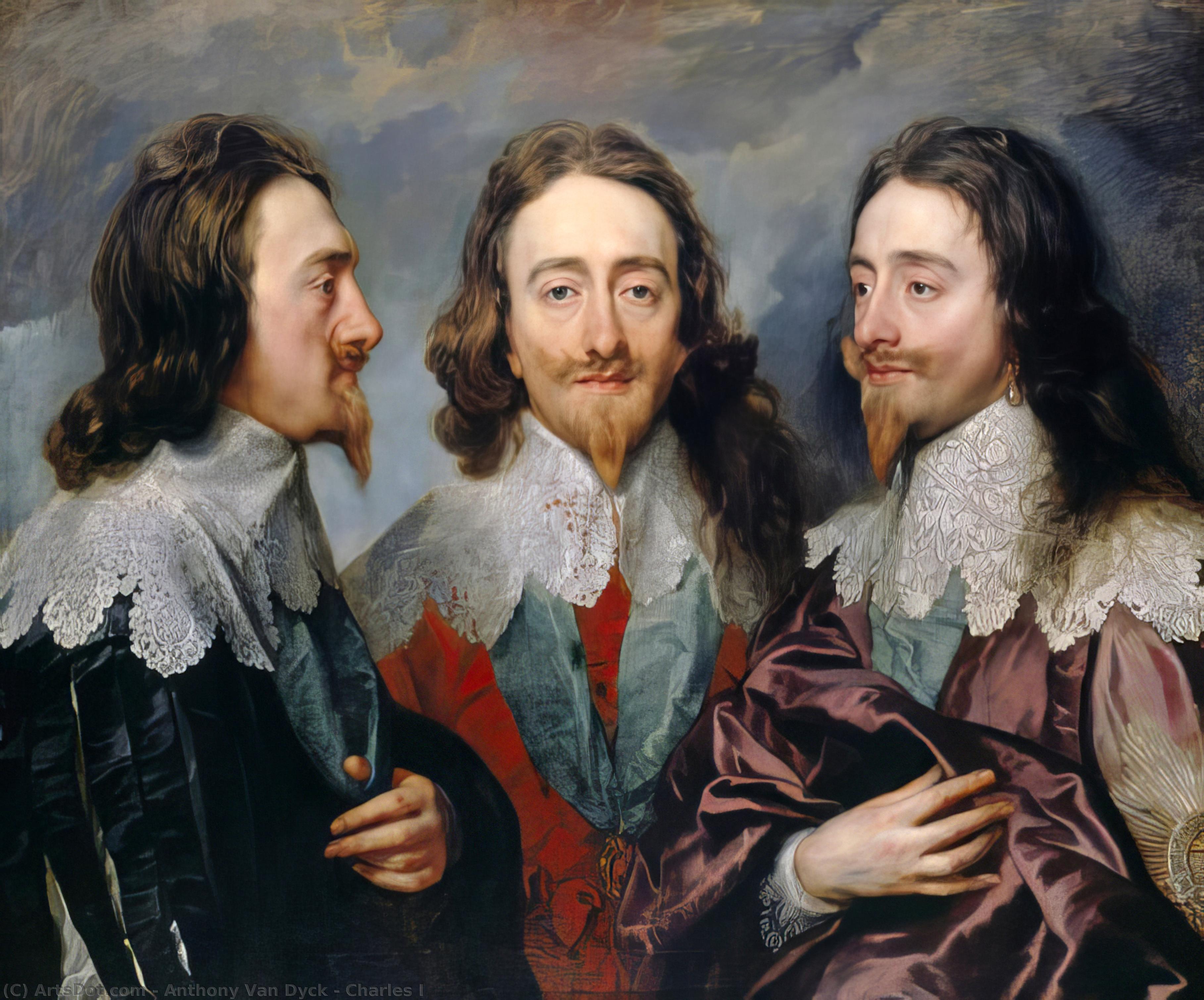
Charles I în Trei Poziții (1636) is the most famous painting by Antoon van Dyck, held by the Colecția Regală in Londra. Family Portrait (1621) and Portrait of Isabella Clara Eugenia as Widow (1628) are the next two works the world knows best. From the 1,620 works of Antoon van Dyck in our catalogue, here are the 100 that collectors and museum visitors look at most, with the year, the museum and the story of each.

Clasate în funcție de scorul nostru de popularitate, care combină numărul de căutări, vizite și comenzi pentru fiecare operă. Actualizat Octombrie 2026. Every masterpiece on this page can be ordered as a museum-quality, hand-painted oil reproduction or a fine art print, at the size you choose.

Portretul lui Antoon van Dyck
Antoon van Dyck · 1599 – 1641
Născut · Decedat
1599 – 1641, Anvers
Mișcare
Baroque style
Lucrări din catalogul nostru
1.620
Cele mai celebre
Charles I în Trei Poziții (1636)
Cele mai multe lucrări la
Colecțiile Statale de Pictură din Bavaria

Top 10: Antoon van Dyck's best-known paintings

Charles I în Trei Poziții (1636) de Antoon van Dyck
1

Charles I în Trei Poziții

1636 · Ulei pe pânză · Colecția Regală, Londra

„Charles I în Trei Poziții” reprezintă un exemplu remarcabil al măiestriei Sir Anthony van Dyck în portretul baroc. Pictată în perioada 1635-1636, această capodoperă realizată în ulei pe pânză evidențiază talentul excepțional al artistului flamand și influența sa profundă asupra artei europene. Tabloul face parte din prestigioasa Colecție Regală și este expus în prezent în Camera de Desen a Regelui, la Castelul Windsor.

Family Portrait (1621) de Antoon van Dyck
2

Family Portrait

1621 · Oil On Canvas · Muzeul Ermitaj, Sankt Petersburg

To gaze upon this magnificent family portrait is to step directly into the opulent drawing rooms of the early seventeenth century. It captures not merely three figures—a distinguished man, an elegant woman, and a cherished child—but an entire tableau of familial pride and societal standing. The composition itself speaks volumes; every fold of fabric, every carefully placed hand, contributes to a narrative of enduring connection. The rich, dramatic red background…

Portrait of Isabella Clara Eugenia as Widow (1628) de Antoon van Dyck
3

Portrait of Isabella Clara Eugenia as Widow

1628 · Oil On Canvas · Museo de Arte de Ponce, Ponce

Sir Anthony van Dyck’s “Portrait of Isabella Clara Eugenia as Widow” is more than just a depiction of a noblewoman; it's a carefully constructed tableau of power, grief, and the enduring legacy of a formidable ruler. Painted in 1628, this oil-on-canvas work transports us to the heart of the Spanish Netherlands during a period of significant political and personal upheaval. Isabella Clara Eugenia, daughter of Philip II of Spain, served…

Jacqueline van Caestre (1622) de Antoon van Dyck
4

Jacqueline van Caestre

1622 · Oil On Panel · Muzeul Royal Łazienki, Varșovia

The portrait of Jacqueline van Caestre, painted in 1622 by the masterful Sir Anthony van Dyck, is more than a mere likeness; it’s a carefully constructed tableau of wealth, status, and burgeoning domesticity. Within its richly layered composition lies a captivating story of a noblewoman navigating the complexities of marriage and courtly life in 17th-century Antwerp. Van Dyck, already establishing his signature style—characterized by an almost sensual realism and a…

Susanna and the Elders (1622) de Antoon van Dyck
5

Susanna and the Elders

1622 · Ulei pe pânză · Alte Pinakothek, Munchen

In the grand tapestry of the Flemish Baroque, few works capture the visceral intersection of vulnerability and voyeurism as profoundly as Sir Anthony van Dyck’s Susanna and the Elders. Painted around 1622, this monumental canvas is far more than a mere biblical illustration; it is a psychological drama frozen in time. The scene centers on Susanna, a figure of profound grace and purity, caught in a moment of harrowing intrusion.…

Genoese Noblewoman (1622) de Antoon van Dyck
6

Genoese Noblewoman

1622 · Oil On Canvas · The Frick Collection, New York City

Anthony van Dyck's "Genoese Noblewoman," painted circa 1625-1627, isn’t merely a portrait; it’s a meticulously crafted window into the opulent world of early 17th-century Genoa. This captivating work, now residing within The Frick Collection in New York City, offers a rare glimpse into the refined tastes and social dynamics of a wealthy Italian city-state – a vibrant hub of commerce, art, and cultural exchange during a period of immense artistic…

Henrietta Maria (1635) de Antoon van Dyck
7

Henrietta Maria

1635 · Oil On Canvas

The gaze of Henrietta Maria meets the viewer through this commanding portrait by Anthony van Dyck. Executed in 1636, the work captures Henrietta Maria of France in a moment of poised royal dignity. She exists here as the Queen of England, a position she holds through her marriage to King Charles I. The painting functions as a visual declaration of her status and her presence within the English court.

Portrait of Queen Henrietta-Maria (1638) de Antoon van Dyck
8

Portrait of Queen Henrietta-Maria

1638 · Oil On Canvas · Muzeul Ermitaj, Sankt Petersburg

To stand before this portrait is to encounter the quiet gravity of the seventeenth-century English court. The Queen stands slightly off-center, her figure anchored by the heavy weight of crimson drapery and a draped table. There is a certain stillness here, a moment caught between the political tensions of 1638 and the personal dignity of the sitter. Van Dyck uses light to sculpt her form, pulling her face and chest…

The healing of the paralytic (1620) de Antoon van Dyck
9

The healing of the paralytic

1620 · Oil On Canvas · Colecțiile Statale de Pictură din Bavaria, Munchen

In this oil painting, titled The healing of the paralytic, Anthony van Dyck explores a moment of profound spiritual intervention. The work, which dates to about 1618-20, captures the immediate aftermath of a miracle. We find ourselves witnessing the precise instant of transition between infirmity and restoration. The subject matter is drawn from the New Testament, specifically the narratives found in Matthew 9:1-8 or John 5:1-15.

Portrait of Alexandre della Faille (1589-1653) (1632) de Antoon van Dyck
10

Portrait of Alexandre della Faille (1589-1653)

1632 · Oil On Canvas · Muzeele Regale de Arte Frumoase din Belgia, Bruxelles

A dignified three-quarter length portrait, this work captures a middle-aged man positioned centrally against a dark, atmospheric background. The subject, Alexandre della Faille, is rendered with a sense of quiet authority and formal composure. A voluminous white ruff collar acts as the primary focal point, its crisp texture contrasting sharply against the heavy, dark fabric of his cloak. Light enters from the upper left, casting soft shadows across the right…

The rest of the Antoon van Dyck ranking, 11 to 100

The Pietà (1629) de Antoon van Dyck
#12

The Pietà

1629 · Muzeul Prado

Step closer to observe the weight of this scene. In this 1629 composition, we find the Virgin Mary cradling the limp, pale body of Christ. The arrangement is…

Order a reproduction →
The Lomellini Family (1627) de Antoon van Dyck
#16

The Lomellini Family

1627

To stand before 'The Lomellini Family' is to step directly into the gilded drawing rooms of 17th-century Genoese aristocracy. Anthony van Dyck, a painter whose elegance seemed to…

Order a reproduction →
Moses and the Brazen Serpent (1530) de Antoon van Dyck
#19

Moses and the Brazen Serpent

1530

Moses and the Brazen Serpent by Anthony van Dyck captures a moment of divine intervention from the Book of Numbers. The oil painting on canvas depicts the biblical…

Samson and Delilah (1630) de Antoon van Dyck
#24

Samson and Delilah

1630 · Muzeul Kunsthistorisches din Viena

In the grand tapestry of the Flemish Baroque, few moments capture the tension between divine strength and human frailty as poignantly as Sir Anthony van Dyck’s Samson and…

Bring it home →
Charles I (1600-49) on Horseback (1635) de Antoon van Dyck
#26

Charles I (1600-49) on Horseback

1635 · Palatul Hampton Court

The scene unfolds with the commanding presence of Charles I (1600-49) on Horseback, a work by the artist Anthony van Dyck. Created in 1635, the portrait captures the…

Bring it home →
Cupid and Psyche (1640) de Antoon van Dyck
#27

Cupid and Psyche

1640 · Colecția Regală

Anthony van Dyck's "Cupid and Psyche," painted in 1640, is more than just a depiction of a mythological romance; it’s a distillation of the Baroque spirit – a…

Bring it home →
Queen Henrietta Maria of England (1620) de Antoon van Dyck
#28

Queen Henrietta Maria of England

1620 · Colecțiile Statale de Pictură din Bavaria

In this three-quarter length portrait, Anthony van Dyck positions Queen Henrietta Maria of England slightly off-center. This subtle shift creates a quiet tension within the frame. A luminous…

Bring it home →
Queen Henrietta Maria of England (1639) de Antoon van Dyck
#30

Queen Henrietta Maria of England

1639 · Statens Museum For Kunst

Queen Henrietta Maria of England, painted by Anthony van Dyck, captures the queen consort of Charles I. Dated 1636, the portrait presents the woman who was born in…

Bring it home →
Saint Sebastian and the Angel (1631) de Antoon van Dyck
#31

Saint Sebastian and the Angel

1631 · Galleria Sabauda

A diagonal line cuts through the composition, pulling the eye from the descending angel down to the slumped, pale form of Saint Sebastian. The saint’s skin is luminous,…

Bring it home →
Portrait of a painter (1640) de Antoon van Dyck
#32

Portrait of a painter

1640 · Kunstmuseum Basel

We are looking at Portrait of a painter, a work by Sir Anthony van Dyck. Created about 1640, this piece presents a man whose identity is tied closely…

Bring it home →
St Jerome (1620) de Antoon van Dyck
#35

St Jerome

1620 · Nationalmuseum

The composition centers on the muscular, elderly figure of St. Jerome, positioned in a wilderness setting. His torso is partially exposed, draped in a voluminous red cloth that…

Order a reproduction →
Venetia, Lady Digby (1634) de Antoon van Dyck
#36

Venetia, Lady Digby

1634

To stand before this magnificent portrait is to step directly into the dramatic heart of the seventeenth century. Sir Anthony van Dyck’s depiction of Venetia, Lady Digby is…

Order a reproduction →
Crucifixion (1622) de Antoon van Dyck
#38

Crucifixion

1622 · San Zaccaria

Sir Anthony van Dyck's 1622 depiction of the Crucifixion is not merely a representation of a biblical event; it’s a visceral exploration of human suffering and spiritual anguish,…

Commission a hand-painted copy →
Ottaviano Canevari (1627) de Antoon van Dyck
#40

Ottaviano Canevari

1627 · The Frick Collection

Sir Anthony van Dyck’s 1627 portrait of Ottaviano Canevari is more than simply a likeness; it's a carefully constructed tableau of intellect, status, and the quiet dignity of…

Bring it home →
Lamentation of Christ (1620) de Antoon van Dyck
#41

Lamentation of Christ

1620 · Colecțiile Statale de Pictură din Bavaria

In this 1620 work, we find ourselves drawn into a tight, pyramidal arrangement of figures that centers entirely on the lifeless body of Christ. A heavy, sacred silence…

Commission a hand-painted copy →
Saint Sebastian (1620) de Antoon van Dyck
#44

Saint Sebastian

1620 · Colecțiile Statale de Pictură din Bavaria

The oil on canvas known as Saint Sebastian is an artwork by Anthony van Dyck. Created about 1620, the painting captures a moment of martyrdom. The figure is…

Order a reproduction →
The Martyrdom of Saint Sebastian (1616) de Antoon van Dyck
#45

The Martyrdom of Saint Sebastian

1616 · Colecțiile Statale de Pictură din Bavaria

The Martyrdom of Saint Sebastian emerges from the shadows of the Baroque era, a religious work that captures a moment of profound transition. In this painting by Sir…

Order a reproduction →
Sir Kenelm Digby (1640) de Antoon van Dyck
#47

Sir Kenelm Digby

1640 · National Portrait Gallery

To gaze upon this portrait of Sir Kenelm Digby is to step directly into the opulent, charged atmosphere of the early seventeenth century English court. The subject, depicted…

Commission a hand-painted copy →
Portrait of an Old Man (1618) de Antoon van Dyck
#49

Portrait of an Old Man

1618 · Liechtenstein Museum

Sir Anthony van Dyck's "Portrait of an Old Man," painted circa 1618, is more than a simple likeness; it’s a profound meditation on time, wisdom, and the quiet…

Order a reproduction →
Portrait of a Man (1922) de Antoon van Dyck
#50

Portrait of a Man

1922 · Colecțiile Statale de Pictură din Bavaria

This work is a Portrait of a Man by the Flemish Baroque artist Anthony van Dyck. Dated 1922, the painting presents a formal, full-length composition. The subject is…

Order a reproduction →
Charles I in Three Positions (1636) de Antoon van Dyck
#51

Charles I in Three Positions

1636 · Colecția Regală

In the grand tapestry of Baroque portraiture, few works command the room with as much quiet authority as Sir Anthony van Dyck’s “Charles I in Three Positions.” Completed…

Order a reproduction →
Portrait of a Genovese Gentleman (1621) de Antoon van Dyck
#53

Portrait of a Genovese Gentleman

1621 · Gemäldegalerie

To stand before this portrait is to step directly into the opulent, sophisticated world of early 17th-century European aristocracy. Sir Anthony van Dyck, the Flemish master whose brushstrokes…

Order a reproduction →
Portrait of a Man (1618) de Antoon van Dyck
#58

Portrait of a Man

1618 · Liechtenstein Museum

Sir Anthony van Dyck's “Portrait of a Man,” painted circa 1618-1619, is not merely a likeness; it’s a carefully constructed meditation on presence and authority. This small yet…

Commission a hand-painted copy →
Marie de Raet (1631) de Antoon van Dyck
#59

Marie de Raet

1631 · Wallace Collection

To stand before Marie de Raet is to be enveloped in the profound stillness of the early seventeenth century. This magnificent portrait by Sir Anthony van Dyck, dating…

Bring it home →
The Virgin and Child (1631) de Antoon van Dyck
#63

The Virgin and Child

1631 · Buckingham Palace

In this Baroque oil painting, the Virgin Mary is positioned at the center of a pyramidal structure, cradling the Christ Child. She wears a rose-colored tunic beneath a…

Order a reproduction →
Lord George Stuart (1638) de Antoon van Dyck
#64

Lord George Stuart

1638 · National Portrait Gallery

To gaze upon this portrait of Lord George Stuart is to step directly into the opulent, yet deeply thoughtful, world of early seventeenth-century English aristocracy. Sir Anthony van…

Order a reproduction →
Queen Henrietta Maria (1760) de Antoon van Dyck
#66

Queen Henrietta Maria

1760 · Birmingham Museum and Art Gallery

In this oil on canvas work from 1636, Sir Anthony van Dyck presents Queen Henrietta Maria. The portrait captures the queen, who lived from 1609 to 1669, with…

Order a reproduction →
The Polish Rider (1620) de Antoon van Dyck
#69

The Polish Rider

1620 · Colecțiile Statale de Pictură din Bavaria

The composition is dominated by the diagonal movement of the horse and rider. This movement creates a sense of forward momentum across the canvas. The subject is a…

Order a reproduction →
Regina Henrietta Maria (1636) de Antoon van Dyck
#73

Regina Henrietta Maria

1636 · Metropolitan Museum of Art

Piesa „Regina Henrietta Maria” a lui Anthony van Dyck, pictată în anul 1636, este mult mai mult decât un simplu portret; este un document meticulos elaborat despre putere,…

Order a reproduction →
Lady Dacre (1633) de Antoon van Dyck
#74

Lady Dacre

1633 · Denver Art Museum

Sir Anthony van Dyck’s “Lady Dacre” is not merely a portrait; it's a carefully constructed tableau of Renaissance elegance, imbued with subtle symbolism and the quiet dignity of…

Commission a hand-painted copy →
Charles i - (16) de Antoon van Dyck
#76

Charles i - (16)

In this work, titled Charles i - (16), Anthony van Dyck presents a formal bust-length depiction of the monarch. The subject is Charles I, who held the titles…

Bring it home →
Deux têtes d (1650) de Antoon van Dyck
#77

Deux têtes d

1650 · Muzeul Fine Arts din Lyon

Sir Anthony van Dyck's "Deux têtes d" – literally, “Two Heads” – is not merely a painting; it’s an arresting tableau of psychological depth and subtle drama. Completed…

Bring it home →
Christ carrying the Cross de Antoon van Dyck
#83

Christ carrying the Cross

Musei di Strada Nuova

In Christ carrying the Cross by Anthony van Dyck, the viewer is met with a tightly cropped, bust-length portrait. The composition focuses entirely on the upper torso and…

Bring it home →
Ecce Homo (1626) de Antoon van Dyck
#85

Ecce Homo

1626 · The Barber Institute of Fine Arts

Sir Anthony van Dyck’s “Ecce Homo,” painted circa 1625-1626, is not merely a depiction of Christ before Pilate; it's an intensely human portrayal of sorrow, humility, and the…

Bring it home →
Margareta Snyders (1620) de Antoon van Dyck
#86

Margareta Snyders

1620

To gaze upon Anthony Van Dyck's portrait of Margareta Snyders is to step directly into the opulent, emotionally charged world of the early seventeenth century. This painting, executed…

Bring it home →
Margareta de Vos (1620) de Antoon van Dyck
#87

Margareta de Vos

1620 · The Frick Collection

Sir Anthony van Dyck’s “Margareta de Vos,” painted in 1620, is more than just a portrait; it's a meticulously crafted tableau of wealth, status, and subtle artistry. This…

Order a reproduction →
Portrait of a Man (1618) de Antoon van Dyck
#90

Portrait of a Man

1618 · Liechtenstein Museum

In this formal portrait from 1618, Sir Anthony van Dyck presents a man positioned slightly off-center, facing forward to engage the viewer directly. The composition is characterized by…

Bring it home →
Portrait of James Hamilton (1630) de Antoon van Dyck
#92

Portrait of James Hamilton

1630 · Liechtenstein Museum

A Noble Presence: Unveiling Anthony van Dyck’s Portrait of James Hamilton The image before you captures not merely a likeness, but the very essence of 17th-century power and…

Bring it home →
Charles I pe cal (1635) de Antoon van Dyck
#93

Charles I pe cal

1635 · National Gallery

Sir Anthony van Dyck, un maestru al curților europene, a creat o operă de artă care transcende timpul – *Charles I on Horseback* (Charles I pe cal). Această…

Bring it home →
The Lomellini Family (1626) de Antoon van Dyck
#96

The Lomellini Family

1626 · National Gallery of Scotland

To stand before Sir Anthony van Dyck’s “The Lomellini Family” is to step directly into the gilded drawing rooms of seventeenth-century Genoa, where the air feels heavy with…

Commission a hand-painted copy →
Șimon și Dalila (1620) de Antoon van Dyck
#97

Șimon și Dalila

1620

Această capodoperă puternică înfățișează viu povestea biblică a lui Samson și Delila, surprindând un moment crucial plin de tensiune, trădare și intensitate emoțională. Scena o prezintă pe Delila,…

Order a reproduction →
Abraham and Isaac (1617) de Antoon van Dyck
#98

Abraham and Isaac

1617 · Galeria Națională din Praga

Sir Anthony van Dyck's “Abraham and Isaac,” painted in 1617, is more than just a biblical scene; it’s a profound meditation on faith, obedience, and the agonizing weight…

Commission a hand-painted copy →
Portrait of Anna van Craesbecke (1635) de Antoon van Dyck
#99

Portrait of Anna van Craesbecke

1635 · Muzeele Statale din Kassel

Sir Anthony van Dyck’s “Portrait of Anna van Craesbecke,” painted in 1635, is more than just a likeness; it's a meticulously crafted tableau of aristocratic life and the…

Bring it home →
A wooded ridge (1630) de Antoon van Dyck
#100

A wooded ridge

1630 · Art Gallery of South Australia

Sir Anthony van Dyck's "A Wooded Ridge," painted around 1630, isn’t merely a landscape; it’s an invitation into a hushed and contemplative realm. This evocative piece, rendered in…

Bring it home →

Antoon van Dyck's paintings by period

The subjects Antoon van Dyck painted most

The four subjects that return most often among these masterpieces, with the finest example of each.

Where to see Antoon van Dyck's paintings

Cele 8 muzee care dețin cele mai multe dintre picturile de pe această pagină.

Muzeu Oraș Lucrări lui Antoon van Dyck Picturi din această listă
Colecțiile Statale de Pictură din Bavaria, MunchenColecțiile Statale de Pictură din Bavaria Munchen 57 The healing of the paralytic, Equestrian Portrait of Charles I of England, Queen Henrietta Maria of England
Muzeul Ermitaj, Sankt PetersburgMuzeul Ermitaj Sankt Petersburg 25 Family Portrait, Portrait of Queen Henrietta-Maria, Portrait of Charles I, King of the Great Britain (1600-1649)
Colecția Regală, LondraColecția Regală Londra 29 Charles I în Trei Poziții, Cupid and Psyche, Charles I in Three Positions
Liechtenstein Museum, VienaLiechtenstein Museum Viena 23 Portrait of an Old Man, Portrait of a Man, Portrait of a Man
The Frick Collection, New York CityThe Frick Collection New York City 8 Genoese Noblewoman, Ottaviano Canevari, Margareta de Vos
Wallace Collection, LondraWallace Collection Londra 9 Queen Henrietta Maria, Marie de Raet
National Portrait Gallery, LondraNational Portrait Gallery Londra 6 Sir Kenelm Digby, Lord George Stuart
Galeria Națională a Scottei, EdinburghGaleria Națională a Scottei Edinburgh 5 Thomas Hamilton, 2nd Earl of Haddington, 1600 - 1640, Alexander Henderson (c.1583–1646), Presbyterian Divine and Diplomatist

Antoon van Dyck through the decades: one masterpiece for each

  1. 1610s
    The Martyrdom of Saint Sebastian (1616) de Antoon van Dyck
    #45 of 100

    The Martyrdom of Saint Sebastian

    Vârsta 11 – 20 · Colecțiile Statale de Pictură din Bavaria

    The Martyrdom of Saint Sebastian emerges from the shadows of the Baroque era, a religious work that captures a moment of profound transition. In this painting by Sir…

  2. 1620s
    Family Portrait (1621) de Antoon van Dyck
    #2 of 100

    Family Portrait

    Vârsta 21 – 30 · Muzeul Ermitaj

    To gaze upon this magnificent family portrait is to step directly into the opulent drawing rooms of the early seventeenth century. It captures not merely three figures—a distinguished…

  3. 1630s
    Charles I în Trei Poziții (1636) de Antoon van Dyck
    Rank 1 / 100

    Charles I în Trei Poziții

    Vârsta 31 – 40 · Colecția Regală

    „Charles I în Trei Poziții” reprezintă un exemplu remarcabil al măiestriei Sir Anthony van Dyck în portretul baroc. Pictată în perioada 1635-1636, această capodoperă realizată în ulei pe…

  4. 1640s
    Queen Henrietta Maria (1640) de Antoon van Dyck
    No. 17 of 100

    Queen Henrietta Maria

    Vârsta 41 – 42 · Wallace Collection

    The Queen sits in a moment of quiet poise, her figure angled slightly away from the viewer to create a sense of graceful movement. She is draped in…

Antoon van Dyck's paintings: frequently asked questions

What is the most famous Antoon van Dyck painting?Show the answer

Charles I în Trei Poziții (1636), Colecția Regală, Londra. Next come Family Portrait (1621) and Portrait of Isabella Clara Eugenia as Widow (1628).

At what age did Antoon van Dyck paint Charles I în Trei Poziții?Show the answer

37 years old: Charles I în Trei Poziții dates from 1636 and Antoon van Dyck was born in 1599.

Which are the 10 most famous Antoon van Dyck paintings?Show the answer

Charles I în Trei Poziții, Family Portrait, Portrait of Isabella Clara Eugenia as Widow, Jacqueline van Caestre, Susanna and the Elders, Genoese Noblewoman, Henrietta Maria, Portrait of Queen Henrietta-Maria, The healing of the paralytic și Portrait of Alexandre della Faille (1589-1653). The ranking above gives the year and the museum of each.

How many paintings by Antoon van Dyck are there?Show the answer

Our catalogue lists 1,620 works by Antoon van Dyck, dated from 1616 to 1641.

Where can I see the most famous Antoon van Dyck paintings?Show the answer

Most of them are in Colecțiile Statale de Pictură din Bavaria (Munchen), Muzeul Ermitaj (Sankt Petersburg) și Colecția Regală (Londra). The table above lists the museums one by one.

In which period did Antoon van Dyck paint the best-known works?Show the answer

In 1630s: 44 of the 100 works on this page date from then, among them Charles I în Trei Poziții.

What is the earliest famous Antoon van Dyck painting, and the latest?Show the answer

The earliest on this page is The Martyrdom of Saint Sebastian (1616), the latest Portrait of Prince Charles Louis, Elector Palatine (1641).

What subjects did Antoon van Dyck paint?Show the answer

Man (22), Portraiture (19) și Portrait (17), among the 100 works on this page.

What did Antoon van Dyck paint on, and with what?Show the answer

Oil On Canvas: 75 of the 100 works on this page.

Which movement does Antoon van Dyck's art belong to?Show the answer

Baroque style, as the paintings on this page show.

What Antoon van Dyck paintings does the Colecțiile Statale de Pictură din Bavaria hold?Show the answer

The healing of the paralytic, Equestrian Portrait of Charles I of England și Queen Henrietta Maria of England are among the 10 works on this page held by the Colecțiile Statale de Pictură din Bavaria, Munchen.

Where can I buy a Antoon van Dyck reproduction?Show the answer

Yes. Every painting on this page can be ordered as a museum-quality, hand-painted oil reproduction or a fine art print, in the size you choose, from the painting's own page.

Antoon van Dyck: biography

A Flemish Master at the Courts of Europe

Sir Anthony van Dyck, născut în Antwerp în 1599, a răsunat ca unul dintre cei mai remarcabili și influențatori pictori de portret ai epocii Barocului. Viața sa, tragică din punct de vedere al duratei sale, a fost o perioadă plină de explorare artistică și comizii prestigioase care l-au condus din orașul său natal din Flandra spre Italia și, în cele din urmă, către inima curții engleze. De la o vârstă fragedă, van Dyck a demonstrat un talent remarcabil, intrând în atelierul lui Hendrick van Balen ca ucenic tânăr și absorbând rapid stilurile predominante ale vremii. Cu toate acestea, asocierea sa cu Peter Paul Rubens – nu doar ca student, ci și ca colaborator – a modelat fundamental fundația artistică a lui van Dyck. A învățat din dinamismul compozițiilor, paleta bogată de culori și măiestria în utilizarea luminii și umbrei a lui Rubens, dar a început curând să își modeleze propriul drum distinctiv, caracterizat printr-o eleganță și rafinament care au devenit semnăturile sale.

Sărbătoriri italienești și nașterea unui stil

Anii petrecuți în Italia, începând cu aproximativ 1621, au reprezentat o perioadă crucială în dezvoltarea sa artistică. S-a stabilit în principal în Genova, unde a câștigat favorul familiilor aristocratice din oraș. Aici a început să cultive stilul sofisticat pentru care va deveni renumit – un stil marcat de posturi grațioase, țesături luxoase și o senzație palpabilă de nobilitate. Spre deosebire de energia robustă adesea găsită în lucrările lui Rubens, portretele italiene ale lui van Dyck emană o compoziție rafinată, capturând nu doar asemănarea fizică, ci și personalitatea interioară și statutul social al subiectelor sale. În această perioadă, a pornit și el în *Iconografia*, o serie de gravuri meticulos realizate de portret care au prezentat figuri proeminente ale timpului său – artiști, savanți și conducători. Acest proiect a demonstrat abilitățile sale tehnice excepționale și l-a stabilit ca fiind un grafician de top. Aceste gravuri nu au fost doar înregistrări; au fost imagini concepute cu grijă, create pentru a immortaliza subiectele și a transmite statutul și inteligența lor.

Influențe și evoluții

Înainte de a ajunge la curtea englezească, van Dyck a petrecut timp în Flandra, unde a continuat să își perfecționeze stilul, influențat de Rubens, dar dezvoltând o abordare mai individuală. A fost un observator atent al tehnicilor și tendințelor artistice ale vremii, adaptându-le la propriile sale viziuni. În această perioadă, a dezvoltat o înțelegere profundă a anatomiei umane, a perspectivei și a modului de a reda texturile și materialele. Aceste cunoștințe i-au permis să creeze portrete care nu erau doar reprezentări fizice, ci și expresii ale personalității și statutului social al subiectelor sale.

Curtea Regelui Carol I Stuart

În 1632, van Dyck a primit o invitație care a schimbat fundamental traseul său profesional – un apel din partea regelui Carol I Stuart al Angliei pentru a deveni pictorul curții. Această numire a marcat o întorsătură de situație, nu numai pentru van Dyck, ci și pentru pictura englezească. A sosit în Londra cu o reputație considerabilă și a devenit rapid indispensabil regelui, fiind însărcinat să creeze imagini care să proiecteze un aer de putere, măreție și drept divin. Portreteele lui Carol I sunt în special notabile; el a părăsit reprezentările rigide și formale favorizate de artiștii anteriori, pictând în schimb regele ca pe un lider dinamic și charismatic. A folosit tehnici inovatoare – iluminare dramatică, gesturi ample și fundaluri bine alese – pentru a crea imagini care erau atât de impresionante vizual, cât și politică. Influența sa s-a extins dincolo de familia regală, modelând cultura vizuală a aristocrației englezești timp de generații. Nu doar că a pictat portrete; a creat o imagine a monarhiei, influențând modul în care regele era perceput timp de peste un secol.

Moștenire și influență durabilă

Decesul prematur al lui van Dyck în 1641 a privajat un talent prodigios, dar moștenirea sa trăiește până astăzi. Impactul său asupra picturii englezești este imens; a stabilit un standard de eleganță și rafinament pe care artiștii următori au încercat să îl imite.
  • Inovație tehnică: A fost un maestru atât al picturii în ulei, cât și al gravării, experimentând constant cu noi tehnici.
  • Stil rafinat: Portretele sale sunt caracterizate de posturi grațioase, țesături luxoase și subtile perspective psihologice.
  • Influență curtoasă: A transformat imaginea monarhiei englezești, creând un limbaj vizual al puterii și prestigiei.
Dincolo de măiestria sa tehnică, van Dyck a avut o capacitate excepțională de a surprinde esența subiectelor sale – personalitatea lor, statutul social și aspirațiile lor. Lucrările sale continuă să captiveze publicul cu frumusețea, eleganța și profunzimea psihologică durabilă. *Copiii Balbi*, *Carol I în trei poziții* și numeroase alte capodopere sunt mărturii ale geniului său, asigurând că Sir Anthony van Dyck rămâne unul dintre cei mai celebrați artiști ai epocii Barocului. Influența sa este încă vizibilă astăzi în modă, fotografie și pictură contemporană, o dovadă a atracției fără timp a artei sale.

Toate cele 1620 de lucrări ale lui Antoon van Dyck →