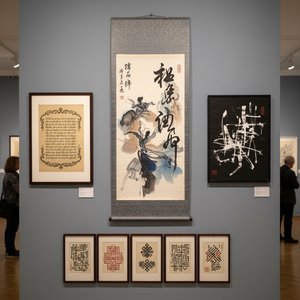
A Brush with Tradition: The World of Su Liupeng
Su Liupeng, a contemporary Chinese artist whose work resonates with both the delicate beauty of classical traditions and a distinctly modern sensibility, emerges as a compelling figure in today’s art landscape. While biographical details remain somewhat elusive – a characteristic often found amongst artists who allow their work to speak most profoundly – his presence within institutions like The Art Institute of Chicago signals a growing recognition of his unique artistic voice. He is known for paintings featuring characters and album pages, demonstrating a mastery of traditional Chinese painting techniques while imbuing them with compelling themes that capture the spirit of contemporary life. His art isn’t simply a replication of the past; it's a vibrant conversation *with* it, reinterpreting established forms for a new generation.Early Influences and Artistic Development
The artistic journey of Su Liupeng appears deeply rooted in the rich heritage of Chinese painting. His work echoes the styles prevalent during the Qing Dynasty (1644–1912), particularly evident in his delicate brushwork, subtle color palettes, and focus on natural motifs like plum blossoms and cranes – symbols of resilience, longevity, and grace. The Art Institute of Chicago’s collection reveals connections to artists such as Zhu Renfeng and Huang Binhong, suggesting a thorough grounding in the literati painting tradition. This lineage is not merely stylistic imitation; it's an absorption of philosophical underpinnings—a reverence for nature, an emphasis on personal expression through calligraphy and brushwork, and a pursuit of spiritual harmony. However, unlike many traditional painters who focused solely on landscapes or bamboo, Su Liupeng introduces the human figure with compelling narrative elements. This shift suggests a desire to engage more directly with the complexities of modern experience, using the established language of Chinese painting to tell new stories. His exploration of album pages—historically intimate and personal forms—further emphasizes this focus on individual expression and emotional resonance.Themes and Techniques: A Contemporary Dialogue
Su Liupeng’s art is characterized by a captivating blend of traditional techniques and contemporary themes. His paintings often feature characters engaged in everyday activities, rendered with meticulous detail and imbued with a sense of quiet contemplation. The use of ink wash painting—a technique that emphasizes the expressive qualities of brushstrokes and varying ink densities—creates a luminous quality, lending an ethereal beauty to his work. He skillfully employs traditional Chinese pigments, achieving subtle gradations of color that evoke mood and atmosphere. The characters themselves are not simply portraits; they are vessels for exploring broader themes of urbanization, human connection, and the search for meaning in a rapidly changing world. The inclusion of album pages adds another layer of intimacy, offering glimpses into personal narratives and emotional landscapes. These aren’t grand historical scenes but rather quiet moments of reflection—a cup of tea shared between friends, a solitary figure lost in thought, a fleeting expression captured with remarkable sensitivity.Historical Significance and Artistic Legacy
While still developing his broader artistic legacy, Su Liupeng represents an important trend within contemporary Chinese art: the revitalization of traditional forms for modern audiences. He is not simply preserving the past but actively reinterpreting it, demonstrating its continued relevance in a globalized world. His work challenges conventional notions of what Chinese painting can be, expanding its boundaries while remaining deeply rooted in its historical context. The inclusion of his pieces in prominent institutions like The Art Institute of Chicago signifies a growing recognition of this artistic innovation and positions him as a key figure in the ongoing dialogue between tradition and modernity within Chinese art. His ability to seamlessly blend technical mastery with compelling thematic concerns ensures that his work will continue to resonate with audiences for years to come, offering a unique perspective on the complexities of contemporary life through the lens of ancient traditions.Exploring Further
- Plum Blossoms, Crane, and Spring, Qing dynasty ( 1644–1912); 1824–1896; c.1892 – A testament to his mastery of classical motifs.
- Tea Drinking Under the Wutong Tree, Ming dynasty (1369–1644), 1509 – Demonstrating a connection to earlier painting styles.
- Model of an Inkstone, Tang dynasty (618–907) - Illustrating his deep understanding of artistic tools and symbolism.
- His work invites viewers to contemplate the enduring power of tradition and its ability to illuminate the complexities of contemporary life.