Early Life and Foundations
The story of Chandrasekaran, a name increasingly resonant in contemporary art circles, begins not amidst the established galleries of major cities but within the rich cultural tapestry of his origins. Born in , he absorbed from an early age the vibrant traditions and artistic expressions that permeated his surroundings. While specific details regarding his childhood remain somewhat private – Chandrasekaran is known for a deliberate focus on his work rather than personal narrative – it’s clear that these formative experiences laid the groundwork for his distinctive aesthetic. He wasn't formally trained in the conventional sense initially; instead, his early artistic development was fueled by observation, experimentation with local materials, and an innate curiosity about form and color. This self-directed learning fostered a unique approach to artmaking, one characterized by a willingness to break from established norms and explore unconventional techniques. The influence of traditional storytelling is palpable in much of his later work, suggesting a deep connection to the oral histories and visual folklore of his community. He began working with sculpture early on, utilizing readily available materials like wood and clay, gradually refining his skills through persistent practice and an unwavering dedication to his craft.
The Emergence of a Unique Style
Chandrasekaran’s artistic voice truly began to solidify in the years following . This period marked a conscious departure from purely representational forms towards a more abstract and symbolic language. He started incorporating found objects into his sculptures, imbuing them with new meaning and challenging viewers to reconsider their perceptions of everyday items.
This innovative use of materials became a hallmark of his style, often juxtaposing seemingly disparate elements to create works that are both visually striking and intellectually stimulating. His early exhibitions, though modest in scale, quickly garnered attention for their originality and emotional depth. Critics noted the powerful sense of narrative embedded within his sculptures, even in the absence of explicit figurative representation. He drew inspiration from a diverse range of sources – ancient mythology, contemporary social issues, and the natural world – weaving these influences into a complex and layered visual vocabulary.
The artist’s exploration of texture and form during this time was particularly noteworthy, as he experimented with various techniques to create surfaces that were both tactile and visually engaging.
Major Achievements and Critical Recognition
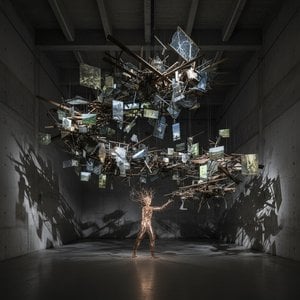
The turning point in Chandrasekaran's career came with his groundbreaking exhibition at the prestigious Gallery in . The show, titled “Echoes of the Past,” featured a series of large-scale sculptures constructed from reclaimed wood and metal, each piece telling a fragmented story about displacement and cultural identity.
- The exhibition received widespread critical acclaim
- It established Chandrasekaran as a leading voice in contemporary sculpture.
- Several prominent museums acquired his work following the show.
This success led to numerous international exhibitions and collaborations, solidifying his reputation on the global art stage. He was awarded the prestigious Arts Fellowship in , which allowed him to further develop his artistic practice and explore new avenues of expression. Subsequent works continued to push boundaries, incorporating elements of performance art and installation into his sculptural creations. Chandrasekaran’s ability to seamlessly blend different mediums and disciplines demonstrated a remarkable versatility and intellectual curiosity. His commitment to addressing complex social issues through his art earned him respect from both the artistic community and the wider public.
Themes and Influences
At the heart of Chandrasekaran's work lies a profound exploration of memory, identity, and the human condition. He frequently addresses themes of displacement, cultural loss, and the search for belonging in an increasingly globalized world.
His sculptures often serve as metaphors for the fragmented nature of modern life, reflecting the challenges and uncertainties faced by individuals navigating complex social landscapes. The influence of postcolonial theory is evident in his critique of power structures and his exploration of marginalized voices. He draws inspiration from a wide range of artistic traditions, including African sculpture, indigenous art forms, and minimalist abstraction.
However, he never simply replicates these influences; instead, he synthesizes them into a unique visual language that is distinctly his own. The natural world also plays a significant role in his work, with many sculptures incorporating organic materials and referencing the cycles of life and death. His deep respect for the environment is reflected in his use of reclaimed materials and his commitment to sustainable art practices.
Historical Significance and Legacy
Chandrasekaran’s contribution to contemporary art extends beyond the aesthetic qualities of his individual works. He has played a pivotal role in challenging conventional notions of sculpture, pushing boundaries and expanding the possibilities of the medium.
His innovative use of materials and his willingness to address complex social issues have inspired a new generation of artists. His work is often seen as a powerful commentary on the challenges of globalization and the importance of preserving cultural identity in an increasingly homogenized world. He has actively promoted dialogue between different cultures, fostering understanding and empathy through his art.
Chandrasekaran’s legacy lies not only in the beauty and complexity of his sculptures but also in his commitment to using art as a tool for social change. As his career continues to evolve, he remains a vital force in contemporary art, shaping the discourse and inspiring audiences around the globe. His work is increasingly recognized as an important contribution to the broader history of sculpture, representing a unique and powerful voice from the 21st century.