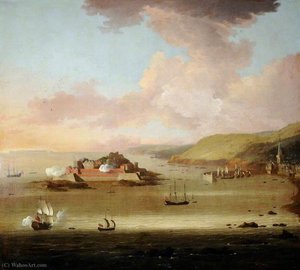
Peter Monamy, 1681 – 1749

Peter Monamy: Cele 71 cele mai faimoase picturi

The Opening of the First Eddystone Lighthouse in 1698 (1703) este cea mai celebră pictură a lui Peter Monamy, păstrată la Yale Center for British Art în New Haven. Shipping in a Calm (1712) și Royal Yacht Becalmed at Anchor (1720) sunt următoarele două opere pe care lumea le cunoaște cel mai bine. Dintr-un total de 72 opere ale lui Peter Monamy din catalogul nostru, iată cele 71 cele mai căutate de colecționari și vizitatori de muzee, incluzând anul, muzeul și povestea fiecăreia.

Clasate în funcție de scorul nostru de popularitate, care combină numărul de căutări, vizitele și comenzile pentru fiecare operă. Actualizat Octombrie 2026. Fiecare capodoperă de pe această pagină poate fi comandată ca o reproducere pictată manual în ulei, de calitate muzeală, sau ca o printare de artă fină, la dimensiunea aleasă de dumneavoastră.

Portretul lui Peter Monamy
Peter Monamy · 1681 – 1749
Născut · Decedat
1681 – 1749, Londra
Mișcare
Neoclassicism
Lucrări din catalogul nostru
72
Cele mai celebre
The Opening of the First Eddystone Lighthouse in 1698 (1703)
Cele mai multe lucrări în
National Maritime Museum

Top 10: cele mai cunoscute picturi ale lui Peter Monamy

Restul clasamentului pentru Peter Monamy, de la 11 la 71

Picturile lui Peter Monamy pe perioade

Subiectele pe care Peter Monamy le-a pictat cel mai des

Cele patru teme care se regăsesc cel mai des printre aceste capodopere, cu cel mai fin exemplu pentru fiecare.

Unde puteți vedea picturile lui Peter Monamy

Cele 8 muzee care dețin cele mai multe dintre picturile de pe această pagină.

Muzee Oraș Lucrări lui Peter Monamy Picturi din această listă
National Maritime Museum, LondraNational Maritime Museum Londra 19 Three English Flagships Becalmed, The Capture of Louisburg, 28 June 1745, The Burning of HMS Royal James at the Battle of Solebay, 28 May 1672
Yale Center for British Art, New HavenYale Center for British Art New Haven 6 The Opening of the First Eddystone Lighthouse in 1698, Shipping in a Calm, Royal Yacht Becalmed at Anchor
Felbrigg Hall, NorwichFelbrigg Hall Norwich 1 Four British Warships and a Fishing-smack in a Strong Wind
Ardress HouseArdress House 1 Stormy Seascape
Colecția Regală, LondraColecția Regală Londra 1 A Calm with a Royal Yacht Firing a Salute
Antony HouseAntony House 1 A Naval Engagement between an English Ship and Barbary Ships
Muzeul Național din Varșovia, VarșoviaMuzeul Național din Varșovia Varșovia 1 Ships on the sea
Metropolitan Museum of Art, New YorkMetropolitan Museum of Art New York 1 Harbor Scene: An English Ship with Sails Loosened Firing a Gun

Peter Monamy de-a lungul deceniilor: o capodoperă pentru fiecare

  1. 1700s
  2. 1710s
  3. 1720s
  4. 1730s

Picturile lui Peter Monamy: întrebări frecvente

Care este cea mai celebră pictură a lui Peter Monamy?Afișează răspunsul

The Opening of the First Eddystone Lighthouse in 1698 (1703), Yale Center for British Art, New Haven. Urmează Shipping in a Calm (1712) și Royal Yacht Becalmed at Anchor (1720).

La ce vârstă a pictat Peter Monamy opera The Opening of the First Eddystone Lighthouse in 1698?Afișează răspunsul

22 ani: The Opening of the First Eddystone Lighthouse in 1698 datează din 1703, iar Peter Monamy s-a născut în 1681.

Care sunt cele mai 10 celebre picturi ale lui Peter Monamy?Afișează răspunsul

The Opening of the First Eddystone Lighthouse in 1698, Shipping in a Calm, Royal Yacht Becalmed at Anchor, An Evening Calm, Four British Warships and a Fishing-smack in a Strong Wind, Stormy Seascape, Three English Flagships Becalmed, A Calm with a Royal Yacht Firing a Salute, An English Royal Yacht Standing Offshore in a Calm și British Men-of-War and a Sloop. Clasamentul de mai sus indică anul și muzeul pentru fiecare.

Câte picturi sunt realizate de Peter Monamy?Afișează răspunsul

Catalogul nostru include 72 lucrări ale lui Peter Monamy, datate între 1703 și 1730.

Unde pot vedea cele mai faimoase picturi ale lui Peter Monamy?Afișează răspunsul

Majoritatea acestora se află în National Maritime Museum (Londra), Yale Center for British Art (New Haven) și Felbrigg Hall (Norwich). Tabelul de mai sus enumeră muzeele pe rând.

În ce perioadă a pictat Peter Monamy cele mai cunoscute opere?Afișează răspunsul

În 1720s: 7 dintre cele 71 lucrări de pe această pagină datează de atunci, printre acestea Royal Yacht Becalmed at Anchor.

Care este cea mai veche și cea mai recentă pictură celebră a lui Peter Monamy?Afișează răspunsul

Cea mai veche lucrare de pe această pagină este din The Opening of the First Eddystone Lighthouse in 1698 (1703), iar cea mai recentă este din An English Royal Yacht Standing Offshore in a Calm (1730).

Ce subiecte a pictat Peter Monamy?Afișează răspunsul

Wars (15), Men (13) și 18th century (9), printre cele 71 opere de pe această pagină.

Din ce curent artistic face parte opera lui Peter Monamy?Afișează răspunsul

Neoclassicism, așa cum demonstrează picturile de pe această pagină.

Ce picturi cu Peter Monamy deține National Maritime Museum?Afișează răspunsul

Three English Flagships Becalmed, The Capture of Louisburg, 28 June 1745 și The Burning of HMS Royal James at the Battle of Solebay, 28 May 1672 sunt printre cele 19 opere de pe această pagină păstrate de National Maritime Museum, Londra.

Unde pot cumpăra o reproducere Peter Monamy?Afișează răspunsul

Da. Orice pictură de pe această pagină poate fi comandată ca o reproducere pictată manual în ulei, de calitate muzeală, sau ca o print de artă fină, în dimensiunea aleasă de dumneavoastră, direct de pe pagina propriei picturi.

Peter Monamy: biografie

A Life Immersed in the Maritime World

Peter Monamy, born in London in 1681, occupies a pivotal position in the development of English marine painting. He wasn’t merely a recorder of ships and seascapes; he was a chronicler of an era—an age defined by Britain's burgeoning naval power and its expanding global reach. His life, deeply intertwined with the maritime world through familial connections to Guernsey in the Channel Islands, instilled within him a lifelong fascination with all things nautical. This wasn’t simply aesthetic appreciation; it was an intimate understanding born from heritage and observation. Monamy didn’t just paint ships, he understood them—their construction, their function, and the lives of those who sailed upon them.

From Decorative Arts to Masterful Seascapes

Monamy's artistic journey began with a solid grounding in the decorative arts. At fifteen years old, he was apprenticed to William Clark, a master painter-stainer specializing in interior decoration and ornamental painting. This apprenticeship wasn’t confined to narrow specialization; it encompassed overdoor paintings, overmantels, and even large-scale house murals—a broad education that honed his technical skills and exposed him to diverse artistic challenges. Significantly, he shared this workshop with James Thornhill, who would later achieve renown as a historical painter, indicating the high caliber of Clark’s tutelage. This early experience in decorative painting likely informed Monamy's meticulous attention to detail and his ability to create visually compelling compositions. It provided him with a foundation upon which he could build his unique style, moving beyond mere ornamentation towards capturing the dynamism and drama of life at sea. The influence of earlier Dutch masters, particularly the Van de Veldes—renowned for their realistic maritime depictions—is evident in Monamy’s work, but he wasn't simply an imitator; he synthesized these influences with his own keen observation and artistic sensibilities.

Capturing the Essence of Naval Life

Monamy’s style is characterized by a remarkable realism and an unwavering focus on detail, particularly in his renderings of ships. He possessed an exceptional ability to depict rigging, sails, and hull construction with accuracy, demonstrating a profound understanding of shipbuilding techniques. However, his paintings weren’t merely technical exercises; they were imbued with a sense of movement and atmosphere. He frequently depicted scenes of action—naval battles, turbulent storms, and the everyday bustle of port life—conveying a palpable sense of drama and excitement. Sovereign of the Seas, for example, stands as a testament to his skill in portraying large warships with meticulous precision, while The Capture of Porto Bello by Admiral Edward Vernon showcases his ability to document significant historical events with both artistic flair and factual accuracy. These weren’t just paintings; they were visual records of Britain's naval triumphs and its growing maritime dominance. His works resonated deeply with a public eager for depictions of national pride and military prowess, securing commissions from both private collectors and government officials.

Notable Achievements & Artistic Legacy

Peter Monamy achieved considerable success during his lifetime as a painter-stainer and marine artist. He gained recognition for his monumental frescoes adorning St Mary’s Church in Bury St Edmunds, demonstrating his mastery of fresco technique and his ability to create grand artistic statements. Furthermore, he produced numerous ship portraits—including *Sovereign of the Seas* and *The Capture of Porto Bello*, commissioned by the East India Company—that exemplify his meticulous attention to detail and his profound understanding of naval craftsmanship. His paintings are held in prestigious collections across Europe, testifying to their enduring appeal and artistic merit. Monamy’s legacy extends beyond individual artworks; he established a distinctive British tradition within marine painting, influencing subsequent generations of artists and shaping the visual culture of his time. He remains an important figure in the history of Baroque realism and English art.

Influences & Artistic Connections

Monamy's artistic development was profoundly shaped by several key influences. Like many artists of his era, he drew inspiration from the Dutch maritime painters—particularly Rembrandt and Jacob van Ruysdael—whose masterful depictions of ships and seascapes established a precedent for realism and dramatic composition. He also benefited from the tutelage of William Clark, whose workshop fostered a collaborative environment that encouraged experimentation and innovation. James Thornhill, with whom Monamy shared this apprenticeship, would later become a celebrated historical painter, demonstrating the high standards of artistic training prevalent in London during Monamy’s formative years. These connections to influential artists underscore Monamy's commitment to excellence and his role as a participant in the broader artistic landscape of eighteenth-century Britain.