A Life Painted in Light: The Story of Patricia Espir
Patricia Espir (1934–1999) was an artist whose canvases shimmered with the warmth of remembered sunlight and the evocative spirit of place. Though her life spanned less than seven decades, she left behind a body of work that continues to resonate with collectors and admirers alike, particularly those drawn to the beauty of Cornwall’s coastal landscapes and intimate still lifes. Born in London, Espir's early years were marked by a unique cultural immersion – childhood spent in Egypt instilled within her a deep appreciation for vibrant color and the play of light on form, influences that would become hallmarks of her artistic style. Returning to England for her education, she initially pursued studies at the Royal Academy Schools under Mike Biddulph, laying a foundation in traditional techniques before forging her own distinctive path. This early exposure to formal training provided a crucial grounding, but it was the emotional resonance of her personal experiences that truly shaped her vision.From Domestic Arts to Artistic Expression
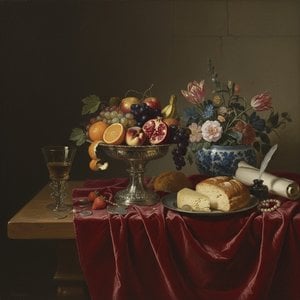
Espir’s journey wasn't one of immediate artistic dedication. In 1953, she studied domestic science at Winkfield Place under Constance Spry and Rosemary Hume, a fascinating detour that led to the publication of “Middle Eastern Cooking” in 1955 and an updated version, “My Family Cookbook”, in 1995. This period reveals a multifaceted personality – a keen observer of life’s details, with a talent for capturing not just visual beauty but also the essence of culture and tradition. However, it was painting that ultimately captured her heart. She embraced an impressionistic style, favoring oils and pastels to create works brimming with color and texture. Her subjects ranged from evocative landscapes and portraits to charming interior scenes, each imbued with a sense of warmth and intimacy. The transition from culinary writing to artistic expression wasn’t abrupt; both pursuits stemmed from a desire to capture the richness and beauty of the world around her, albeit through different mediums.Cornwall as Muse: A Celebration of Coastal Life
Espir's most celebrated works are undoubtedly those depicting Cornwall. She became deeply connected to the region, finding inspiration in its dramatic coastline, rugged cliffs, and ever-changing skies. Her seascapes aren’t merely representations of a place; they are emotional responses to it – capturing the raw power of the Atlantic Ocean, the tranquility of hidden coves, and the subtle nuances of light reflecting on water. Paintings like “Sea View, Cornwall”, “Sea Mist”, and “Atlantic View” exemplify this connection, showcasing her ability to convey atmosphere and mood with remarkable sensitivity. Her palette is often bold and vibrant, yet never garish, instead evoking a sense of joyful energy and optimism. She wasn’t simply painting *what* she saw but rather *how* it felt to be present in those moments, allowing the landscape to speak through her brushstrokes.Exhibitions and Recognition: A Growing Reputation
Throughout her career, Espir exhibited widely, gaining recognition for her unique artistic voice. She showcased her work at prestigious venues such as the Royal Academy Summer Exhibition and the Chelsea Art Show, establishing herself within the British art scene. Solo exhibitions in both the UK and abroad further cemented her reputation, allowing audiences to fully appreciate the breadth and depth of her talent. A particularly significant exhibition took place in 1999 with the Ben Uri Art Society at The Sheridan Russell Gallery, a testament to her growing acclaim shortly before her passing on March 31st of that year. Her work also found its way into public collections, including displays at St George’s Hospital in south London, where her seascapes were chosen for their calming and uplifting qualities – a fitting tribute to the emotional power of her art.Legacy and Historical Significance: Capturing Beauty in Detail
Patricia Espir's legacy lies in her ability to capture beauty in its most fleeting forms. Her paintings are not grand statements or intellectual exercises; they are celebrations of life, light, and the enduring power of nature. As a member of the Artists’ Collecting Society (ACS), she contributed to the ongoing support of artists’ resale rights, demonstrating a commitment to the artistic community beyond her own practice. While perhaps not a household name, Espir's work holds a special place for those who appreciate evocative landscapes and intimate still lifes. Her paintings offer a glimpse into a world seen through the eyes of an artist deeply attuned to the emotional resonance of color, texture, and light – a testament to the enduring power of observation and the transformative magic of artistic expression. Her ability to blend traditional techniques with a uniquely personal vision ensures her continued relevance in the landscape of British art. She remains a captivating figure for those seeking beauty and tranquility within the canvas.Întrebări și răspunsuri
Pot să explorez lucrările lui Patricia Espir în funcție de tehnică?
Pagina Toate tehnicile grupează operele lui Patricia Espir pe tehnici.
Ce stări exprimă operele lui Patricia Espir?
Pagina Galerie pe stări de spirit a artistului prezintă operele lui Patricia Espir organizate în funcție de atmosfera lor.
Pot explora operele lui Patricia Espir pe baza unor cuvinte cheie?
Operele lui Patricia Espir pot fi explorate pe baza cuvintelor cheie, în pagina de După cuvinte cheie a artistului. Fiecare cuvânt cheie grupează operele aferente.