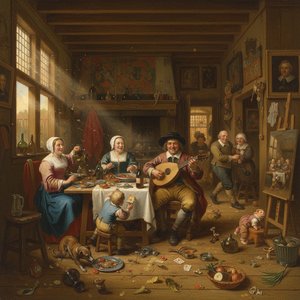
Moses ter Borch: A Shadow of Genius in the Dutch Golden Age
Moses ter Borch, a tragically short-lived figure of the Dutch Golden Age, remains one of the most enigmatic and compelling artists of his era. Born in Zwolle in 1645 into a family steeped in artistic tradition – his father, Gerard ter Borch the Elder, was a respected draftsman and painter, and his sister, Gesina ter Borch, was a celebrated watercolorist – Moses’s life was cut tragically short in 1667 during the Second Anglo-Dutch War. Despite his brief career, he left behind a remarkable body of work, primarily consisting of self-portraits and memorial depictions, offering poignant glimpses into the anxieties and artistic sensibilities of 17th-century Holland. His art is characterized by a haunting realism, an almost melancholic introspection, and a masterful command of light and shadow that belies his youth.
Early Life and Artistic Foundations
Moses’s early life was profoundly shaped by the artistic environment he inherited. His father, Gerard ter Borch the Elder, instilled in him a rigorous training in drawing and painting, while his sister, Gesina ter Borch, provided an additional layer of artistic influence through her watercolor work. Notably, Gesina, recognizing Moses's talent, served as both a model and a collaborator on several paintings, particularly those depicting ladies in satin – works that showcase the family’s refined aesthetic sensibilities. The influence of his father’s meticulous draftsmanship combined with Gesina’s delicate color palettes created a unique artistic lineage within the ter Borch family. It's believed he also benefited from the artistic education afforded to women of his social standing, a rare opportunity in that era.
A Portraitist of His Own Time
Ter Borch is primarily known for his self-portraits and memorial portraits – works that offer an intimate window into the artist’s psyche and the cultural values of his time. Unlike many of his contemporaries who embraced grand, heroic subjects, ter Borch focused on capturing the quiet dignity and vulnerability of individuals, often depicting them in moments of reflection or sorrow. His self-portraits are particularly striking; they reveal a man wrestling with mortality, grappling with artistic ambition, and confronting his own identity. The subtle shifts in expression – a fleeting sadness, a thoughtful gaze – convey a depth of emotion rarely found in portraits of the period. He frequently depicted himself alongside deceased family members, creating poignant memorial scenes that served as both personal tributes and reflections on the transient nature of life.
Technique and Style
Ter Borch’s artistic style is characterized by a remarkable sensitivity to light and shadow, a technique he likely honed under his father's tutelage. He employed a muted palette – predominantly browns, grays, and blacks – creating an atmosphere of subdued intensity. His brushwork is meticulous yet fluid, capturing the texture of fabrics, the sheen of skin, and the subtle nuances of expression with remarkable precision. He was a master of chiaroscuro, using dramatic contrasts between light and dark to heighten the emotional impact of his compositions. While influenced by the prevailing artistic trends of the Dutch Golden Age, ter Borch developed a distinctly personal style—one that prioritized psychological depth over ostentatious display.
Tragic End and Lasting Legacy
Moses ter Borch’s life was tragically cut short in 1667 during the Battle of Landguard Fort, a pivotal engagement in the Second Anglo-Dutch War. He died from wounds sustained in battle, a poignant end for an artist who had already demonstrated such promise. Despite his untimely death, ter Borch's work continues to fascinate and intrigue art historians and collectors alike. His self-portraits and memorial portraits offer a rare glimpse into the inner lives of individuals during a transformative period in European history. His legacy lies not only in his artistic skill but also in the haunting beauty and emotional resonance of his creations—a testament to the enduring power of a brief, brilliant life. He is now recognized as one of the most important, albeit tragically overlooked, artists of the Dutch Golden Age.