A Renaissance Visionary: The Illusionistic World of Michele di Giovanni da Fiesole
In the heart of the Florentine Renaissance, a period defined by the rebirth of classical ideals and the mastery of perspective, there existed a singular talent capable of blurring the very boundaries between stone and spirit. Michele di Giovanni da Fiesole, an artist whose name evokes the ancient, sun-drenched hills of Tuscany, carved a unique niche in the history of art through his unparalleled ability to manipulate perception. While much of his biographical narrative remains shrouded in the mists of the fifteenth century, his artistic legacy is vibrantly clear. Born around 1418 in the historic town of Fiesole, he emerged as a master of the decorative arts, specifically renowned for his breathtaking fireplace paintings that transformed cold architectural elements into windows of profound beauty.
The formative years of di Giovanni are a subject of scholarly intrigue, yet the echoes of greatness suggest a lineage of profound influence. It is widely believed by historians that he may have honed his craft within the prestigious workshop of Andrea Mantegna in Mantua. This connection would have provided him with a rigorous foundation in the principles of linear perspective and the classical idealism that characterized the era's most significant movements. By absorbing these advanced techniques, di Giovanni was able to move beyond mere ornamentation, developing a style that synthesized the structural rigor of the early Renaissance with a poetic, almost magical, sense of atmosphere.
The Mastery of Trompe l'Oeil and Architectural Illusion
What truly distinguishes the work of Michele di Giovanni is his revolutionary command of trompe l'oeil—the art of "deceiving the eye." His primary medium was not merely the canvas, but the very architecture of the Florentine domestic space. He specialized in creating immersive environments, most notably through his celebrated fireplace paintings. These were not simply depictions of hearths; they were meticulously crafted illusions designed to mimic the weight and texture of precious marble or carved stone. Through a masterful manipulation of light and shadow, he could make a flat wooden panel appear as a heavy, three-dimensional architectural feature, lending an air of monumental grandeur to the private villas of the era's elite.
This technical prowess served a higher purpose than mere trickery. In his hands, the illusion of depth and material became a vehicle for narrative and emotion. His works often featured:
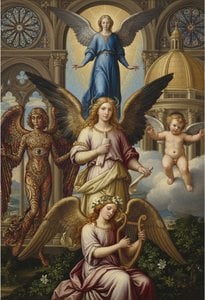
- Celestial Imagery: The integration of delicate angels and divine figures that seemed to float within the architectural recesses he created.
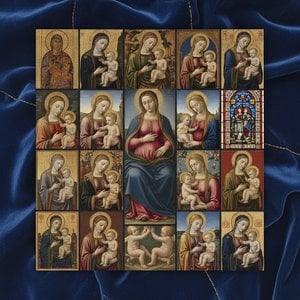
- Sacred Subjects: Tender depictions of the Madonna and Child, which brought a sense of quiet sanctity to the domestic hearth.
- Classical Elegance: A seamless blend of religious devotion and the burgeoning humanist interest in classical aesthetics.
Legacy and the Florentine Elite
The historical significance of Michele di Giovanni da Fiesole is inextricably linked to the patronage of the most powerful families in Italy. His fame was cemented through his collaborations with the Medici, the architects of Florentine political and cultural dominance. By decorating the villas and palaces of such illustrious patrons—including notable works for the Villa Castello and Palazzo Pretorio—di Giovanni helped define the aesthetic standard of Renaissance luxury. His ability to synthesize artistic innovation with the opulent tastes of the ruling class ensured that his work was not merely seen, but experienced as an integral part of the lived environment.
Though his known output is relatively modest, consisting of approximately thirty to forty surviving works, each piece stands as a testament to a period of intense creative transformation. He remains a vital figure for understanding how the Renaissance moved from the flat, symbolic language of the Middle Ages into a sophisticated era of spatial complexity and sensory realism. Today, his legacy lives on in the study of illusionistic painting, reminding us of a time when art possessed the power to turn a simple room into a gateway to the divine.