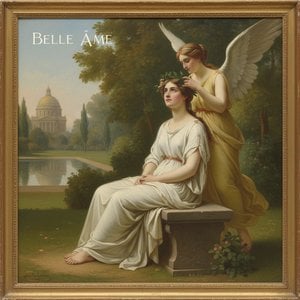
Jules Cyrille Cavé: A Painter of Delicate Symbolism
Jules Cyrille Cave (4 January 1859 – 12 May 1949) was a French Academic painter whose oeuvre is characterized by an exquisite sensitivity to light and color, coupled with a profound engagement with mythological themes and pastoral landscapes. Despite limited biographical information available about his personal life, Cavé’s artistic legacy resides in his masterful depictions of nymphs, flowers, and serene figures—works that exemplify the tenets of Symbolism and Gothic art prevalent during his time. His paintings are instantly recognizable for their ethereal beauty and profound emotional resonance, cementing his place as a pivotal figure within the Symbolist movement.
Early Life & Training
Born in Paris, details regarding Cavé's upbringing remain scarce—a characteristic of many artists whose lives were overshadowed by their creative pursuits. However, he commenced his artistic education at the Académie Julian in 1877, immersing himself in the tutelage of luminaries like William Bouguereau and Tony Robert-Fleury. Completing his studies in 1879 solidified his commitment to the Academic tradition, a stylistic choice profoundly influenced by Bouguereau’s meticulous realism and idealized representations of human form. This formative period instilled in Cavé a disciplined approach to technique and an unwavering belief in the power of observation—principles that would permeate his entire artistic career.
Influence & Artistic Style
Cavé's artistic development was inextricably linked to Bouguereau’s influence—a connection that extended beyond mere mentorship. Like Bouguereau, Cavé favored depictions of pastoral scenes populated by graceful women engaged in simple activities, such as gathering daisies. This stylistic preference aligns perfectly with the broader Symbolist movement, which sought to convey emotional and spiritual truths through evocative imagery rather than literal representation. Bouguereau’s meticulous attention to detail and his masterful use of chiaroscuro—the interplay between light and shadow—served as a guiding force for Cavé, shaping his artistic vision and informing his compositional choices. He skillfully captured the subtle nuances of emotion and atmosphere, creating canvases that transcended mere visual spectacle.
Notable Works
Among Cavé’s most celebrated paintings is “Martyr in the Catacombs,” completed in 1886. This haunting piece captures a palpable sense of solemn beauty—a testament to Cavé's ability to infuse his canvases with psychological depth and symbolic resonance. The painting exemplifies the Gothic aesthetic, prioritizing atmosphere and emotional intensity over precise anatomical detail. Unlike many artists of his era who prioritized scientific accuracy, Cavé deliberately embraced ambiguity and suggestion, inviting viewers to contemplate profound themes of faith and suffering. Critics lauded its masterful use of color and texture, recognizing it as a cornerstone of Symbolist art.
Recognition & Legacy
A related work from 2002, “Gathering Daisies,” featuring the same model as “Martyr in the Catacombs,” achieved considerable acclaim at Christie’s London auction house. This painting underscores Cavé's enduring fascination with idealized femininity and his unwavering adherence to Bouguereau’s stylistic precepts—a stylistic lineage that continues to inspire artists today. His contribution to French Symbolism—particularly his exploration of mythological narratives—continues to resonate with scholars and collectors alike, securing his place as a significant voice within the artistic landscape of the late nineteenth century. Jules Cyrille Cavé's enduring legacy resides not only in his stunning visual creations but also in his unwavering dedication to artistic principles that prioritized emotion and spiritual contemplation.