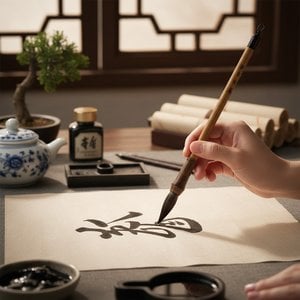
Jin Nong (1687 – 1764): The Eccentric Poet Painter
Jin Nong, born in Hangzhou in 1687, stands as a singular figure in Chinese art history—a celebrated painter and calligrapher who defied convention and embraced an unconventional path to artistic success. Unlike many artists of his era striving for patronage and acclaim within the imperial court, Jin Nong cultivated a distinctive style rooted in amateur scholarship and fueled by a desire for independence. His legacy resides not merely in his exquisite paintings but also in his pioneering exploration of self-portraiture and his embrace of collaborative techniques that blurred the lines between art and commerce.
- Early Life & Influences: Jin Nong’s upbringing fostered an appreciation for traditional Chinese culture, particularly Confucian ethics and Daoist philosophy. These influences profoundly shaped his artistic sensibilities, informing his meticulous attention to detail and his symbolic use of imagery—a hallmark of the Shu Fa style.
- Yangzhou Residence & Artistic Practice: Moving to Yangzhou in his sixties, Jin Nong established a workshop where he produced ink stones and lanterns alongside his disciples. This entrepreneurial spirit allowed him to sustain himself financially while pursuing his artistic passions, prioritizing painting over formal bureaucratic roles.
- The Mei Blossom Motif: Jin Nong’s fame stemmed largely from his depictions of mei blossoms—fragile flowers symbolizing resilience and renewal—which became immensely popular in Yangzhou during his lifetime. These paintings exemplify the Shu Fa style's emphasis on capturing fleeting beauty and conveying profound philosophical ideas.
- Technique & Collaboration: Jin Nong famously employed ghost painters, assistants who executed brushstrokes under his direction, maximizing productivity and ensuring artistic consistency. Luo Ping served as his editor and collaborator, meticulously documenting Jin Nong’s oeuvre—a testament to the artist's commitment to preserving his vision.
- Legacy & Historical Significance: Jin Nong is recognized as one of the Eight Eccentrics of Yangzhou, a group of artists who challenged societal norms and pursued artistic endeavors with unwavering dedication. His self-portraits represent an unprecedented innovation in Chinese art, marking a pivotal moment in exploring psychological depth within visual representation. He remains an enduring symbol of artistic integrity and intellectual curiosity—a figure whose work continues to inspire admiration for its beauty and philosophical resonance.
Notable Paintings & Artistic Style
Jin Nong’s paintings are characterized by their meticulous execution, masterful use of color palettes (primarily monochrome), and profound symbolic depth. He adhered strictly to the Shu Fa style—a method emphasizing simplicity and capturing the essence of nature—resulting in landscapes imbued with serene tranquility and portraits conveying introspective contemplation. Recurring motifs included mei blossoms, bamboo, chrysanthemums, and plum trees – each carrying specific connotations related to Confucian virtues like integrity, righteousness, benevolence, and wisdom. His compositions often incorporated elements of Buddhist iconography, reflecting his spiritual beliefs and contributing to the broader artistic landscape of Qing Dynasty China.
- FOUR POEMS: This scroll exemplifies Jin Nong’s signature style—a monochromatic depiction of mei blossoms conveying profound philosophical ideas.
- Ink Play: Demonstrates Jin Nong's skill in capturing fleeting beauty and reflecting Daoist principles.
Influence & Artistic Innovation
Jin Nong’s pioneering exploration of self-portraiture stands apart from the artistic conventions of his time, establishing a precedent for psychological realism within Chinese painting. His collaborative approach—utilizing ghost painters and employing Luo Ping as editor—challenged established practices and underscored the importance of artistic integrity. Furthermore, Jin Nong's unwavering devotion to Shu Fa style solidified its position as one of China’s most influential artistic traditions, inspiring subsequent generations of artists to prioritize simplicity, contemplation, and symbolic representation. His work continues to resonate with scholars and art enthusiasts alike, cementing his place as a visionary artist who reshaped the boundaries of Chinese visual culture.