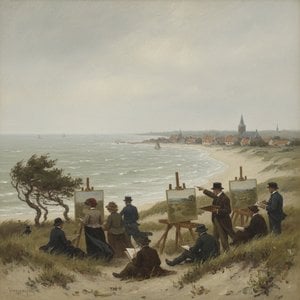
Jan Weissenbruch: Un maestru al peisajelor atmosferice olandeze
Primii ani și începuturile artistice
- Naștere: 19 iunie 1824, Haga, Țările de Jos.
- Jan Weissenbruch s-a născut într-o familie cu o puternică tradiție artistică; tatăl său, Johannes Weissenbruch, a fost pictor și colecționar de artă.
- Expunerea timpurie la operele unor artiști precum Andreas Schelfhout și Bartholomeolomeus van Hove, prin intermediul colecției tatălui său, i-a influențat profund viziunea artistică.
- La vârsta de șaisprezece ani, a început să primească lecții de desen de la Johannes Low, iar în 1843 a urmat cursuri de seară susținute de Bartholomeus van Hove la Academia de Artă din Haga.
Dezvoltarea artistică și influențele primare
- Influențe timpurii: Primele lucrări ale lui Weissenbruch prezentau o asemănare puternică cu stilul Romantic al lui Andreas Schelfhout.
- Impactul lui Ruisdael: El a admirat profund pictorul de peisaje din secolul al XVII-lea, Jacob van Ruisdael, ale cărui opere le-a studiat la muzeul Mauritshuis din Haga. Această admirație i-a inspirat cele magnifice și dramatice ceruri pe care le-a pictat ulterior.
- Evoluția stilului: Cu trecerea timpului, utilizarea culorii de către Weissenbruch a devenit mai sobră, iar aplicarea vopselei a devenit mai largă și mai liberă, rezultând peisaje cu o atmosferă tot mai profundă.
Caracteristici cheie și stil artistic
- Peisaje atmosferice: Weissenbruch este renumit pentru capacitatea sa de a surprinde nuanțele subtile ale luminii și ale atmosferei în picturile sale.
- Maestrul acuarelei: El a fost remarcat în special pentru abilitățile sale excepționale în tehnica acuarelei, creând scene delicate și pline de evocare.
- Reprezentant al Școlii de la Haga: Opera sa întruchipează caracteristicile Școlii de la Haga – un accent pus pe reprezentări realiste ale peisajelor olandeze și ale vieții cotidiene.
Lucrări notabile și expoziții
- A debutat în lumea artei în 1847, prin prima sa participare la Expoziția Maistrilor Viinzi.
- Membru fondator: Weissenbruch a fost unul dintre fondatorii Pulchri Studio, o societate de artiști de prestigiu din Haga.
- Recunoaștere timpurie: În 1849, la doar doi ani după prima sa expoziție, Muzeul Teylers din Haarlem a achiziționat unul dintre peisajele sale panoramice.
Ulteriorii ani și moștenirea artistică
- Influența Barbizon: În anul 1900, la vârsta de șaptezeci de ani, Weissenbruch a călătorit la Barbizon, în Franța, unde a pictat faimoasa sa lucrare „Vederea pădurii de lângă Barbizon”.
- Pictatul în aer liber: El prefera să lucreze în aer liber, găsind inspirație în mediul rural din împrejurimile Hagii.
- Moarte și pomenire: Jan Weissenbruch a decedat în 1903, lăsând în urmă o moștenire ca unul dintre cei mai buni reprezentanți ai Școlii de la Haga. Per cuvintele sale delicate și paleta cromatică sobră continuă să fascineze iubitorii de artă și astăzi.
Semnificația istorică
- Tradiția peisajului olandez: Weissenbruch a jucat un rol vital în continuarea tradiției olandeze a picturii de peisaj, construind pe moștenirea unor maeștri anteriori precum Ruisdael.
- Contribuția Școlii de la Haga: Opera sa a ajutat la definirea principiilor estetice și filosofice ale Școlii de la Haga, punând accent pe realism, atmosferă și conexiunea cu natura.
- Influență durabilă: El rămâne o figură importantă în istoria artei olandeze, inspirând generații de pictori de peisaje prin reprezentările sale sensibile ale lumii naturale.
Întrebări și răspunsuri
Pot explora operele lui Jan Weissenbruch pe teme?
Operele lui Jan Weissenbruch pot fi explorate pe temă pe pagina Atlas pe subiecte a artistului.
Există o relatare cronologică a carierei lui Jan Weissenbruch?
O relatare cronologică a creației lui Jan Weissenbruch este disponibilă pe pagina Cronica a artistului, unde operele de artă se succed în ordinea creației lor, capitol cu capitol.
Care sunt locul și anul nașterii lui Jan Weissenbruch?
Jan Weissenbruch s-a născut în La Haia, în anul 1824.
De unde este Jan Weissenbruch?
Jan Weissenbruch s-a născut în Olanda.
Unde pot vedea toate operele lui Jan Weissenbruch?
Toate lucrările lui Jan Weissenbruch de pe acest site pot fi vizualizate în pagina Toate operele de artă a artistului.
Pot să explorez lucrările lui Jan Weissenbruch în funcție de starea de spirit?
Pagina Spațiu pe stări de spirit a artistului prezintă operele lui Jan Weissenbruch organizate în funcție de atmosfera lor.
În ce oraș și țară s-a născut Jan Weissenbruch?
Jan Weissenbruch s-a născut în La Haia, în Olanda.