Helene Schjerfbeck – Artvee
Helene Schjerfbeck (1862–1946) was a Finnish painter. A modernist painter, she is known for her realist works and self-portraits, and also for her landscapes and still lifes. Throughout her long life, her work changed dramatically beginning with French-influenced realism and plein air painting. It gradually evolved towards portraits and still life paintings. At the beginning of her career she often produced historical paintings, such as *The Wounded Warrior in the Snow*(1880), *At the Door of Linköping Jail in 1600*(1882) and *The Death of Wilhelm von Schwerin*(1886). Historical paintings were usually the realm of male painters, as was experimentation with modern influences and French radical naturalism. As a result, her works from mostly the 1880s did not receive a favourable reception until later in her life.Early Life
Helena Sofia Schjerfbeck was born on July 10, 1862, in Helsinki, Finland (then an autonomous Grand-Duchy within the Russian Empire), to Svante Schjerfbeck (an office manager) and Olga Johanna (née Printz). She had one surviving brother, Magnus Schjerfbeck(1860–1933), who went on to become an architect. In 1866, when she was four she fell down some stairs injuring her hip, which prevented her from attending school and left her with a limp for the rest of her life. She showed talent at an early age, and at eleven years old in 1873 she was enrolled at the Finnish Art Society School of Drawing. Her fees were paid by Adolf von Becker, who saw promise in her. At this school Schjerfbeck met Helena Westermarck. These two, and artist Maria Wiik and lesser known Ada Thilén had a close friendship during their lives.From Academic Roots to Modernist Visions
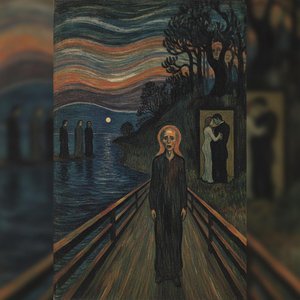
Schjerfbeck’s initial artistic explorations were firmly rooted in academic realism, reflecting the dominant European trends of the late 19th century. Early works like *The Wounded Warrior in the Snow* and *At the Door of Linköping Jail in 1600,* while demonstrating technical proficiency, didn't immediately garner acclaim. These historical paintings, ambitious in scope, were somewhat out of step with prevailing tastes and perhaps more significantly, a genre traditionally reserved for male artists. A period of study in Paris under Léon Bonnat at the Académie Colarossi exposed her to Impressionism and Naturalism, subtly influencing her palette and approach. However, it was her time in Brittany during the mid-1880s that truly began to shape her unique artistic voice. Here, amidst the rugged landscapes and simple lives of the Breton people, she painted scenes like *Funeral in Brittany,* a hauntingly beautiful depiction showcasing her growing skill in capturing realistic detail and atmosphere. But Schjerfbeck was not destined to remain within the confines of established styles. Around 1905, a dramatic transformation began, propelling her towards Expressionism and abstraction. Her canvases became increasingly characterized by simplified forms, bold colors, and an emotional intensity that resonated with the anxieties and uncertainties of the modern age. This shift wasn’t abrupt; it was a gradual distillation of years of observation, experimentation, and deeply personal reflection. Influences like James McNeill Whistler and Edvard Munch can be discerned in her later work, but Schjerfbeck ultimately forged a path distinctly her own.Themes of Isolation and the Inner Life
Recurring themes permeate Schjerfbeck’s oeuvre: isolation, introspection, the human condition, and the relentless passage of time. Her numerous self-portraits are particularly revealing, offering an unflinching gaze into her evolving artistic style and personal life. These weren't merely exercises in technical skill; they were profound explorations of identity, aging, and the complexities of the inner world. As she aged, her self-portraits became increasingly abstract, stripping away extraneous detail to reveal the essential essence of the subject – a testament to her mastery of form and color. *The Lace Shawl*(1920) exemplifies this period, an Expressionist portrait that captures not just a likeness but a mood, a sense of quiet dignity tinged with melancholy. Even in her landscapes and still lifes, a similar emotional resonance is present. Her paintings aren’t simply representations of the external world; they are imbued with a psychological depth that invites viewers to contemplate their own experiences and emotions. *Drying Laundry,* an early 1900s watercolor, beautifully captures Finnish domesticity but also evokes a sense of solitude and quiet contemplation.Recognition and Lasting Legacy
For much of her life, Schjerfbeck struggled for widespread recognition, particularly for her later, more experimental work. The art world wasn’t always receptive to her bold innovations, and it was only through the dedicated support of art dealer Gösta Stenman, beginning in 1913, that her career began to gain momentum. Her first solo exhibition in 1917 marked a turning point, finally bringing her work to public attention. Recognition gradually increased during her later years, both in Finland and Scandinavia. Today, Helene Schjerfbeck is rightfully celebrated as one of Finland’s most important modernist painters. Her unique artistic voice – a compelling blend of realism, expressionism, and abstraction – has secured her place among the leading figures of Nordic art. The 2020 film *Helene,* based on her life, further popularized her story and introduced her work to a new generation of audiences. She lived primarily in Hyvinkää after 1902, dedicating herself fully to painting and reading, continuing to experiment with techniques until her death in 1946. Her legacy endures not only through the enduring power of her paintings but also as an inspiration to artists who dare to challenge conventions and explore the depths of human experience.Întrebări și răspunsuri
De unde este Helene Șcerfbäck?
Helene Șcerfbäck s-a născut în Finlanda.
Există o relatare cronologică a carierei lui Helene Șcerfbäck?
Cariera lui Helene Șcerfbäck se desfășoară etapă cu etapă pe pagina Cronologie a artistului: o cronologie orizontală a operelor de artă, grupate în capitole reprezentative ale perioadelor de activitate.
Câte opere de artă ale lui Helene Șcerfbäck pot fi vizualizate în catalog?
Puteți explora cele 127 de opere de artă de opere ale lui Helene Șcerfbäck pe pagina Toate operele de artă.