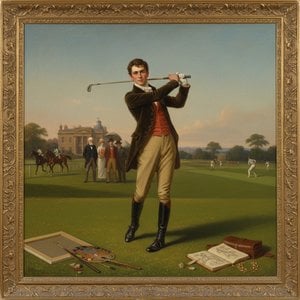
Gustave Jacquet: Elegance and Symbolism in Parisian Portraiture
Gustave Jacquet (1846 – 1909) stands as a quiet yet significant figure within the landscape of late nineteenth-century French art, particularly renowned for his exquisitely rendered portraits that captured the spirit of Belle Époque Paris. Unlike many of his contemporaries who embraced grand narratives and dramatic expressions, Jacquet’s artistic vision prioritized subtlety and nuance—a deliberate choice that resulted in images imbued with a profound sense of grace and psychological depth. His oeuvre is characterized by an unwavering commitment to capturing not merely likeness but also the inner life of his subjects, establishing him as a master of tonal portraiture and a champion of Impressionistic ideals.- Early Life and Artistic Training: Born in Paris in 1846, Jacquet’s formative years were marked by exposure to the artistic ferment of his time—a period witnessing the burgeoning influence of Impressionism and Symbolism on French culture. His father, Alfred Eugène Gustave Jacquet, was a celebrated photographer, fostering an appreciation for visual precision and meticulous observation that would undoubtedly inform Jacquet's own artistic endeavors. Crucially, he received instruction from Émile Pessard at the Conservatoire de Paris, where he honed his compositional skills under the guidance of a pedagogue deeply rooted in Romantic tradition yet receptive to emerging stylistic trends.
- The Influence of Impressionism: Jacquet’s artistic trajectory intersected decisively with the revolutionary aesthetic championed by Claude Monet and Pierre-Auguste Renoir. While eschewing overtly flamboyant brushstrokes, he absorbed the Impressionists' preoccupation with capturing fleeting moments of light and atmosphere—a technique that subtly permeated his portraits. This influence is particularly evident in his use of tonal gradations and delicate color palettes, mirroring the Impressionist desire to convey not just what was seen but also how it felt.
- Notable Portraits and Artistic Style: Jacquet’s artistic reputation rests primarily upon a collection of portraits depicting prominent figures of Parisian society—aristocrats, intellectuals, and artists alike. Among his most celebrated works are depictions of Madame Roland, a symbol of republican ideals during the July Days of 1848, and portraits of Eugène Delacroix, reflecting the artist’s profound admiration for Romantic grandeur. Jacquet's distinctive style is characterized by an uncanny ability to convey emotion through subtle gestures and expressions—a testament to his meticulous attention to detail and his masterful command of tonal harmony. He skillfully utilized chiaroscuro—the interplay between light and shadow—to sculpt form and imbue his subjects with psychological complexity.
- Symbolism and Artistic Vision: Beyond Impressionistic influences, Jacquet’s artistic vision embraced elements of Symbolism, reflecting the broader intellectual currents shaping French culture at the turn of the century. Like many Symbolist painters, he sought to transcend mere representation—aiming instead to evoke moods and emotions through evocative imagery and symbolic color combinations. His canvases often convey a sense of melancholy contemplation, hinting at hidden depths beneath outward appearances.
- Legacy and Historical Significance: Gustave Jacquet’s contribution to French art history resides not in grand pronouncements or revolutionary innovations but rather in his unwavering dedication to capturing the essence of human experience—a pursuit that yielded portraits of exceptional beauty and psychological insight. His work exemplifies the understated elegance characteristic of Belle Époque Paris, encapsulating a particular sensibility attuned to nuance and subtlety. Today, Jacquet’s paintings continue to resonate with viewers captivated by their timeless grace and profound emotional resonance—solidifying his place as an artist who quietly yet powerfully shaped the visual culture of his era.