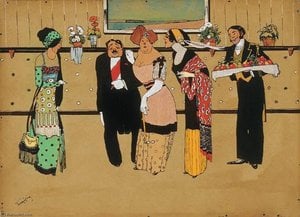
Geza Farago: A Hungarian Symbolist Visionary
Geza Farago (1877–1928) stands as one of the most prominent figures in early Hungarian poster art and a celebrated Symbolist painter. His artistic legacy transcends mere visual representation; it embodies a profound engagement with philosophical ideas and emotional depth, characteristics that define his distinctive style and enduring influence on Hungarian art history. Born in Budapest, Hungary, Farago’s formative years were marked by exposure to the burgeoning artistic milieu of Prague and Vienna – environments that nurtured his talent and propelled him toward groundbreaking explorations of form and color.
- Early Influences: Faragó's artistic journey commenced under the tutelage of Ferenc Újházy, establishing a foundation in classical drawing techniques. Subsequently, he honed his skills at the textile factory, gaining practical experience alongside theoretical studies at the Colarossi Academy and Atelier Artistique Delaye.
- Parisian Engagement: A pivotal moment arrived in 1898 when Faragó relocated to Paris, immersing himself in the vibrant artistic atmosphere of the Belle Époque. He studied under Mucha, absorbing the stylistic principles of Art Nouveau – a movement characterized by flowing lines, floral motifs, and opulent ornamentation. This formative period solidified his commitment to decorative art and cemented his connection with Symbolist aesthetics.
- Collaboration with Mucha: Faragó’s association with Alphonse Mucha proved invaluable, fostering a dialogue between artistic traditions and shaping his unique visual language. Together they explored themes of femininity, mythology, and dreamlike landscapes—elements that would become hallmarks of Farago's oeuvre.
Faragó’s artistic output extended beyond the realm of posters; he actively participated in theatrical productions as a scenic designer, contributing to iconic Hungarian operas and ballets. His meticulous attention to detail and his masterful command of color and composition demonstrated his versatility as an artist—a quality that cemented his reputation as a multifaceted creative force. During World War I, Faragó dedicated himself to designing propaganda posters, skillfully blending artistic expression with civic responsibility. He utilized the expressive power of visual imagery to convey messages of patriotism and resilience during a turbulent period in Hungarian history.
- Poster Artistry: Faragó’s contribution to Hungarian poster art is unparalleled. His designs captivated audiences with their humor, caricature, and striking decorative elements—drawing inspiration from Japanese woodcuts and embracing the stylistic innovations of the Symbolist movement. Notable posters include “The Modern Eve,” “Slim Woman with a Cat,” “Paradise Lost,” and numerous depictions of everyday life rendered in exquisite detail.
- Notable Paintings: Faragó’s paintings showcased his profound understanding of Symbolist principles, prioritizing emotional resonance over literal representation. His canvases explored themes of mythology, spirituality, and psychological introspection—reflecting the intellectual currents of his time. Among his celebrated works are “A Symbolista” and “Eva”.
Faragó's artistic legacy continues to inspire contemporary artists and scholars alike. His pioneering approach to decorative art—characterized by meticulous craftsmanship and imaginative storytelling—established him as a cornerstone of Hungarian cultural heritage. Today, Faragó’s paintings reside in the collection of the Hungarian National Gallery, serving as enduring reminders of his visionary talent and unwavering devotion to artistic excellence. He remains an unforgettable figure in Hungarian art history, whose distinctive style and profound philosophical engagement continue to resonate with audiences worldwide.