Early Life and Artistic Awakening in the Tyrolean Landscape
Franz von Defregger’s story begins amidst the dramatic beauty of Tyrol, Austria – a region steeped in history, folklore, and rugged mountain landscapes. Born on April 30th, 1835, in Strohn, a small hamlet nestled within the foothills of the Alps, his early life was profoundly shaped by the rhythms of rural existence. His parents, Michael and Maria Defregger, were farmers – hardworking individuals who instilled in their children a deep connection to the land, a respect for tradition, and an appreciation for the simple pleasures of country life. However, this idyllic setting was soon disrupted by tragedy; when Franz was still young, a devastating typhoid epidemic swept through the region, claiming the lives of his mother and two sisters. This profound loss cast a long shadow over his childhood, leaving him with a sense of vulnerability and a yearning for solace – a need that would ultimately find expression in his art. Despite these sorrows, a spark of creativity began to flicker within him. He displayed an early aptitude for music, finding comfort and release in playing the flugelhorn within local bands, and simultaneously developed a natural talent for drawing and woodcarving, skills he honed through practical work alongside his father on the family farm. These nascent artistic pursuits were entirely self-taught, born from keen observation of the world around him – the weathered faces of farmers, the intricate patterns of snowflakes, the majestic sweep of the mountain ranges. The decision to pursue art professionally wasn’t a sudden one; it was a deliberate act of courage and conviction, fueled by a desire to transform personal experience into something meaningful and enduring.Formal Training and the Embrace of Munich
Recognizing his burgeoning talent, Franz's father, despite facing considerable hardship, made a bold decision: he sold the family farm in 1858, sacrificing their financial security for the uncertain path of an artist. This act of faith signaled not just a career change but a profound commitment to his artistic aspirations. Franz then embarked on a journey to Innsbruck, where he apprenticed under the esteemed sculptor Michael Stolz – a move that proved pivotal in shaping his technical skills and understanding of form. However, Stolz quickly recognized that Franz’s true calling lay in painting, skillfully guiding him towards an introduction to Karl von Piloty, a highly influential figure at the Academy of Fine Arts in Munich. This marked a transformative moment in Defregger's artistic development; from 1860 to 1861, he attended preparatory classes under Hermann Dyck, laying the foundation for his formal artistic education. A subsequent period of study at the École des Beaux-Arts in Paris (1863-1865) exposed him to the vibrant and experimental atmosphere of the Barbizon school – a movement characterized by its emphasis on plein air painting, naturalistic landscapes, and a rejection of academic conventions. The Barbizon painters’ focus on capturing the essence of light and atmosphere profoundly influenced Defregger's style, imbuing his later works with a sense of luminosity and emotional depth. Returning to Munich, he formally enrolled at the Academy, immersing himself in the traditions of the Munich School – an artistic collective known for its meticulous realism, historical narratives, and celebration of Bavarian identity.A Style Rooted in Tyrolean Life and Historical Narrative
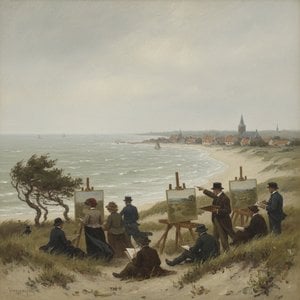
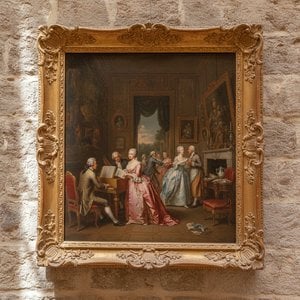
Franz von Defregger’s artistic style is instantly recognizable for its deeply rooted connection to his native Tyrol and its inhabitants. He didn't simply paint landscapes; he painted *life* – the everyday routines, the joys and sorrows, the triumphs and struggles of the people who called this rugged region home. His paintings are imbued with a remarkable sense of realism, capturing not just physical appearances but also the subtle nuances of emotion, social interaction, and cultural identity. He was particularly adept at portraying Tyrolean peasants – farmers, woodcutters, musicians, and storytellers – rendering them with dignity, empathy, and an unwavering respect for their traditions. This fascination with rural life extended to historical subjects as well; Defregger frequently depicted scenes from the Tyrolean national uprising of 1809, a pivotal moment in the region’s history, particularly focusing on the heroic figure of Andreas Hofer – a symbol of resistance and independence. Works like *Andreas Hofer mit seinen Beratern in Innsbruck* (1879) are not merely historical accounts; they are powerful narratives that celebrate courage, loyalty, and the enduring spirit of the Tyrolean people. The influence of the Barbizon school is evident in his landscapes – capturing the atmospheric beauty of the Tyrolean mountains and valleys with a masterful understanding of light and color. However, Defregger’s true genius lay in his ability to seamlessly blend realism with narrative storytelling, creating works that are both visually stunning and emotionally resonant.Recognition, Legacy, and Enduring Appeal
Franz von Defregger's talent quickly gained recognition within the artistic circles of Munich. In 1878, he achieved a significant milestone by becoming a professor of history painting at the Munich Art Academy – a position he held until 1910, shaping the artistic development of countless aspiring painters. His works were exhibited widely throughout Germany and Austria, garnering critical acclaim and attracting a devoted following. He received numerous accolades for his contributions to art and culture, including the Order of Merit of Bavaria (1883) and the Prussian Order of Merit for Science and the Arts – testament to his enduring influence. Notably, he established both a private home in Munich (the Defregger House) and a residence in Bolzano (Villa Defregger), further cementing his connection to his homeland. Even today, streets are named in his honor in Vienna, Bolzano, and Gries am Brenner – a lasting tribute to the esteem in which he was held by the people of Tyrol. Franz von Defregger passed away on January 2nd, 1921, leaving behind a rich artistic legacy that continues to captivate viewers with its evocative depictions of Tyrolean life, historical narratives, and enduring celebration of the region’s spirit. His paintings remain cherished for their honesty, emotional depth, and ability to transport us back in time to a world of simple pleasures, heroic deeds, and profound human connection.Întrebări și răspunsuri
Pot studia utilizarea culorii de către Franz Defregger în toate lucrările sale?
Genoma Paletei lui Franz Defregger este o pagină care prezintă profilul cromatic al întregii creații a artistului.
Sub ce alte nume este cunoscut/ă Franz Defregger?
Franz Defregger apare sub numele alternative Franz von Defregger.
Pot să explorez lucrările lui Franz Defregger în funcție de mișcare?
Operele lui Franz Defregger pot fi vizualizate pe baza stilului artistic în pagina Toate mișcările a artistului.