Frans Vervloet: A Venetian Visionary
Frans Vervloet (b. 1795, Mechelen, d. 1872, Venezia) stands as a prominent figure in Belgian Romantic painting and printmaking, renowned for his meticulous depictions of Venetian landscapes and architectural grandeur. Born into a family steeped in artistic tradition, Vervloet’s formative years were marked by exposure to the burgeoning neoclassical movement, which instilled in him an appreciation for classical ideals of beauty and proportion – influences that would subtly shape his distinctive style.
Early Life & Artistic Training
Vervloet received his initial artistic education at Saint John's College in Leuven, where he honed his skills in drawing and painting under the tutelage of Jean-Baptiste Oudry. This early training fostered a keen observational eye and established a foundation for Vervloet’s later explorations into tonal realism and atmospheric perspective. Recognizing his talent, Oudry encouraged Vervloet to pursue independent study and experimentation, propelling him toward a path of artistic self-discovery. He continued his studies at the Akademie voor Schone Kunsten in Mechelen and was instructed by his brother J. J. Vervloet (1790-1869), a genre and portrait painter. During this period he produced both genre pieces and copies after Old Masters, including Peter Paul Rubens – although he concentrated mostly on architectural painting, for example the Installation of Archbishop François Antoine de Méan at Mechelen. Following the great success of this painting, he devoted himself from 1817 to paintings of church interiors.
Venetian Landscapes: Capturing Light & Atmosphere
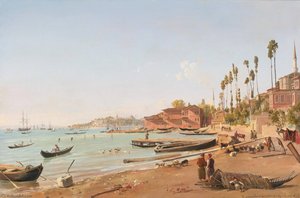
Vervloet's artistic breakthrough arrived during his extended sojourn in Venice between 1820 and 1830. Drawn to the city’s captivating beauty—particularly Saint Mark’s Square and Riva degli Schiavoni—he embarked on a prolific series of paintings that exemplify the Romantic preoccupation with capturing fleeting moments of sublime grandeur. His canvases are characterized by masterful use of light and color, skillfully conveying the ethereal quality of Venetian air and reflecting the shimmering surfaces of water. He was greatly influenced by the group of painters of the Posillippo School whose members favoured a more spontaneous approach, with an emphasis on plein-air painting.
- Notable Works: “A Girl at a Window,” “View of Piazza San Marco, Venice,” “Venice, a view of Saint Mark’s Square Venice, a view of the Palazzo Ducale and the Riva degli Schiavoni”
- Technique: Vervloet employed meticulous tonal realism combined with atmospheric perspective to achieve unparalleled accuracy in portraying Venetian vistas. This technique allowed him to reproduce the subtle nuances of light and shadow—a hallmark of Romantic painting.
Influence & Legacy
Vervloet’s Venetian landscapes exerted considerable influence on subsequent generations of Belgian artists, establishing him as a pivotal figure in shaping the Romantic aesthetic. His unwavering dedication to observation and his masterful technique served as an inspiration for painters striving to capture the essence of natural beauty with uncompromising fidelity. Vervloet's legacy continues to endure—his artworks remain treasured examples of Romantic idealism and artistic excellence. They stand as enduring reminders of the power of art to evoke emotion and convey profound insights into the human experience.