Claude Emile Schuffenecker (1851–1934): An Unsung Pioneer of Impressionism
Claude Emile Schuffenecker, born December 8th, 1851, in Haute-Saône, France, remains a figure largely overshadowed by the luminaries of his era – Paul Gauguin and Odilon Redon. Yet, this quiet French Post-Impressionist artist possessed an undeniable contribution to the artistic landscape of late nineteenth century Paris, marked by a fervent dedication to capturing fleeting moments of beauty and a pioneering role in fostering the burgeoning field of art collecting. His life’s journey unfolded amidst considerable personal hardship, yet his artistic vision persisted, shaping landscapes imbued with atmospheric subtlety and portraits reflecting profound psychological depth.
Early Life & Artistic Formation
Schuffenecker's upbringing was shaped by familial circumstances that instilled a strong work ethic. Following the untimely death of his father, Nicolas Schuffenecker—a tailor from Guewenheim (Alsace)—in 1854, he and his brother Amédée faced significant economic challenges as their mother relocated to Meudon, near Paris, where her family resided. Supported by his maternal aunt Anne Fauconnet Monnet, Schuffenecker received a robust education at the frères des écoles chrétiennes, preparing him for a career in commerce—specifically, assisting his uncle Pierre Cornu’s chocolate and coffee roasting business. This practical grounding would prove invaluable later in life, providing stability amidst artistic pursuits. Crucially, he found kindred spirits in Gauguin and Redon, engaging in spirited discussions about the masters at the Louvre and honing his skills at the Académie Colarossi. These formative encounters profoundly impacted his artistic sensibilities—establishing a foundation for his future explorations of Impressionist techniques and Symbolist aesthetics.
Friendship with Gauguin & The Volpini Exhibition
A remarkable friendship blossomed between Schuffenecker and Paul Gauguin—a connection that transcended mere artistic camaraderie and deepened into genuine affection. Both men shared an unwavering fascination for studying Old Masters, meticulously analyzing compositions and techniques at the Louvre to discern their underlying principles. This intellectual exchange fueled their creative endeavors and cemented their commitment to venturing beyond conventional artistic boundaries. Notably, Schuffenecker played a pivotal role in organizing the Volpini Exhibition of 1889—a landmark event showcasing Impressionist art and attracting considerable public attention. His involvement underscored his conviction that disseminating artistic ideas was paramount—and bolstered by Gauguin’s influence—he championed innovative approaches to painting and visual expression.
Schuffenecker’s Artistic Style & Influences
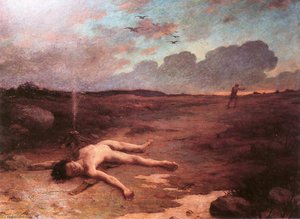
Schuffenecker's distinctive style is characterized by a masterful manipulation of light and color—traits undeniably influenced by Impressionism, yet tempered with a sensitivity to Symbolist sensibilities. He prioritized capturing mood and emotion over precise topographical accuracy—a deliberate choice reflecting his belief in conveying inner experiences through visual media. Consider “Near Meudon,” where Schuffenecker captures the ethereal quality of twilight, employing delicate brushstrokes and muted hues to convey a profound sense of tranquility. Similarly, "Paysage Landscape" exemplifies his ability to distill complex visual information into evocative representations of nature—a testament to his artistic prowess. He was particularly captivated by Vincent van Gogh’s expressive use of color and texture—recognizing the transformative potential of conveying inner feelings through visual media—and he diligently studied Van Gogh's groundbreaking innovations in pigment blending and brushwork.
A Controversial Legacy & Rediscovery
Despite Schuffenecker’s considerable contribution to Impressionism and art collecting—including his early involvement in establishing a collection of Van Gogh paintings—his artistic reputation suffered a significant setback following the 1920s, fueled by accusations of stylistic imitation and speculation regarding the authenticity of certain artworks attributed to him. However, recent scholarly investigations have begun to illuminate Schuffenecker’s life and oeuvre with greater nuance—challenging earlier assessments and bolstering a more measured appreciation for his artistic achievements. Researchers now recognize Schuffenecker's dedication to capturing atmospheric subtleties and psychological depth—demonstrating that he was not merely a follower of established trends, but rather a courageous innovator who forged his own path within the evolving landscape of French art. Today, Musée des Cultures Taurines in Nîmes proudly showcases Schuffenecker’s legacy through its impressive collection of paintings and artifacts—affirming his rightful place among the pioneers of modern French painting.