A Renaissance Voice from Ferrara: The Life and Art of Domenico Panetti
Domenico Panetti, a name perhaps less celebrated than some of his contemporaries, nevertheless occupies a significant position within the artistic landscape of the Italian Renaissance. Born in Ferrara around 1460, Panetti’s life unfolded against the backdrop of a court renowned for its cultural patronage and intellectual ferment under the Este family. While detailed biographical information remains somewhat elusive, piecing together accounts from early art historians like Maria Farquhar and insights gleaned from surviving artworks reveals a painter deeply embedded in the artistic currents of his time, yet possessing a distinctive voice that blended tradition with emerging stylistic innovations. He died in 1530, leaving behind a legacy primarily concentrated within the churches and collections of his native city.Early Influences and Artistic Formation
The precise nature of Panetti’s artistic training remains open to speculation. It is believed he initially worked in the established style prevalent in Ferrara during the latter half of the 15th century—a rather dry, formal approach characteristic of many regional schools. However, a pivotal moment in his development occurred with the return of Benvenuto da Garofalo from Rome, where he had studied under the masterful Raphael. This encounter proved transformative; Panetti became the pupil of his former disciple, embracing the new classical ideals and refined techniques that Garofalo brought back from the heart of the Renaissance. This willingness to adapt and evolve is a defining characteristic of Panetti’s career, demonstrating an intellectual curiosity and commitment to artistic progress. The influence of Ercole de' Roberti is also often cited, suggesting a foundational grounding in Ferrarese painting traditions before his exposure to Roman innovations.A Style Defined by Grace and Devotion
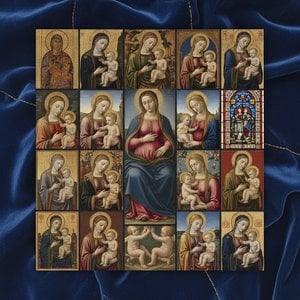
Panetti’s mature style is marked by a delicate balance between the formality of earlier Ferrarese art and the grace and naturalism championed by Raphael and his followers. His compositions, often centered on religious themes—particularly depictions of the Virgin Mary and Child—exude a quiet devotional intensity. Works such as the *Deposition from the Cross* in San Niccolo and the *Visitation* in San Francesco showcase his ability to convey emotional depth through subtle gestures and expressive faces. A key feature of his paintings is the harmonious integration of figures with landscape, creating scenes that feel both grounded and ethereal. The recent restoration of works like the *Madonna and Child with Two Donors*, housed in the Museo della Cattedrale in Ferrara, has revealed a vibrant polychromy previously obscured by layers of age, further illuminating the richness and sophistication of his palette. He often inscribed his name on his paintings, providing valuable documentation of his evolving style over time.Legacy and Historical Significance
Domenico Panetti’s importance lies not in radical innovation but in his skillful synthesis of diverse artistic influences and his ability to create works that resonate with both spiritual depth and aesthetic beauty. He served as a crucial link between the older generation of Ferrarese painters and the emerging trends of the High Renaissance, acting as a conduit for new ideas and techniques within his region. Perhaps most significantly, he was the master of Garofalo, one of Ferrara’s most celebrated artists, ensuring the continuation of his artistic legacy. While his oeuvre is relatively small compared to some of his contemporaries, Panetti's paintings offer a compelling glimpse into the artistic life of Renaissance Ferrara and demonstrate the enduring power of grace, devotion, and skillful craftsmanship. His work continues to be appreciated for its quiet elegance and its ability to capture the spiritual essence of the subjects he portrayed.Întrebări și răspunsuri
În ce oraș și țară s-a născut Domenico Panetti?
Domenico Panetti s-a născut în Ferrera, în Italy.
De unde este Domenico Panetti?
Domenico Panetti s-a născut în Italy.
Unde pot fi găsite operele lui Domenico Panetti, grupate pe mișcări artistice?
Manifestările artistice în cadrul cărora a activat Domenico Panetti pot fi vizualizate pe pagina de Toate mișcările a artistului, care grupează operele pe stiluri artistice.
Unde pot fi găsite operele lui Domenico Panetti grupate pe palete de culori?
Operele lui Domenico Panetti pot fi explorate pe baza paletei cromatice în pagina de După palete de culori a artistului.
Unde pot vedea toate operele create de Domenico Panetti?
Toate lucrările lui Domenico Panetti de pe acest site pot fi vizualizate în pagina Toate operele de artă a artistului.
Unde pot vedea operele lui Domenico Panetti organizate după atmosferă?
Operele lui Domenico Panetti pot fi explorate în funcție de starea de spirit pe pagina Spațiu pe stări de spirit a artistului, care organizează lucrările după stările lor de spirit regăsite.
Există o relatare cronologică a carierei lui Domenico Panetti?
Pagina Cronica a lui Domenico Panetti este o cronologie interactivă care prezintă lucrările artistului în ordine cronologică, grupate pe capitole reprezentative ale perioadelor carierei.
Care sunt locul și anul nașterii lui Domenico Panetti?
Domenico Panetti s-a născut în Ferrera, în anul 1460.