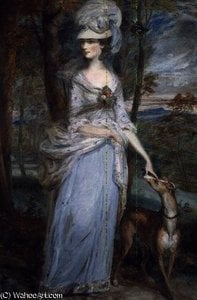
Daniel Gardner, 1750 – 1805

Cele mai 50 celebre picturi ale lui Daniel Gardner

Pictura care l-a făcut faimos pe Daniel Gardner este Henry Greswolde Lewis (1776); aceasta este expusă în Detroit Institute of Arts, Detroit. Elizabeth Lewis (1776) și The Hon. Mrs. Gray (1790) îi urmează în inima colecționarilor și a vizitatorilor muzeelor. Dintre cele 50 opere ale lui Daniel Gardner din catalogul nostru, acestea 50 sunt cele mai admirate, fiecare fiind prezentată cu data creării, muzeul de păstrare și elementele care o fac unică.

Clasate în funcție de scorul nostru de popularitate, care combină numărul de căutări, vizitele și comenzile pentru fiecare operă. Actualizat Noiembrie 2026. Fiecare capodoperă de pe această pagină poate fi comandată ca o reproducere pictată manual în ulei, de calitate muzeală, sau ca o printare de artă fină, la dimensiunea aleasă de dumneavoastră.

Portretul lui Daniel Gardner
Daniel Gardner · 1750 – 1805
Născut · Decedat
1750 – 1805, Kendal
Mișcare
Neoclassicism
Lucrări din catalogul nostru
50
Cele mai celebre
Henry Greswolde Lewis (1776)
Cele mai multe lucrări în
Detroit Institute of Arts

Daniel Gardner: cele zece capodopere

Elizabeth Lewis (1776) de Daniel Gardner
2

Elizabeth Lewis

1776 · Oil · Detroit Institute of Arts, Detroit

In Elizabeth Lewis, Daniel Gardner centers the composition on a single female figure. Positioned slightly off-center, the subject appears to be walking through a wooded landscape, creating a sense of movement within the frame. The perspective is a medium shot, focusing on the subject from the waist up against a receding backdrop of trees that provides spatial dimension.

Reproducere pictată manual în ulei de la $181 37 × 27 cm
The Hon. Mrs. Gray (1790) de Daniel Gardner
3

The Hon. Mrs. Gray

1790 · Oil On Canvas · National Gallery of Art, Washington

Daniel Gardner painted The Hon. Mrs. Gray in 1790. The portrait captures a woman in a three-quarter view, seated in a manner that emphasizes her presence within a quiet, intimate space. This work belongs to the tradition of late 18th-century British portraiture, focusing on the likeness and character of the sitter.

Reproducere pictată manual în ulei de la $181 29 × 35 cm Aceeași dimensiune ca originalul $299 64 × 76 cm Comandă în dimensiunea originală →
Miss Alice Bullock Of Wigan de Daniel Gardner
4

Miss Alice Bullock Of Wigan

In this intimate encounter, Miss Alice Bullock Of Wigan meets the viewer through the steady, direct gaze of Daniel Gardner. The subject sits poised, her presence defined by a soft pink flush upon her cheeks and the gentle adornment of a blue ribbon nestled in her brown hair. She exists in a space of quiet stillness, her features emerging from a dark, shadowed background that pushes her forward into the…

Reproducere pictată manual în ulei de la $181 27 × 37 cm

Mai multe capodopere cu Daniel Gardner, de la 11 la 50

Subiectele pe care Daniel Gardner le-a pictat cel mai des

Cele patru teme care se regăsesc cel mai des printre aceste capodopere, cu cel mai fin exemplu pentru fiecare.

Unde puteți vedea picturile lui Daniel Gardner

Cele 5 muzee care dețin cele mai multe dintre picturile de pe această pagină.

Muzee Oraș Lucrări lui Daniel Gardner Picturi din această listă
Detroit Institute of Arts, DetroitDetroit Institute of Arts Detroit 2 Henry Greswolde Lewis, Elizabeth Lewis
National Gallery of Art, WashingtonNational Gallery of Art Washington 1 The Hon. Mrs. Gray
National Portrait Gallery, LondraNational Portrait Gallery Londra 1 Untitled
Montacute HouseMontacute House 1 Sir William Heathcote
Abbot Hall Art Gallery, KendallAbbot Hall Art Gallery Kendall 1 Портрет на актриса

Daniel Gardner, an de an: picturile care definesc un stil

Daniel Gardner a pictat timp de 15 ani, de la 1776 la 1790: iată cele mai frumoase picturi ale fiecărei ani.

  1. 1776
    Henry Greswolde Lewis (1776) de Daniel Gardner
    Locul 1 din 50

    Henry Greswolde Lewis

    Vârsta: 26 · Detroit Institute of Arts

    This 18th-century portrait miniature depicts Henry Greswolde Lewis. Executed by Daniel Gardner, the work dates to about 1776. It presents the sitter in an oval format, a characteristic…

  2. 1776
    Elizabeth Lewis (1776) de Daniel Gardner
    Locul 2 din 50

    Elizabeth Lewis

    Vârsta: 26 · Detroit Institute of Arts

    In Elizabeth Lewis, Daniel Gardner centers the composition on a single female figure. Positioned slightly off-center, the subject appears to be walking through a wooded landscape, creating a…

  3. 1790
    The Hon. Mrs. Gray (1790) de Daniel Gardner
    Locul 3 din 50

    The Hon. Mrs. Gray

    Vârsta: 40 · National Gallery of Art

    Daniel Gardner painted The Hon. Mrs. Gray in 1790. The portrait captures a woman in a three-quarter view, seated in a manner that emphasizes her presence within a…

capodoperele lui Daniel Gardner: întrebări și răspunsuri

Pentru care pictură este cel mai cunoscut Daniel Gardner?Afișează răspunsul

Henry Greswolde Lewis (1776), Detroit Institute of Arts, Detroit. Urmează Elizabeth Lewis (1776) și The Hon. Mrs. Gray (1790).

Ce vârstă avea Daniel Gardner când a pictat Henry Greswolde Lewis?Afișează răspunsul

26 ani: Henry Greswolde Lewis datează din 1776, iar Daniel Gardner s-a născut în 1750.

Care sunt cele mai importante zece picturi ale lui Daniel Gardner?Afișează răspunsul

Henry Greswolde Lewis, Elizabeth Lewis, The Hon. Mrs. Gray, Miss Alice Bullock Of Wigan, William Cornwallis As Admiral, Portrait of Mrs. Paul Prickett, Lady Watkin Williams-wynn, James Lambert, Three Young Girls On A Terrace With A Dog și Thomas Jones -. Clasamentul de mai sus indică anul și muzeul pentru fiecare.

Câte lucrări a pictat Daniel Gardner?Afișează răspunsul

Catalogul nostru include 50 lucrări ale lui Daniel Gardner, datate între 1776 și 1790.

În ce muzee pot fi vizionate capodoperele lui Daniel Gardner?Afișează răspunsul

Majoritatea acestora se află în Detroit Institute of Arts (Detroit), National Gallery of Art (Washington) și National Portrait Gallery (Londra). Tabelul de mai sus enumeră muzeele pe rând.

Când a pictat Daniel Gardner capodoperele?Afișează răspunsul

În 1776: 2 dintre cele 50 lucrări de pe această pagină datează de atunci, printre acestea Henry Greswolde Lewis.

Care sunt primele și ultimele picturi celebre ale lui Daniel Gardner?Afișează răspunsul

Cea mai veche lucrare de pe această pagină este din Henry Greswolde Lewis (1776), iar cea mai recentă este din The Hon. Mrs. Gray (1790).

Care au fost subiectele preferate ale lui Daniel Gardner?Afișează răspunsul

Portraits (7), Portrait (7) și 18th century (5), printre cele 50 opere de pe această pagină.

Din ce mișcare artistică face parte Daniel Gardner?Afișează răspunsul

Neoclassicism, așa cum demonstrează picturile de pe această pagină.

Ce capodopere ale lui Daniel Gardner sunt expuse la Detroit Institute of Arts?Afișează răspunsul

Henry Greswolde Lewis și Elizabeth Lewis sunt printre cele 2 opere de pe această pagină păstrate de Detroit Institute of Arts, Detroit.

Pot să dețin o reproducere a unei capodopere a lui Daniel Gardner?Afișează răspunsul

Da. Orice pictură de pe această pagină poate fi comandată ca o reproducere pictată manual în ulei, de calitate muzeală, sau ca o print de artă fină, în dimensiunea aleasă de dumneavoastră, direct de pe pagina propriei picturi.

Viața lui Daniel Gardner

A Life Dedicated to Portraiture

Daniel Gardner, born in Kendal, Westmorland in 1750, and passing away in London in 1805, carved a distinctive niche for himself within the vibrant British art scene of the late 18th century. Though perhaps not as widely celebrated as his contemporary, Joshua Reynolds, Gardner established a successful practice specializing in intimate portraits that captured the essence of aristocratic society. His story is one of humble beginnings – the son of a master baker – juxtaposed with an unexpected artistic journey, fueled by familial connections and early exposure to the world of art. Specifically, his mother’s brother was an upholsterer who maintained business ties to George Romney’s father, providing Daniel with his initial artistic instruction from the renowned painter himself. While Gardner later admitted that he learned relatively little directly from Romney, this formative period undoubtedly laid a foundation for his future endeavors and instilled in him a deep understanding of portraiture techniques.

Early Training and Royal Academy Recognition

Daniel's early life offered little indication of his destined path as an artist. However, the connections forged through his family proved pivotal. He initially apprenticed as an upholsterer, a practical trade that provided a means of sustenance while he explored his artistic inclinations. It was in 1767 that he made the decisive move to London, enrolling at the prestigious Royal Academy of Arts in 1770. This marked a turning point, immersing him in a rigorous curriculum under the tutelage of some of the era’s most prominent artists: Johann Zoffany, Nathaniel Dance-Holland, Benjamin West, Giovanni Battista Cipriani, and Francesco Bartolozzi. These masters imparted invaluable knowledge and skills, shaping his artistic sensibilities and solidifying his commitment to painting. A significant early achievement came in 1771 when Gardner won a silver medal at the Royal Academy for a portrait of an old man – likely executed in pastel, a medium he would later master with exceptional skill. This recognition served as a powerful validation of his talent and signaled the emergence of a promising artist within the established art world. Despite this initial success, Gardner’s subsequent exhibition record remained relatively limited, suggesting a preference for private commissions rather than seeking widespread public acclaim through formal exhibitions.

Style and Influences: A Delicate Balance

Gardner's artistic style was deeply influenced by Joshua Reynolds, particularly in terms of composition and the conception of his figures. He frequently borrowed poses and arrangements from Reynolds’ work, demonstrating an astute understanding of successful portraiture conventions – a testament to the influence of his mentor. However, critics often noted that Gardner lacked the same level of anatomical precision as Reynolds, suggesting a more relaxed approach to detail. This perceived deficiency, however, did not diminish his popularity; rather, it contributed to a unique aesthetic characterized by a certain *facile elegance*. Gardner excelled in capturing likeness and personality, prioritizing charm and grace over strict realism. He was particularly adept at conveying the subtle nuances of character through expressive eyes and carefully rendered features. His skill with pastels, crayons, and gouache allowed him to create luminous effects and delicate textures, imbuing his portraits with a remarkable sense of atmosphere and intimacy. Notably, Gardner employed a distinctive technique involving dry pastel for faces while utilizing scumbled gouache for the rest of the picture – a method that resulted in a unique visual quality characterized by soft transitions and subtle gradations of color. Some art historians have even suggested that Gardner’s loose style and vibrant use of color foreshadowed elements of later Impressionist painting, marking him as an artist ahead of his time.

Patronage and Legacy: Capturing Aristocratic Society

Gardner's clientele read like a who’s who of British aristocracy. He painted portraits of prominent figures such as Jane Gordon, Duchess of Gordon; Georgiana Cavendish, Duchess of Devonshire – famed for her beauty and political influence; Charles Cornwallis, 1st Marquess Cornwallis; Elizabeth Lamb, Viscountess Melbourne; Frances Villiers, Countess of Jersey; the celebrated artist Angelica Kauffman; and Lord George Gordon. He was particularly sought after for family portraits, often depicting families with their children and pets in idyllic woodland settings – scenes that reflected both the wealth and sentimental values of his patrons. Beyond portraiture, Gardner demonstrated his versatility with an early oil painting depicting Philip Egerton of Oulton, showcasing his developing skills in this more traditional medium. He was a shrewd businessman, wisely investing the considerable wealth generated from his commissions into land and property around Kendal, securing his financial future. He eventually retired from painting to focus on these ventures, passing away in London in 1805, reportedly due to a liver complaint. While perhaps not achieving the same level of enduring fame as some of his contemporaries, Daniel Gardner’s unique style, technical innovation, and ability to capture the character of his sitters secured him a significant place within the history of British portraiture. His work continues to offer a fascinating glimpse into the lives and tastes of the late 18th-century aristocracy, and his subtle anticipation of Impressionistic techniques ensures his lasting interest among art historians today.