Biografie artist
A Legacy of Elegance: The Life and Art of Raimundo de Madrazo
Raimundo de Madrazo y Garreta, born in Rome in 1841, entered a world already steeped in artistic tradition—a lineage marked by prestige and shaped by the influence of prominent figures like José de Madrazo, Director of the Museo del Prado, and Federico de Madrazo, himself a celebrated portraitist. This familial foundation wasn’t merely about inheritance; it instilled within young Raimundo not only technical mastery but also an understanding of the social standing associated with artistic creation—a conviction that would permeate his entire oeuvre. His earliest training unfolded within the intimate setting of his family's studios, absorbing principles of classical technique from both father and grandfather, establishing a bedrock for his future endeavors. Formal studies at the Real Academia de Bellas Artes de San Fernando in Madrid, under Carlos Luis de Ribera and Carlos de Haes, further honed his skills, exposing him to contemporary artistic currents—a crucial step toward defining his distinctive aesthetic vision. However, it was a pivotal sojourn to Paris in 1860 that irrevocably transformed his trajectory—a journey that cemented his connection with the Parisian art world and propelled him towards an unparalleled artistic zenith. Studying under Léon Cogniet and forging connections within this vibrant milieu would become synonymous with Madrazo’s artistic sensibilities for decades to come. The subtle yet profound influence of Alfred Stevens during this period proved particularly significant, subtly shifting his approach toward a more refined and decorative sensibility—a deliberate departure from strict academicism in favor of a style imbued with grace and allure.
Realism Infused with Refinement: Artistic Style and Influences
Madrazo’s artistic style is fundamentally rooted in Realism; nevertheless, it transcends mere imitation through an infusion of elegance and sophistication—a hallmark that distinguishes him from the more austere strains of the movement. While committed to accurate representation, his paintings possess a delicate grace that speaks volumes about his artistic sensibilities—a testament to his ability to capture not only physical likeness but also the inner essence of his subjects with remarkable skill. This refinement evolved organically over time, subtly incorporating elements reminiscent of Rococo—a fondness for ornate detail and playful composition—and *Japonisme*, the burgeoning Western fascination with Japanese art, particularly in its emphasis on flattened perspective and decorative patterns. Cogniet’s grounding in academic tradition provided a counterbalance to Stevens’ stylistic experimentation, fostering a synthesis that resulted in Madrazo's singular artistic voice. He wasn’t simply recording reality; he was crafting an idealized vision of it—one that resonated deeply with the tastes of a discerning clientele eager for beauty and refinement in art. This masterful blending of realism and decorative embellishment allowed him to create works that captivated viewers while simultaneously upholding the highest standards of artistic excellence. His palette favored muted tones, skillfully blended to convey subtle nuances of emotion and atmosphere—a technique honed through years of meticulous observation and disciplined practice.
Portraits of an Era: Major Works and Themes
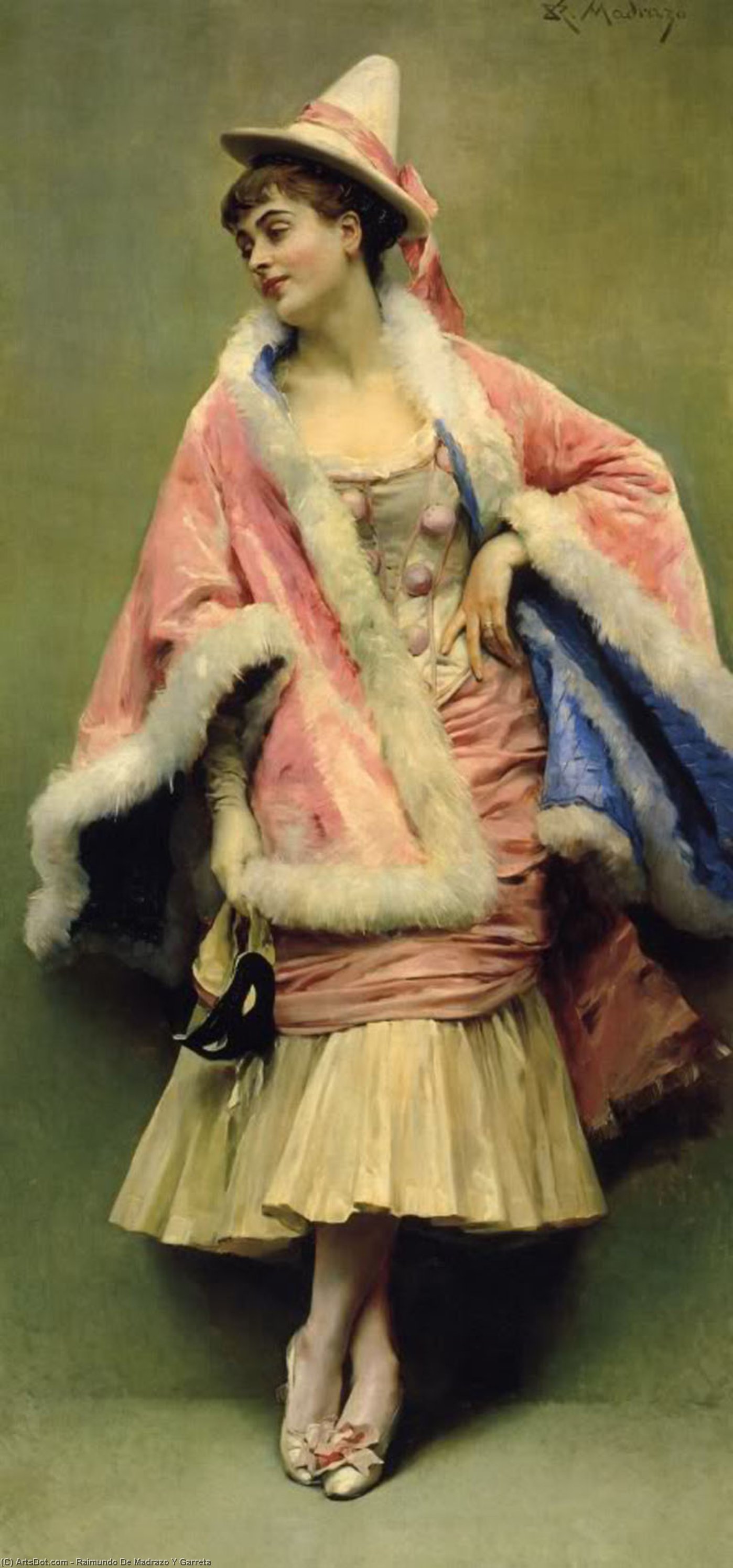
Madrazo’s fame rested primarily upon his portraits—captivating depictions of individuals from the Spanish aristocracy and beyond—each imbued with a palpable sense of dignity and grace. His *Portrait of his father painting*, executed in 1869, stands as a poignant reminder of familial affection and artistic dedication—a masterful portrayal that captures not only physical likeness but also the very act of creation itself—a painter portraying a painter, a meta-commentary on the artistic process. Works like *Fond Memories* exemplify his talent for evoking nostalgia and capturing intimate moments with profound sensitivity—a testament to his ability to convey emotion through subtle gestures and expressive brushstrokes. However, it was his genre paintings—particularly those featuring Aline Masson as his model—that cemented his reputation as a leading artist of his time. *The Reluctant Mistress*, *After the Bath*, and *Portrait of Aline Masson in a Mantilla* are prime examples—sensuous scenes rendered with exquisite detail that celebrate feminine beauty and grace—a stylistic hallmark that distinguishes Madrazo’s oeuvre from many of his contemporaries. Aline Masson's presence was central to understanding Madrazo’s artistic output; she served as his muse for over fifteen years, embodying the ideal of refined elegance that permeated his paintings. These works weren’t merely depictions of fashionable society; they were carefully constructed fantasies—designed to appeal to a clientele eager to possess images of beauty and luxury. The recurring motif of feminine allure, often veiled in an atmosphere of gentle mystery, became a signature element of Madrazo's artistic style—a testament to his ability to capture the essence of human emotion with unparalleled subtlety.
International Recognition and Lasting Impact
Raimundo de Madrazo’s career unfolded on an international stage—beginning with his debut exhibition in Paris in 1860 and continuing through numerous subsequent exhibitions across Europe and America. He cultivated a loyal clientele among prominent families—including the Vanderbilts and Alexander Turney Stewart—demonstrating a keen understanding of artistic patronage and its role in shaping cultural discourse. His membership in the Royal Academy of London—established in 1882—further solidified his reputation as a leading artist of his time, alongside Alfred Stevens, Giuseppe de Nittis, and Georges Petit—an initiative designed to champion foreign artists residing in Paris and to foster artistic exchange. He consistently exhibited at the Salon de Paris—receiving a major medal at the Exposition Universelle in 1889—a recognition that underscored his enduring influence on the Parisian art world. Beyond his artistic achievements, Madrazo demonstrated a commitment to cultural preservation through his generous donation of Francisco de Goya’s works to the Museo del Prado in 1894—a gesture that ensured the legacy of Goya would continue to inspire generations of artists. Raimundo de Madrazo died peacefully in Versailles in 1920, leaving behind a body of work that remains celebrated for its elegance, skill, and profound insight into the human condition—a testament to his enduring contribution to Spanish art history.



 Comandă tipăritul
 Trimite
 Details
 Adaugă la favorite
 Descarcă
 Similare
 X-Ray
X-Ray
 Diaporama
 200.0 x 95.0 cm





 Distribuie





































 Citește mai mult
 Opțiunea cu sticlă este disponibilă doar pentru dimensiuni de sub 110 cm


