CONSULTAȚIE GRATUITĂ ÎN ARTE VIZUALE


x
 Comandă tipăritul Cumpără imaginea
 Trimite
 Details
 Adaugă la favorite
 Descarcă
 Similare
 X-Ray
X-Ray
 Diaporama
 Ulei pe pânzăArtă de pereteExplore Paul Cézanne's 'Forest,' a serene Post-Imp
 1890Secolul al XIX-lea
 72.0 x 92.0 cm
Pictură în ulei pe pânză, pictată manual, la dimensiunea și ramele dorite de dumneavoastră, realizată la comandă de artiștii noștri.





























Alegeți dintre dimensiunile noastre prestabilite, care respectă proporțiile originale ale operei de artă.

Puteți introduce propriile dimensiuni pentru a se potrivi unui anumit cadru sau spațiu. Dacă dimensiunea selectată nu corespunde proporțiilor imaginii originale, vom decupa opera de artă sau vom extinde pictura cu elemente suplimentare pictate manual. O simulare digitală vă va fi trimisă pentru aprobare înainte de începerea producției.
Vă rugăm să rețineți că previzualizarea de pe ecran nu reflectă decuparea sau extinderea reală. Doar macheta va arăta cu exactitate compoziția finală.
Deși sunt disponibile dimensiuni personalizate, vă recomandăm să selectați o dimensiune din lista predefinită pentru a păstra proporțiile originale.
Livrare în întreaga lume () în 3/4 săptămâni, în loc de cele 5 săptămâni standard. (1 Iulie). Fără compromisuri în ceea ce privește calitatea.


Pădurii
Dimensiune reproducere
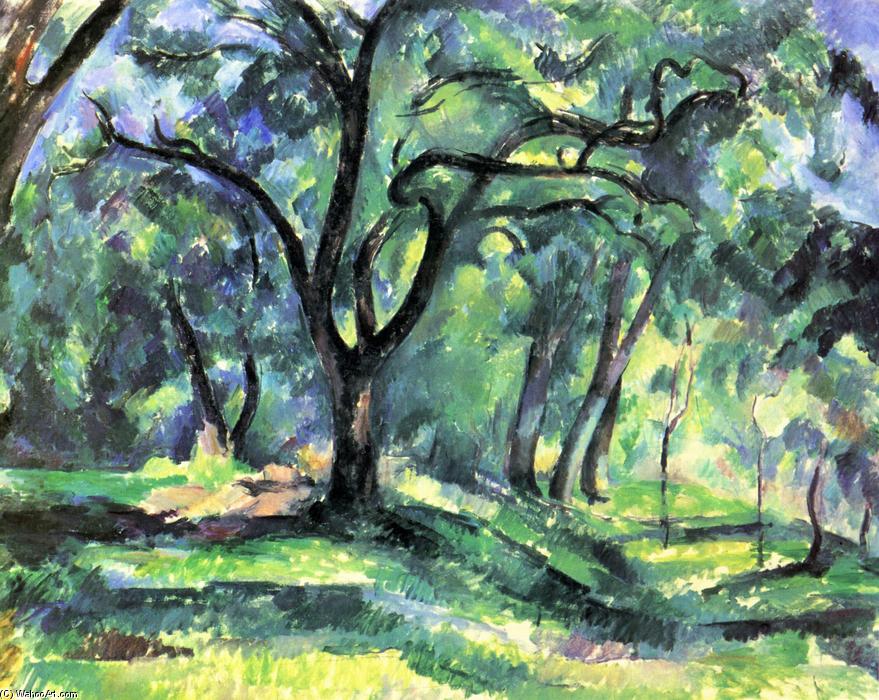
Cézanne's Post-Impressionist style is immediately apparent in “Forest.” He deliberately departs from the Impressionists’ focus on capturing the ephemeral effects of light and color. Instead, he meticulously builds his composition using geometric forms – triangles, rectangles, and cylinders – to represent the underlying structure of objects. The trees aren’t rendered as they appear to the eye at a single moment; they are broken down into their fundamental shapes, then reassembled on the canvas with a deliberate sense of order. This approach wasn’t about photographic accuracy but rather about conveying Cézanne’s subjective experience of the scene – his understanding of how things *exist* in space.
The painting features two figures nestled amongst the trees, seemingly enjoying a quiet moment outdoors. Their presence isn’t central to the composition; they are integrated seamlessly into the landscape, almost as if they were part of the forest itself. This subtle inclusion highlights Cézanne’s interest in dissolving the boundaries between subject and environment. The use of color is equally deliberate. He employs a restrained palette of greens, blues, and browns, layering them with thick brushstrokes to create a sense of depth and volume. Notice how he uses variations in tone – lighter shades for distant trees and darker hues for those closer to the viewer – to suggest atmospheric perspective. The dappled light filtering through the canopy is particularly masterful, creating an illusion of movement and vitality.
“Forest” emerged during a period of significant artistic ferment in France. Post-Impressionism was reacting against the limitations of Impressionism, seeking to express deeper emotions and ideas. Cézanne, along with artists like Van Gogh and Gauguin, were exploring new ways to represent reality – not through fleeting impressions but through carefully constructed forms and symbolic color. Cézanne’s work can be seen as a bridge between these movements; he retained some of the Impressionists’ interest in color while adopting a more structured and analytical approach.
The historical context is crucial to understanding Cézanne’s motivations. He was deeply interested in architecture, particularly the solidity and permanence of buildings. This fascination with structure informed his approach to landscape painting, leading him to seek ways to translate the geometric principles of architectural design into the natural world. He famously said, “I do not paint what I see, but what I feel.” This sentiment encapsulates his artistic philosophy – a desire to capture not just the appearance of things but their underlying essence.
Cézanne’s influence on subsequent art movements is undeniable. His innovative approach to form and color paved the way for Cubism, which sought to break down objects into geometric fragments – a direct response to Cézanne’s deconstruction of natural forms. Artists like Picasso and Braque were profoundly influenced by his work, adopting his techniques of multiple viewpoints and fragmented representation. Beyond Cubism, Cézanne’s emphasis on structure and form had a lasting impact on 20th-century art in general.
Today, “Forest” continues to captivate viewers with its serene atmosphere and masterful technique. It's a testament to Cézanne’s artistic genius – a painting that not only depicts a forest but also invites us to contemplate the nature of perception itself. WahooArt offers meticulously crafted reproductions of this iconic work, allowing you to bring this masterpiece into your own home and experience its beauty firsthand.
Resources:


1839 - 1906 , Franța

Explore the rich history of forests in art! Discover Romantic masterpieces by Friedrich & Monet, Symbolist depths, and contemporary visions. Find inspiration & quality reproductions at WahooArt.

Descoperă top 10 capodopere impresioniste care au revoluționat arta! Monet, Manet, Renoir și alți maeștri ai peisajului. Reproduceri de tablouri de calitate muzeală pentru un decor inspirat. Explorează colecția completă pe WahooArt.com!
Explore the emotional power of Romantic landscape painting! Discover the sublime & picturesque aesthetics, key artists like Friedrich & Cole, and lasting influence on art history. Find your perfect piece at WahooArt.

Explore the rich history of landscape painting! Discover renowned artists, movements like Romanticism, & techniques such as atmospheric perspective. Find inspiration and quality reproductions at WahooArt.

Descoperă Top 10 capodopere ulei pe lemn care au revoluționat arta! Explorează poveștile lui Van Gogh, Monet și Rembrandt. Inspirație pentru decor interior cu reproduceri de artă clasică de calitate muzeală. Găsește tabloul perfect pe WahooArt.com


Rămâneți la curent cu cele mai recente știri din lumea artei, ofertele noastre exclusive și ideile de decor.
Spuneți-ne despre proiectul dumneavoastră, iar experții noștri în artă vă vor oferi 3 sugestii personalizate.
Vom selecta 3 opțiuni special pentru tine – Gratuit!

 Distribuie








 Citește mai mult
 Opțiunea cu sticlă este disponibilă doar pentru dimensiuni de sub 110 cm