




The History and Origins of Saragossa Museum
The Saragossa Museum, also known as the Museo Provincial de Bellas Artes, emerged from a specific movement to establish provincial museums across Spain. This initiative followed a Royal Decree issued in 1913. The institution was formally established in 1916, marking a significant moment for the cultural landscape of Zaragoza, Spain. It began its existence within the walls of the former Jesuit college of San Sebastián, a setting that provided the initial foundation for its growing collections.
The museum eventually moved to its current location at Plaza de los Sitios, 6, 50001 Zaragoza. This transition allowed the institution to expand its reach and its capacity to hold significant works. The building itself was conceived for the Hispano-French Exhibition of 1908, predating the formal establishment of the museum by several years. This connection to the exhibition period links the museum's physical presence to a specific era of architectural and civic development in the city.
The Grand Architecture of the Museum
The structure was conceived for the Hispano-French Exhibition of 1908. Designed by architects Ricardo Magdalena and Julio Bravo, the building occupies a footprint of 3,200 square meters. Its dimensions span 55 meters across the facade by 52 meters in depth. The exterior is composed of stone and fine brick facing, characterized by semi-circular arches and a monumental cornice. On the second floor, the facade features Renaissance-style galleries that provide a sense of classical rhythm to the elevation.
Inside, the spatial arrangement follows a three-floor structure. The interior courtyard draws inspiration from the Zaporta courtyard, creating a central point of light and openness within the masonry. The design reflects a Neo-Renaissance style, emphasizing permanence through its heavy materials and structured proportions. The building's presence in the city is defined by this deliberate architectural language, which seeks to harmonize the various sections of the institution.
Major Collections and Departments
The museum holds over 2,000 works of art distributed across several specialized departments. The permanent collection includes Archaeology and Arts of Antiquity, which traces the history of the region back to the earliest human presence in the Ebro Valley. Alongside these ancient remains, the Fine Arts section focuses on the second half of the 19th century and the first decades of the 20th century. This department contains significant works by Francisco Goya and Joaquín Sorolla, providing a presence of Spanish life from a bygone era. A dedicated section for East Asian Art also contributes to the breadth of the holdings.
Beyond the main building, the Ethnology and Ceramics section is located at Parque Jose Antonio Labordata. This department is particularly noted for its collection of Iberian ceramics, which reflect the ancient artistic traditions of the region. The museum's curation emphasizes a connection between these archaeological finds and the later fine arts movements. The presence of these diverse objects allows for a chronological study of the area's material culture.
Masterpieces of the Art Collection
The presence of Francisco Goya within these walls is felt through several significant works. Among them, La virgen del Pilar holds a central place in the collection. His brushwork and command of light define much of the Spanish artistic tradition represented here, offering a direct encounter with the painter's hand.
The collection reaches back to the late fifteenth century with Bartolomé Bermejo’s Descent from the Cross, dated about 1477. This work provides a profound sense of historical weight. Nearby, the 1581 Portrait of Gian Paolo Zappi by Lavinia Fontana offers a different perspective on portraiture. The subtle details of the sitter's likeness invite a quiet, sustained observation.
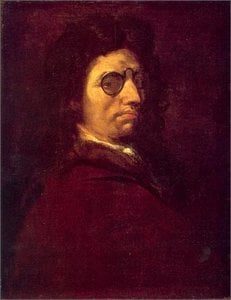
Other significant canvases include Luca Giordano’s Cephalus and Procris in the presence of Diana, painted in 1695. The composition carries the specific energy of the late seventeenth century. In a different vein, Carlos de Haes’s Landscape of Forest and River from 1862 captures the natural world through a mid-nineteenth-century lens. Each piece exists as a distinct entity, inviting the viewer to linger before the specific textures and colors of the original paint.