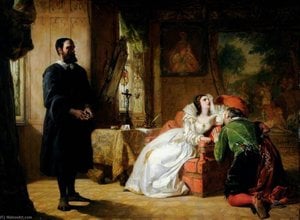
William Powell Frith, 1819 – 1909

Pinturas de William Powell Frith: As 100 Obras Mais Famosas, Classificadas

A pintura mais famosa de William Powell Frith é The Derby Day (1858), no Tate Britain, em Londres. Com Dr Johnson and Mrs Siddons in Bolt Court (1887) e João Knox Reproving Maria, Rainha das Escócia (1844), completam-se as três obras que todos reconhecem. O nosso catálogo lista 154 obras de William Powell Frith; as 100 abaixo são as mais admiradas no mundo, cada uma com o seu ano, o museu que a detém e a sua importância.

Classificado de acordo com o nosso índice de popularidade, que combina buscas, visitas e pedidos de cada obra. Atualizado em Outubro 2026. Cada obra-prima nesta página pode ser encomendada como uma reprodução em óleo pintada à mão, com qualidade de museu, ou como uma impressão de fine art, no tamanho de sua escolha.

Retrato de William Powell Frith
William Powell Frith · 1819 – 1909
Nascimento · falecimento
1819 – 1909, Aldfield
Movimento
Romanticism
Obras em nosso catálogo
154
Mais famosas
The Derby Day (1858)
Mais obras em
National Portrait Gallery

As 10 pinturas mais famosas de William Powell Frith

The Derby Day (1858) de William Powell Frith
1

The Derby Day

1858 · Oil On Canvas · Tate Britain, Londres

William Powell Frith's “The Derby Day,” painted in 1858, isn’t merely a depiction of a horse race; it’s a meticulously crafted panorama of Victorian society at its most vibrant and, frankly, its most stratified. Exhibited to immediate acclaim at the Royal Academy, this large oil painting captures a single afternoon – a fleeting moment frozen in time – yet offers an astonishingly detailed window into the lives, aspirations, and social…

Dr Johnson and Mrs Siddons in Bolt Court (1887) de William Powell Frith
2

Dr Johnson and Mrs Siddons in Bolt Court

1887 · Oil On Canvas · dr Johnson's House, London

In this work, titled Dr Johnson and Mrs Siddons in Bolt Court, the artist William Powell Frith presents a quiet, intimate encounter between two significant figures of the era. The painting captures Dr. Samuel Johnson and Mrs. Siddons in a moment of shared presence. It is a study of character and connection, rendered with the meticulous observation that defined Frith's approach to his subjects.

João Knox Reproving Maria, Rainha das Escócia (1844) de William Powell Frith
3

João Knox Reproving Maria, Rainha das Escócia

1844 · Acrílico sobre tela · Sheffield City Art Galleries, Sheffield

Uma Cena Histórica Capturada em Óleo Sobre Tela: John Knox Reproving Mary, Queen of Scots A pintura "John Knox Reproving Mary, Queen of Scots" de William Powell Frith é uma obra fascinante que transcende o mero registro histórico, oferecendo um profundo mergulho na psicologia humana e nas complexidades das relações políticas da Inglaterra Vitoriana. Criada em 1844, esta tela monumental, agora alojada nas Galerias Municipais de Sheffield, permanece como um…

William Powell Frith (1838) de William Powell Frith
4

William Powell Frith

1838 · Oil On Canvas · National Portrait Gallery, Londres

The young man in this oil on canvas is William Powell Frith, captured in a moment of quiet introspection. Painted in 1838, the work presents the artist as a nineteen-year-old student, peering out from a time when his professional path was just beginning to take shape. At this stage, he is a resident of 6 Charlotte Street, a location that marks his early presence in the London art scene. The…

Self-Portrait at the Age of 83 (1901) de William Powell Frith
6

Self-Portrait at the Age of 83

1901 · Oil On Canvas · Yale Center for British Art, New Haven

The oil painting titled Self-Portrait at the Age of 83 was executed by the artist William Powell Frith. Created in 1901, this work functions as a self-portrait, capturing the likeness of the artist himself. The subject depicted in the composition is William Powell Frith, presented in a bust-length view that focuses on the facial features and head of the sitter.

William Powell Frith, pinturas de 11 a 100

Barco da Ferry de Eastham (1862) de William Powell Frith
#12

Barco da Ferry de Eastham

1862 · Williamson Art Gallery - Museum

William Powell Frith e o Vibrante Cenário da Vida Cotidiana em Eastham Ferry Boat Este óleo sobre tela, intitulado “Eastham Ferry Boat” (Barco da Fenícia de Eastham), pintado…

Encomendar uma reprodução →
William Powell Frith (1867) de William Powell Frith
#13

William Powell Frith

1867 · National Portrait Gallery

This oil on canvas work, titled William Powell Frith, is a self-portrait executed by the artist William Powell Frith. The painting, which depicts the artist himself, was completed…

Encomendar uma reprodução →
Portrait of a Lady La Marquise (1885) de William Powell Frith
#21

Portrait of a Lady La Marquise

1885 · Auckland Art Gallery Toi o Tāmaki

Portrait of a Lady La Marquise is an oil portrait by the British artist William Powell Frith. Executed in 1885, the work presents a young woman in a…

Leve para casa →
The Sleeping Model (1853) de William Powell Frith
#29

The Sleeping Model

1853 · Royal Academy of Arts

In the quiet corners of a nineteenth-century studio, where the scent of oil paint and turpentine lingers, William Powell Frith captures a scene of profound, unexpected stillness. The…

Leve para casa →
The Invalid (1890) de William Powell Frith
#44

The Invalid

1890 · Nottingham Castle Museum And Art Gallery

In the quiet corners of late nineteenth-century England, domestic life was often defined by a delicate balance of social propriety and deep-seated familial devotion. William Powell Frith’s 1890…

Encomende uma cópia pintada à mão →
O Pequeno Retrato (1883) de William Powell Frith
#64

O Pequeno Retrato

1883 · New Walk Museum - Art Gallery

Uma Reflexão Silenciosa Sobre a Beleza Victoriana: O Retrato de William Powell Frith Uma obra que captura a essência da introspecção e da beleza delicada da época vitoriana…

Encomendar uma reprodução →
Lancaster Sands, Lancashire (1848) de William Powell Frith
#65

Lancaster Sands, Lancashire

1848 · Touchstones Rochdale Arts And Heritage Centre

The painting Lancaster Sands, Lancashire is a beautiful depiction of people on the beach with horses and carriages. Created in 1848 by William Powell Frith, this oil on…

Leve para casa →
The Railway Station - William Powell Frith (2026) de William Powell Frith
#66

The Railway Station - William Powell Frith

2026

William Powell Frith’s masterful depiction of a bustling railway station is more than just a painting; it's a vibrant snapshot of nineteenth-century England, teeming with life and narrative.…

Pinturas de William Powell Frith por período

Os temas que William Powell Frith mais pintou

Os quatro temas que mais se repetem entre estas obras-primas, com o melhor exemplo de cada um.

Onde ver as pinturas de William Powell Frith

Os 8 museus que detêm a maioria das pinturas desta página.

Museu Cidade Obras de William Powell Frith Pinturas desta lista
National Portrait Gallery, LondresNational Portrait Gallery Londres 3 William Powell Frith, William Powell Frith, Mary Elizabeth Maxwell, née Braddon
Royal Collection, LondresRoyal Collection Londres 4 Anne Page, Queen Alexandra (1844-1925) when Princess of Wales
Birmingham Museum and Art Gallery, BirminghamBirmingham Museum and Art Gallery Birmingham 2 Garden Flowers ( Making A Posy ), Retribution
Mercer Art Gallery, HarrogateMercer Art Gallery Harrogate 2 Many Happy Returns of the Day, L'adieu de Marie Stuart
Sheffield City Art Galleries, SheffieldSheffield City Art Galleries Sheffield 2 João Knox Reproving Maria, Rainha das Escócia
Rhode Island School of Design Museum of Art, ProvidenceRhode Island School of Design Museum of Art Providence 2 Feeding Time (My Lady's Pets)
Auckland Art Gallery Toi o Tāmaki, AucklandAuckland Art Gallery Toi o Tāmaki Auckland 2 Portrait of a Lady La Marquise
Tate Britain, LondresTate Britain Londres 1 The Derby Day

A pintura mais famosa de cada década de William Powell Frith

  1. 1830s
    William Powell Frith (1838) de William Powell Frith
    Posição 4 de 100

    William Powell Frith

    Idade 11 – 20 · National Portrait Gallery

    The young man in this oil on canvas is William Powell Frith, captured in a moment of quiet introspection. Painted in 1838, the work presents the artist as…

  2. 1840s
    João Knox Reproving Maria, Rainha das Escócia (1844) de William Powell Frith
    Nº 3 de 100

    João Knox Reproving Maria, Rainha das Escócia

    Idade 21 – 30 · Sheffield City Art Galleries

    Uma Cena Histórica Capturada em Óleo Sobre Tela: John Knox Reproving Mary, Queen of Scots A pintura "John Knox Reproving Mary, Queen of Scots" de William Powell Frith…

  3. 1850s
    The Derby Day (1858) de William Powell Frith
    #1 de 100

    The Derby Day

    Idade 31 – 40 · Tate Britain

    William Powell Frith's “The Derby Day,” painted in 1858, isn’t merely a depiction of a horse race; it’s a meticulously crafted panorama of Victorian society at its most…

  4. 1860s
  5. 1870s
  6. 1880s
    Dr Johnson and Mrs Siddons in Bolt Court (1887) de William Powell Frith
    #2 de 100

    Dr Johnson and Mrs Siddons in Bolt Court

    Idade 61 – 70 · dr Johnson's House

    In this work, titled Dr Johnson and Mrs Siddons in Bolt Court, the artist William Powell Frith presents a quiet, intimate encounter between two significant figures of the…

  7. 1890s
    The Invalid (1890) de William Powell Frith
    Nº 44 de 100

    The Invalid

    Idade 71 – 80 · Nottingham Castle Museum And Art Gallery

    In the quiet corners of late nineteenth-century England, domestic life was often defined by a delicate balance of social propriety and deep-seated familial devotion. William Powell Frith’s 1890…

  8. 1900s
    Self-Portrait at the Age of 83 (1901) de William Powell Frith
    #6 de 100

    Self-Portrait at the Age of 83

    Idade 81 – 90 · Yale Center for British Art

    The oil painting titled Self-Portrait at the Age of 83 was executed by the artist William Powell Frith. Created in 1901, this work functions as a self-portrait, capturing…

Dúvidas sobre as pinturas de William Powell Frith

Qual é a pintura mais famosa de William Powell Frith?Mostrar a resposta

The Derby Day (1858), Tate Britain, Londres. Seguem-se Dr Johnson and Mrs Siddons in Bolt Court (1887) e João Knox Reproving Maria, Rainha das Escócia (1844).

Qual era a idade de William Powell Frith quando The Derby Day foi pintada?Mostrar a resposta

39 anos: The Derby Day data de 1858 e William Powell Frith nasceu em 1819.

Quais são as 10 principais pinturas de William Powell Frith?Mostrar a resposta

The Derby Day, Dr Johnson and Mrs Siddons in Bolt Court, João Knox Reproving Maria, Rainha das Escócia, William Powell Frith, King Henry And Anne Boleyn Deer Shooting, Self-Portrait at the Age of 83, The Duel Scene from 'Twelfth Night' by William Shakespeare, Garden Flowers ( Making A Posy ), Anne Page e Mr Honeywood Introduces the Bailiffs to Miss Richland as His Friends (also known as rom Oliver Goldsmith's 'The Good Natured Man', Act III, Scene 1). O ranking acima apresenta o ano e o museu de cada uma.

Quantas pinturas William Powell Frith fez?Mostrar a resposta

Nosso catálogo lista 154 obras de William Powell Frith, datadas de 1837 a 1901.

Onde estão as pinturas mais famosas de William Powell Frith?Mostrar a resposta

A maioria deles está em National Portrait Gallery (Londres), Royal Collection (Londres) e Birmingham Museum and Art Gallery (Birmingham). A tabela acima lista os museus um a um.

Quando é que William Powell Frith pintou as suas obras mais famosas?Mostrar a resposta

Em 1860s: 11 das 100 obras nesta página datam dessa época, entre elas Feeding Time (My Lady's Pets).

Quais são as pinturas mais antigas e mais recentes de William Powell Frith?Mostrar a resposta

A obra mais antiga nesta página é de My First Attempt from Nature (1837), e a mais recente é de Self-Portrait at the Age of 83 (1901).

O que William Powell Frith mais pintou?Mostrar a resposta

Victorian era (13), Portraiture (5) e Victorian society (4), entre as 100 obras nesta página.

Qual técnica William Powell Frith mais utilizou?Mostrar a resposta

Oil On Canvas: 7 de um total de 100 obras nesta página.

A qual movimento artístico William Powell Frith pertence?Mostrar a resposta

Romanticism, como mostram as pinturas nesta página.

Quais pinturas de William Powell Frith posso ver no National Portrait Gallery?Mostrar a resposta

William Powell Frith, William Powell Frith e Mary Elizabeth Maxwell, née Braddon estão entre as 3 obras nesta página pertencentes ao National Portrait Gallery, Londres.

Posso comprar uma reprodução de uma pintura de William Powell Frith?Mostrar a resposta

Sim. Todas as pinturas desta página podem ser encomendadas como uma reprodução em óleo pintada à mão com qualidade de museu ou como uma impressão de fine art, no tamanho de sua escolha, a partir da própria página da pintura.

Sobre William Powell Frith

Early Life and Artistic Beginnings

William Powell Frith’s journey into the world of art began in a surprisingly modest setting: Aldfield, a small village nestled near Ripon in North Yorkshire, England. Born on January 9, 1819, he was the son of an innkeeper, a profession that initially seemed far removed from the realm of artistic creation. However, his father recognized and nurtured a nascent talent within young William, recognizing a keen eye for detail and a natural inclination towards visual representation.

Unlike many artists who benefited from privileged backgrounds, Frith’s early education was somewhat rudimentary. He received instruction in basic literacy and arithmetic before transitioning to the teachings of a local church school. Yet, it was his father's astute observation that steered him toward a more formal artistic training. This pivotal decision marked a turning point, setting him on a path towards becoming one of Britain’s most celebrated genre painters.

Frith’s initial aspirations leaned towards the practical profession of an auctioneer, a common pursuit for young men in his era. However, his father, recognizing his son's artistic potential, gently encouraged him to pursue his passion. This guidance led Frith to enroll at Sass’s Academy in Charlotte Street, London – a prestigious institution renowned for its rigorous training and exposure to the latest artistic trends. There, he honed his skills under the tutelage of accomplished instructors, laying the foundation for his future success.

Influences and Artistic Style

Frith's artistic development was profoundly shaped by several key influences, most notably the work of Sir David Wilkie, a prominent painter known for his captivating depictions of domestic scenes. Wilkie’s ability to capture the nuances of everyday life with remarkable realism and detail served as a significant model for Frith. He particularly admired Wilkie's approach to portraying social interactions within public spaces – a theme that would become central to Frith’s own artistic vision.

Furthermore, Frith was deeply impacted by the literary works of Charles Dickens, whose vivid descriptions of London life provided him with rich source material. He frequently drew inspiration from Dickens' novels and short stories, translating their scenes and characters onto canvas with meticulous precision. This collaboration between literature and art is evident in many of his most celebrated paintings.

Frith’s artistic style was characterized by an extraordinary level of detail and a commitment to realism. He meticulously observed the world around him, capturing the appearance of clothing, architecture, and human expressions with remarkable accuracy. His compositions often featured numerous figures arranged within complex, crowded scenes – a hallmark of his distinctive approach. He skillfully employed photographic studies, particularly those created by Robert Howlett, to ensure that every element in his paintings was rendered with utmost precision.

Notable Works and Artistic Achievements

William Powell Frith’s career produced a remarkable body of work, each painting offering a unique glimpse into Victorian society. Among his most iconic creations are Ramsgate Sands (1854), a vibrant depiction of seaside life that captures the energy and excitement of a popular resort town; The Derby Day (1858), a sprawling panorama of the Epsom Downs Racecourse, teeming with elegantly dressed spectators and spirited horses; and The Railway Station (1862), a detailed portrayal of Paddington Station, showcasing the bustling activity of London’s transportation hub.

His painting *The Sleeping Model* (1853) holds particular significance as his Diploma work at the Royal Academy. This piece demonstrated his technical mastery and artistic vision, solidifying his position within the art world. Another notable work is *The Crossing Sweeper* (1858), a poignant scene that starkly contrasts the opulence of the wealthy with the poverty of the working class – a commentary on social inequality that resonated deeply with Victorian audiences.

Frith’s success was not merely artistic; it was also commercial. His paintings were immensely popular, attracting large crowds to exhibitions and generating significant revenue. He became one of the most commercially successful artists of his time, a testament to his talent and the appeal of his subject matter.

Later Years and Legacy

As he matured, Frith continued to produce works that reflected both his artistic skill and his social awareness. His later paintings often explored themes of wealth, poverty, and morality, offering critical observations on Victorian society. He wrote two autobiographies, *My Autobiography* (1887) and *Further Reminiscences* (1888), providing valuable insights into his life, artistic process, and the cultural context in which he worked.

Frith remained active as an artist until his death on November 2, 1909, at the age of 90. He continued to exhibit his work throughout his later years, maintaining a strong presence within the British art scene. His legacy endures as one of the most important genre painters of the Victorian era, celebrated for his meticulous realism, social commentary, and captivating depictions of everyday life.

His paintings continue to be exhibited in museums and galleries around the world, offering a valuable window into 19th-century England. Frith’s work serves as a reminder of the power of art to document history, explore social issues, and capture the essence of human experience.

Todas as 154 obras de William Powell Frith →