Visualizar em escala Visualizar em RA Alternar para Impressão Ver Imagem Digital Enviar
Ver detalhes Guia Adicionar aos favoritos Baixar imagem Semelhantes Raio X Apresentação de slides Estatísticas

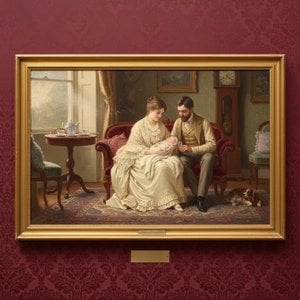
The Invalid

Experience Victorian life through 'The Invalid' by William Powell Frith! This captivating oil painting portrays a family gathering with poignant detail and masterful storytelling.

William Powell Frith foi um renomado pintor inglês da Era Vitoriana, conhecido por cenas sociais detalhadas e narrativas panorâmicas como "The Derby Day". Seu estilo realista capturou a vida cotidiana de Londres com precisão e socialmente consciente.

Reprodução em Óleo Feita à Mão

Óleo sobre tela pintado à mão no tamanho e moldura de sua escolha, feito sob encomenda pelos nossos artistas. ( Alternar para Impressão Ver Imagem Digital)

P118B $10
P118H $10
P118W $10
P438Z $10
P508JH $12
P508YH $12
P805H $10
P805Z $10
P919BZ $10
P919G $10
P919XJ $10
P959ZH $10
P968JZ $12
W106C $8
W218G $10
W218JH $8
W218Y $10
W307PJ $10
W316G $10
W316PJ $8
W316Y $10
W398PJ $8
W4111J $10
W500HY $15
W500JH $15
W692G $12
W849H $8
W940BG $15
W953PJ $8

Padrão
sob medida
CM
INCH

Escolha entre os nossos tamanhos pré-definidos que respeitam as proporções originais da obra de arte.

largura
altura

Pode inserir as suas próprias dimensões para se adequar a uma moldura ou espaço específico. Se o tamanho selecionado não corresponder às proporções da imagem original, iremos cortar a obra de arte ou estender a pintura com elementos adicionais pintados à mão. Um esboço digital será enviado para sua aprovação antes do início da produção.
Tenha em atenção que a pré-visualização no ecrã não reflete o corte ou extensão real. Apenas o esboço mostrará com precisão a composição final.
Embora tamanhos personalizados estejam disponíveis, recomendamos selecionar uma dimensão da lista predefinida para preservar as proporções originais.

Exemplos do que pode ser personalizado: Substituir o rosto pela foto do cliente; Adicionar um animal de estimação (ex: substituir gato por cão); Incluir uma mensagem oculta no fundo; Alterar a paisagem ou elementos do fundo.
Após o pedido, a equipa WahooArt.com enviará um e-mail ao cliente para solicitar instruções e fornecer uma prévia do esboço.

Entrega mundial () em 3 a 4 semanas, em vez das 5 semanas padrão. (21 Setembro). Sem comprometer a qualidade.

why_choose_icon
Envio expresso gratuito para todo o mundo
why_choose_icon
Tela de Linho Premium
why_choose_icon
Seguro de transporte total
why_choose_icon
Garantia de Reembolso de Impostos Alfandegários
why_choose_icon
Garantia de Fidelidade de Cor
why_choose_icon
Política de Devolução em 100 Dias (Apenas para Defeitos)
why_choose_icon
Garantia de reembolso de 100%
why_choose_icon
Desconto para múltiplas unidades

Preço Total

$ 272

reproduction

The Invalid

Técnica de Reprodução

Dimensões da Reprodução

-

Preço Total

$ 272

Detalhes Rápidos

  • Artistic style: Influenced by Sir David Wilkie; Attention to detail
  • Medium: Oil on panel
  • Subject or theme: Family life; Domestic interior
  • Title: The Invalid
  • Location: Nottingham Castle Museum & Art Gallery
  • Artist: William Powell Frith
  • Year: 1890

Teste de Conhecimentos Artísticos

Cada pergunta possui apenas uma resposta correta.

Questão 1:
What is the primary subject matter depicted in ‘The Invalid’?
Questão 2:
Where can you find ‘The Invalid’?
Questão 3:
What artistic style is characteristic of William Powell Frith’s work?
Questão 4:
Which artist heavily influenced Frith's approach to domestic subjects?
Questão 5:
What is a notable element of the painting’s composition that contributes to its atmosphere?

A Tender Glimpse into Victorian Intimacy

In the quiet corners of late nineteenth-century England, domestic life was often defined by a delicate balance of social propriety and deep-seated familial devotion. William Powell Frith’s 1890 masterpiece, "The Invalid," serves as a profound window into this era, capturing a moment that is simultaneously heavy with the weight of illness and lightened by the warmth of human connection. The painting presents a domestic tableau where a family gathers around a woman resting in bed, creating an atmosphere that feels less like a formal portrait and more like a stolen glance into a private, sacred space. Through his masterful use of color and composition, Frith invites us to witness the quiet strength found in companionship during times of vulnerability.

The scene is bathed in a comforting, golden glow, achieved through a palette dominated by rich reds, oranges, and yellows. This warmth does more than just illuminate the room; it acts as an emotional embrace, softening the somber reality of the subject matter. As we gaze upon the canvas, our eyes are drawn to the meticulous details that ground the scene in a tangible reality: the steady, silent presence of a grandfather clock on the wall, a vase brimming with fresh flowers that offers a flicker of life amidst the stillness, and scattered books that hint at the intellectual lives of those present. Every element is placed with intention, contributing to a narrative of caregiving and quiet endurance.

Mastery of Narrative and Technique

Frith was renowned for his ability to construct panoramic narratives, and even within this intimate domestic setting, his skill in storytelling is palpable. Drawing significant inspiration from the celebrated Sir David Wilkie, Frith eschews grand, theatrical gestures in favor of a more nuanced realism. He does not merely record a scene; he constructs an unfolding drama where the unspoken anxieties and affections of the characters are felt by the viewer. The positioning of the figures—particularly the man seated vigilantly beside the bed—underscores the Victorian ideal of duty and support, making the painting a poignant study of the bonds that hold a family together.

For the discerning collector or interior designer, "The Invalid" offers much more than mere decoration. It is a piece of historical storytelling that brings a sense of depth and soul to any space. The painting’s ability to evoke empathy makes it an ideal centerpiece for rooms designed for reflection and conversation. Whether placed in a traditional study or a contemporary living area, the work provides a sophisticated touch of nostalgia, reminding us of the timelessness of love and the enduring importance of presence in the face of adversity.


Biografia do Artista

Early Life and Artistic Beginnings

William Powell Frith’s journey into the world of art began in a surprisingly modest setting: Aldfield, a small village nestled near Ripon in North Yorkshire, England. Born on January 9, 1819, he was the son of an innkeeper, a profession that initially seemed far removed from the realm of artistic creation. However, his father recognized and nurtured a nascent talent within young William, recognizing a keen eye for detail and a natural inclination towards visual representation.

Unlike many artists who benefited from privileged backgrounds, Frith’s early education was somewhat rudimentary. He received instruction in basic literacy and arithmetic before transitioning to the teachings of a local church school. Yet, it was his father's astute observation that steered him toward a more formal artistic training. This pivotal decision marked a turning point, setting him on a path towards becoming one of Britain’s most celebrated genre painters.

Frith’s initial aspirations leaned towards the practical profession of an auctioneer, a common pursuit for young men in his era. However, his father, recognizing his son's artistic potential, gently encouraged him to pursue his passion. This guidance led Frith to enroll at Sass’s Academy in Charlotte Street, London – a prestigious institution renowned for its rigorous training and exposure to the latest artistic trends. There, he honed his skills under the tutelage of accomplished instructors, laying the foundation for his future success.

Influences and Artistic Style

Frith's artistic development was profoundly shaped by several key influences, most notably the work of Sir David Wilkie, a prominent painter known for his captivating depictions of domestic scenes. Wilkie’s ability to capture the nuances of everyday life with remarkable realism and detail served as a significant model for Frith. He particularly admired Wilkie's approach to portraying social interactions within public spaces – a theme that would become central to Frith’s own artistic vision.

Furthermore, Frith was deeply impacted by the literary works of Charles Dickens, whose vivid descriptions of London life provided him with rich source material. He frequently drew inspiration from Dickens' novels and short stories, translating their scenes and characters onto canvas with meticulous precision. This collaboration between literature and art is evident in many of his most celebrated paintings.

Frith’s artistic style was characterized by an extraordinary level of detail and a commitment to realism. He meticulously observed the world around him, capturing the appearance of clothing, architecture, and human expressions with remarkable accuracy. His compositions often featured numerous figures arranged within complex, crowded scenes – a hallmark of his distinctive approach. He skillfully employed photographic studies, particularly those created by Robert Howlett, to ensure that every element in his paintings was rendered with utmost precision.

Notable Works and Artistic Achievements

William Powell Frith’s career produced a remarkable body of work, each painting offering a unique glimpse into Victorian society. Among his most iconic creations are Ramsgate Sands (1854), a vibrant depiction of seaside life that captures the energy and excitement of a popular resort town; The Derby Day (1858), a sprawling panorama of the Epsom Downs Racecourse, teeming with elegantly dressed spectators and spirited horses; and The Railway Station (1862), a detailed portrayal of Paddington Station, showcasing the bustling activity of London’s transportation hub.

His painting *The Sleeping Model* (1853) holds particular significance as his Diploma work at the Royal Academy. This piece demonstrated his technical mastery and artistic vision, solidifying his position within the art world. Another notable work is *The Crossing Sweeper* (1858), a poignant scene that starkly contrasts the opulence of the wealthy with the poverty of the working class – a commentary on social inequality that resonated deeply with Victorian audiences.

Frith’s success was not merely artistic; it was also commercial. His paintings were immensely popular, attracting large crowds to exhibitions and generating significant revenue. He became one of the most commercially successful artists of his time, a testament to his talent and the appeal of his subject matter.

Later Years and Legacy

As he matured, Frith continued to produce works that reflected both his artistic skill and his social awareness. His later paintings often explored themes of wealth, poverty, and morality, offering critical observations on Victorian society. He wrote two autobiographies, *My Autobiography* (1887) and *Further Reminiscences* (1888), providing valuable insights into his life, artistic process, and the cultural context in which he worked.

Frith remained active as an artist until his death on November 2, 1909, at the age of 90. He continued to exhibit his work throughout his later years, maintaining a strong presence within the British art scene. His legacy endures as one of the most important genre painters of the Victorian era, celebrated for his meticulous realism, social commentary, and captivating depictions of everyday life.

His paintings continue to be exhibited in museums and galleries around the world, offering a valuable window into 19th-century England. Frith’s work serves as a reminder of the power of art to document history, explore social issues, and capture the essence of human experience.

William Powell Frith

William Powell Frith

1819 - 1909 , Reino Unido

Informações Rápidas

  • Artistic Movement Or Style: Pintura de gênero
  • Artists Or Movements Influenced By This Artist: ['The Clique']
  • Artists Who Influenced This Artist: ['David Wilkie']
  • Date Of Birth: 9 jan 1819
  • Date Of Death: 2 nov 1909
  • Full Name: William Powell Frith
  • Nationality: Inglês
  • Notable Artworks:
    • Ramsgate Sands
    • Derby Day
    • Estação Ferroviária
  • Place Of Birth: Aldfield, Reino Unido
Explore obras de arte organizadas por temas, estilos e características.