Peter Ilsted, 1861 – 1933

As 14 pinturas mais famosas de Peter Ilsted

A pintura que tornou Peter Ilsted famoso(a) é A Young Girl Preparing Chantarelles (1892); ela está exposta no Statens Museum For Kunst, em Copenhague. A Little Girl Sewing (1900) e Præsten Gjerløv Christian Krog Schiøler (1904) seguem-lhes nos corações de colecionadores e visitantes de museus. Dos 15 trabalhos de Peter Ilsted em nosso catálogo, estas 14 são as obras mais admiradas, cada uma apresentada com a sua data, o seu museu e o que a torna única.

Classificado de acordo com o nosso índice de popularidade, que combina buscas, visitas e pedidos de cada obra. Atualizado em Novembro 2026. Cada obra-prima nesta página pode ser encomendada como uma reprodução em óleo pintada à mão, com qualidade de museu, ou como uma impressão de fine art, no tamanho de sua escolha.

Retrato de Peter Ilsted
Peter Ilsted · 1861 – 1933
Nascimento · falecimento
1861 – 1933, Sakskøbing
Obras em nosso catálogo
15
As mais famosas
A Young Girl Preparing Chantarelles (1892)
Mais obras em
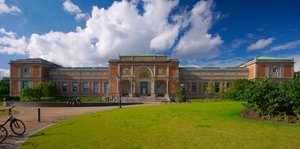
Statens Museum For Kunst

Peter Ilsted: as dez obras-primas

A Young Girl Preparing Chantarelles (1892) de Peter Ilsted
1

A Young Girl Preparing Chantarelles

1892 · Oil · Statens Museum For Kunst, Copenhague

In "A Young Girl Preparing Chantarelles" by Peter Ilsted, the scene unfolds through an asymmetrical arrangement that directs the eye across a sparse interior. A young woman is positioned on the left side of the frame, her body turned toward a wooden table on the right. This spatial tension creates a quiet pull toward the center of the room. The perspective is a straight-on, eye-level view, placing the viewer directly…

Reprodução em óleo pintada à mão de $199 28 × 36 cm Mesmo tamanho da original $280 52 × 66 cm Encomendar no tamanho original →
A Little Girl Sewing (1900) de Peter Ilsted
2

A Little Girl Sewing

1900 · Oil On Canvas · Ribe Kunstmuseum, Esbjerg

In "A Little Girl Sewing" by Peter Ilsted, a quiet, intimate genre scene unfolds within a still domestic space. Created about 1900, the work captures a young girl lost in the rhythmic, focused task of sewing. She sits positioned to one side, her attention entirely consumed by the needle and thread. This simple, everyday moment feels suspended in time, offering a glimpse into a private world of quiet concentration and…

Reprodução em óleo pintada à mão de $199 30 × 34 cm Mesmo tamanho da original $281 55 × 63 cm Encomendar no tamanho original →
Præsten Gjerløv Christian Krog Schiøler (1904) de Peter Ilsted
3

Præsten Gjerløv Christian Krog Schiøler

1904 · Painting · Statens Museum For Kunst, Copenhague

In this 1904 portrait, Peter Ilsted captures Præsten Gjerløv Christian Krog Schiøler in a moment of quiet dignity. The subject, an elderly man, meets the viewer's gaze through a formal three-quarter view. He sits with a sense of social standing, his presence filling the frame from the waist up. There is a weight to his expression, a solemnity that suggests a lifetime of wisdom and experience. His white hair and…

Reprodução em óleo pintada à mão de $199 27 × 37 cm Mesmo tamanho da original $254 44 × 60 cm Encomendar no tamanho original →
In the bedroom. (1901) de Peter Ilsted
4

In the bedroom.

1901 · Oil

In the bedroom. by Peter Ilsted, painted about 1901, captures a solitary moment of reflection or transition within a quiet, nocturnal space. The composition is vertically oriented, drawing the eye toward a woman sitting on the edge of a bed. She rests beside a lit bedside lamp that acts as the primary source of light in the room. From a slightly low, side angle, the viewer observes this private scene…

Reprodução em óleo pintada à mão de $199 29 × 35 cm Mesmo tamanho da original $226 39 × 47 cm Encomendar no tamanho original →
Ved klaveret (1887) de Peter Ilsted
5

Ved klaveret

1887 · Oil On Canvas · Statens Museum For Kunst, Copenhague

is an oil on canvas work by the Danish artist Peter Ilsted. Created about 1887, the painting captures a quiet, intimate interior scene. The composition centers on a woman and a young child seated at a dark wooden piano, framed by a large painting on the wall and a heavy dark curtain.

Reprodução em óleo pintada à mão de $199 28 × 35 cm Mesmo tamanho da original $209 33 × 40 cm Encomendar no tamanho original →
A model. (1890) de Peter Ilsted
6

A model.

1890 · Oil On Canvas

In "A model." by Peter Ilsted, the viewer enters a dimly lit interior where a single, low light source—perhaps a small lamp or a candle resting on the floor—casts a warm, intense glow upwards. This light pierces the shadows to highlight the soft contours of the woman's back, buttocks, and legs. The subject is a nude female figure seen from behind, seated upon a raised platform or bench. She hunches…

Reprodução em óleo pintada à mão de $199 29 × 35 cm Mesmo tamanho da original $224 38 × 46 cm Encomendar no tamanho original →
Woman reading (1905) de Peter Ilsted
8

Woman reading

1905 · Oil

In Woman reading, painted by Peter Ilsted about 1905, the viewer encounters a domestic scene of quiet study. The subject is a woman seated at a desk, captured from behind in a moment of solitary concentration. She is positioned in the foreground, set against a flat, textured wall that emphasizes the stillness of the room. This arrangement creates a sense of intimacy, as if the observer has stumbled upon a…

Reprodução em óleo pintada à mão de $199 29 × 34 cm
Wilhelm the dining room de Peter Ilsted
10

Wilhelm the dining room

Painting

The painting titled Wilhelm the dining room is a work by the artist Peter Ilsted. This piece depicts a woman situated within a kitchen setting. She is positioned near a table, with a chair placed immediately beside it. The composition focuses on the domestic arrangement of the room, where a dining table is surrounded by several chairs.

Reprodução em óleo pintada à mão de $199 28 × 36 cm

Mais obras-primas de Peter Ilsted, de 11 a 14

Os temas que Peter Ilsted mais pintou

Os quatro temas que mais se repetem entre estas obras-primas, com o melhor exemplo de cada um.

Onde ver as pinturas de Peter Ilsted

Os 2 museus que detêm a maioria das pinturas desta página.

Museus Cidade Obras de Peter Ilsted Pinturas desta lista
Statens Museum For Kunst, CopenhagueStatens Museum For Kunst Copenhague 4 A Young Girl Preparing Chantarelles, Præsten Gjerløv Christian Krog Schiøler, Ved klaveret
Ribe Kunstmuseum, EsbjergRibe Kunstmuseum Esbjerg 1 A Little Girl Sewing

Peter Ilsted, década a década: a pintura emblemática de cada uma

  1. 1880s
    Ved klaveret (1887) de Peter Ilsted
    #5 de 14

    Ved klaveret

    Idade 19 – 28 · Statens Museum For Kunst

    is an oil on canvas work by the Danish artist Peter Ilsted. Created about 1887, the painting captures a quiet, intimate interior scene. The composition centers on a…

  2. 1890s
    A Young Girl Preparing Chantarelles (1892) de Peter Ilsted
    Posição 1 de 14

    A Young Girl Preparing Chantarelles

    Idade 29 – 38 · Statens Museum For Kunst

    In "A Young Girl Preparing Chantarelles" by Peter Ilsted, the scene unfolds through an asymmetrical arrangement that directs the eye across a sparse interior. A young woman is…

  3. 1900s
    A Little Girl Sewing (1900) de Peter Ilsted
    #2 de 14

    A Little Girl Sewing

    Idade 39 – 48 · Ribe Kunstmuseum

    In "A Little Girl Sewing" by Peter Ilsted, a quiet, intimate genre scene unfolds within a still domestic space. Created about 1900, the work captures a young girl…

As obras-primas de Peter Ilsted: perguntas e respostas

Por qual pintura Peter Ilsted é mais conhecido(a)?Mostrar a resposta

A Young Girl Preparing Chantarelles (1892), Statens Museum For Kunst, Copenhague. Seguem-se A Little Girl Sewing (1900) e Præsten Gjerløv Christian Krog Schiøler (1904).

Qual era a idade de Peter Ilsted quando pintou A Young Girl Preparing Chantarelles?Mostrar a resposta

31 anos: A Young Girl Preparing Chantarelles data de 1892 e Peter Ilsted nasceu em 1861.

Quais são as dez maiores pinturas de Peter Ilsted?Mostrar a resposta

A Young Girl Preparing Chantarelles, A Little Girl Sewing, Præsten Gjerløv Christian Krog Schiøler, In the bedroom., Ved klaveret, A model., Interior with a samovar. Evening, Woman reading, Image banner051222 e Wilhelm the dining room. O ranking acima apresenta o ano e o museu de cada uma.

Quantas obras Peter Ilsted pintou?Mostrar a resposta

Nosso catálogo lista 15 obras de Peter Ilsted, datadas de 1887 a 1905.

Em quais museus posso ver as obras-primas de Peter Ilsted?Mostrar a resposta

A maioria deles está em Statens Museum For Kunst (Copenhague) e Ribe Kunstmuseum (Esbjerg). A tabela acima lista os museus um a um.

Quando é que Peter Ilsted pintou as suas obras-primas?Mostrar a resposta

Em 1900s: 5 das 14 obras nesta página datam dessa época, entre elas A Little Girl Sewing.

Quais são as primeiras e as últimas pinturas famosas de Peter Ilsted?Mostrar a resposta

A obra mais antiga nesta página é de Ved klaveret (1887), e a mais recente é de Woman reading (1905).

Quais eram os temas favoritos de Peter Ilsted?Mostrar a resposta

Woman (7), Interior (5) e Table (4), entre as 14 obras nesta página.

Qual técnica Peter Ilsted preferia?Mostrar a resposta

Oil: 6 de um total de 14 obras nesta página.

Quais obras-primas de Peter Ilsted estão expostas no Statens Museum For Kunst?Mostrar a resposta

A Young Girl Preparing Chantarelles, Præsten Gjerløv Christian Krog Schiøler e Ved klaveret estão entre as 4 obras nesta página pertencentes ao Statens Museum For Kunst, Copenhague.

Posso adquirir uma reprodução de uma obra-prima de Peter Ilsted?Mostrar a resposta

Sim. Todas as pinturas desta página podem ser encomendadas como uma reprodução em óleo pintada à mão com qualidade de museu ou como uma impressão de fine art, no tamanho de sua escolha, a partir da própria página da pintura.

A vida de Peter Ilsted

Peter Ilsted (1861–1933): The Quietude of Domestic Space

Peter Vilhelm Ilsted was born in Sakskøbing, Denmark, on February 14th, 1861. He descended from a wealthy merchant family—a circumstance that afforded him considerable freedom to pursue his artistic inclinations from an early age. His formative years were marked by attendance at the Royal Danish Academy of Fine Arts in Copenhagen between 1878 and 1883, where he honed his skills under the tutelage of luminaries like Edvard Munch and Kristian Foss. This period instilled within him a profound appreciation for the artistic traditions of Norway and Sweden—influences that would permeate his subsequent oeuvre. Notably, Ilsted’s sister Ida married Vilhelm Hammershøi in 1891, forging an enduring artistic partnership that profoundly shaped their respective styles. Together, they became pivotal figures in establishing what is known as “The Copenhagen Interior School,” a movement characterized by its exploration of domestic interiors bathed in soft, diffused light—a deliberate reaction against the industrializing forces reshaping Denmark at the time. Inspiration drew heavily from Johannes Vermeer and Rembrandt, masters who had championed the depiction of everyday life within confined spaces.
  • Early Influences: Ilsted’s artistic sensibilities were nurtured by exposure to Impressionism and Symbolism, movements that prioritized capturing fleeting moments of emotion and atmosphere rather than striving for photographic realism.
  • Technique: He mastered the mezzotint etching process—a technique he embraced with particular fervor—demonstrating exceptional precision and artistry in transferring tonal gradations onto metal plates. This method allowed him to achieve remarkable subtlety and nuance, mirroring the quiet contemplation inherent in his chosen subjects.

The Copenhagen Interior School: A Synthesis of Tradition and Innovation

Ilsted’s artistic vision—like that of Hammershøi—centered on portraying domestic interiors with an unwavering commitment to capturing a sense of serene stillness. Artists such as Carl Holsøe, who collaborated closely with Ilsted and Hammershøi, shared this aesthetic preoccupation. The interiors depicted by these masters eschewed ostentation and grandeur, instead favoring muted color palettes—primarily browns, greys, and blacks—that evoked the comforting warmth of a home untouched by the anxieties of modernity. They deliberately avoided excessive ornamentation, prioritizing compositional clarity and spatial depth—a stylistic decision rooted in the legacy of seventeenth-century Dutch painters like Rembrandt and Johannes Vermeer. These artists sought to convey not merely visual representation but also an emotional resonance—a feeling of quiet contemplation that invited viewers to immerse themselves in the depicted scene.
  • Light and Shadow: Ilsted’s masterful manipulation of light and shadow—a technique he termed “chiaroscuro”—was central to his artistic practice. He meticulously studied Rembrandt's etchings, absorbing his profound understanding of tonal gradation and its ability to imbue images with psychological depth.
  • Compositional Considerations: Ilsted’s interiors often featured figures positioned strategically—typically seen from behind—creating a sense of mystery and prompting viewers to consider the unspoken thoughts and emotions animating those depicted within. This compositional device echoed Hammershøi's stylistic approach, reflecting a shared desire to convey mood through subtle visual cues.

Mezzotint Prints: A Revolutionary Medium

Ilsted’s dedication to mezzotint etching—a technique rarely practiced in Denmark during his time—represented a bold departure from prevailing artistic conventions. He undertook extensive research into the craft, studying English mezzotints and meticulously replicating their tonal qualities. His prints achieved unparalleled subtlety and nuance thanks to the “à la poupée” method—a painstaking process involving hand-inking different areas of the plate with fabric bundles—which ensured that colors remained isolated from one another during printing. This innovative technique garnered considerable acclaim in Ilsted’s day, establishing him as a pioneer in graphic arts and securing his place among the foremost artists of his era.
  • Notable Prints: Among Ilsted's most celebrated works are depictions of domestic interiors—such as “Lille Rekonvalescent”—which exemplify his signature style—characterized by soft tonal shades and contemplative compositions.
  • Critical Recognition: Ilsted’s prints were lauded by prominent art critics and collectors, including James McNeill Whistler and Duret, who recognized their exceptional artistic merit and groundbreaking technical innovation.

Legacy and Historical Significance

Peter Ilsted's contribution to Danish art—particularly his pioneering role in establishing “The Copenhagen Interior School”—continues to resonate today. His meticulous observation of domestic life—combined with his masterful command of mezzotint etching—established him as a singular voice within the artistic landscape of early twentieth-century Denmark. He stands alongside Vilhelm Hammershøi and Carl Holsøe as one of the most influential figures in shaping Danish visual culture—a testament to his enduring artistic vision and unwavering commitment to exploring themes of tranquility, contemplation, and understated beauty. His work remains a compelling exemplar of how art can capture not merely what is seen but also what is felt—a legacy that ensures Ilsted’s place among the titans of Scandinavian painting.