Um Visionário da Paisagem Atmosférica
Sir Alfred Edward East emergiu do vibrante meio artístico da Grã-Bretanha vitoriana, um período definido por um profundo fascínio tanto pelo realismo meticuloso quanto pelos ideais românticos emergentes. Nascido em Kettering, Northamptonshire, sua jornada criativa teve início com uma formação fundamental na Glasgow School of Art. Embora suas inclinações iniciais estivessem enraizadas nas veneráveis tradições da pintura de paisagem britânica — um gênero já honrado por mestres como Constable e Turner — a trajetória artística de Alfred East passou por uma mudança decisiva e transformadora. Ele foi além da mera documentação, buscando, em vez disso, capturar a própria essência do mundo natural através de uma lente de profunda ressonância emocional.
Esta evolução foi profundamente moldada pelo seu encontro com a escola francesa de Barbizon. Em vez de simplesmente adotar uma nova técnica, Alfred East abraçou uma mudança filosófica que priorizava a observação direta e a representação despojada da vida rural. Ele evitou as grandes narrativas históricas em favor da poesia encontrada nas cenas cotidianas, concentrando-se na sensação de estar verdadeiramente imerso na natureza. Essa busca pela pintura en plein air permitiu-lhe dominar o jogo sutil entre luz, sombra e atmosfera, criando obras que possuem uma qualidade quase tátil.
A Influência de Horizontes Distantes
Um momento crucial na carreira de Alfred East ocorreu em 1888, quando foi comissionado por Marcus Huish, diretor administrativo da Fine Art Society, para viajar ao Japão por seis meses. Esta expedição revelou-se transformadora, pois a luz única, as cores vibrantes e a estética cultural distinta da paisagem japonesa cativaram sua imaginação. Ele não se limitou a documentar locais exóticos; ele absorveu uma nova forma de ver — uma sensibilidade aguçada à composição e ao delicado equilíbrio entre a natureza e a presença humana. A subsequente exposição de 104 pinturas desta turnê, em 1890, foi um sucesso espetacular, estabelecendo-o firmemente como um dos principais pintores de paisagem de sua era.
Sua obra permanece como uma bela síntese de diversas influências, fundindo elementos essenciais:
- A Influência de Barbizon: Um compromisso com tons terrosos, paletas suaves e o poder evocativo da perspectiva atmosférica.
- A Tradição Britânica: Um respeito profundo pela beleza rústica e pelo espírito tranquilo do campo inglês.
- A Estética Japonesa: Uma infusão de novas perspectivas sobre a luz e uma sensibilidade refinada aos detalhes sutis do mundo natural.
Legado e Significância Artística
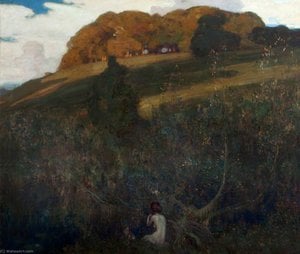
Ao longo de sua vida, a dedicação de Alfred East em capturar a alma da paisagem deixou uma marca indelével na arte de seu tempo. Sua habilidade em transmitir a grandeza silenciosa de cenas como Midland Meadows ou as mudanças sazonais vistas em October Glow, near Yardley Woods demonstra um domínio magistral do clima e da luz. Além de suas telas pessoais, sua conexão com suas raízes permanece preservada através da Alfred East Art Gallery em Kettering, que serve como um santuário para o próprio espírito da pintura de paisagem que ele ajudou a pioneering. Seu legado continua a ressoar através de obras que convidam os espectadores a se reconectarem com a beleza duradoura do mundo natural.
Perguntas e Respostas
Onde e quando nasceu Alfred East?
Alfred East nasceu em Kettering, em 1844.
Posso ordenar as obras de Alfred East por cor?
A página Índice de Cores organiza as obras de Alfred East por cor.
Existe uma visão geral de todos os temas que Alfred East pintou?
As obras de Alfred East podem ser exploradas por tema na página Atlas de Temas do artista.