Visualizar em escala Visualizar em RA Encomendar reprodução pintada à mão Ver Imagem Digital Enviar
Ver detalhes Guia de Obras do Aluno Adicionar aos favoritos Baixar imagem Semelhantes Raio X Apresentação de slides Estatísticas

Untitled (D2WVSV)

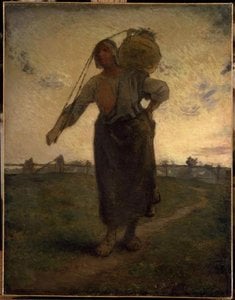
William Morris Hunt's "Untitled" (1852) captures a contemplative woman amidst a serene outdoor scene, showcasing the Barbizon School’s luminous style and hinting at Victorian era elegance. A captivating portrait with subtle details.

William Morris Hunt (1824-1879): Pintor Barbizon americano conhecido por paisagens luminosas e retratos. Inspirado por Millet, moldou a arte de Boston no século XIX e promoveu os estilos europeus.

Giclée / Impressão de Arte

Impressão giclée ou em tela de qualidade de museu, com produção rápida e opções flexíveis de acabamento. ( Encomendar reprodução pintada à mão Ver Imagem Digital)

Corner sample of the P118B picture frame: poliestireno moldado, 5 cm wide and 3 cm thick
P118B €10
Corner sample of the P118H picture frame: poliestireno moldado, 5 cm wide and 3 cm thick
P118H €10
Corner sample of the P118W picture frame: poliestireno moldado, 5 cm wide and 3 cm thick
P118W €10
Corner sample of the P438Z picture frame: poliestireno moldado, 5.5 cm wide and 3.5 cm thick
P438Z €10
Corner sample of the P508JH picture frame: poliestireno moldado, 7 cm wide and 3.5 cm thick
P508JH €12
Corner sample of the P508YH picture frame: poliestireno moldado, 7 cm wide and 3.5 cm thick
P508YH €12
Corner sample of the P805H picture frame: poliestireno moldado, 5 cm wide and 3.5 cm thick
P805H €10
Corner sample of the P805Z picture frame: poliestireno moldado, 5 cm wide and 3.5 cm thick
P805Z €10
Corner sample of the P919BZ picture frame: poliestireno moldado, 7 cm wide and 3.5 cm thick
P919BZ €10
Corner sample of the P919G picture frame: poliestireno moldado, 7 cm wide and 3.5 cm thick
P919G €10
Corner sample of the P919XJ picture frame: poliestireno moldado, 7 cm wide and 3.5 cm thick
P919XJ €10
Corner sample of the P959ZH picture frame: poliestireno moldado, 5 cm wide and 3 cm thick
P959ZH €10
Corner sample of the P968JZ picture frame: poliestireno moldado, 6 cm wide and 4 cm thick
P968JZ €12
Corner sample of the W106C picture frame: madeira maciça, 5 cm wide and 3 cm thick
W106C €8
Corner sample of the W218G picture frame: madeira maciça, 5 cm wide and 3 cm thick
W218G €10
Corner sample of the W218JH picture frame: madeira maciça, 5 cm wide and 3 cm thick
W218JH €8
Corner sample of the W218Y picture frame: madeira maciça, 5 cm wide and 3 cm thick
W218Y €10
Corner sample of the W307PJ picture frame: madeira maciça, 6 cm wide and 3 cm thick
W307PJ €10
Corner sample of the W316G picture frame: madeira maciça, 6 cm wide and 3 cm thick
W316G €10
Corner sample of the W316PJ picture frame: madeira maciça, 6 cm wide and 3 cm thick
W316PJ €8
Corner sample of the W316Y picture frame: madeira maciça, 6 cm wide and 3 cm thick
W316Y €10
Corner sample of the W398PJ picture frame: madeira maciça, 5 cm wide and 3 cm thick
W398PJ €8
Corner sample of the W4111J picture frame: madeira maciça, 6.5 cm wide and 3.5 cm thick
W4111J €10
Corner sample of the W500HY picture frame: madeira maciça, 7 cm wide and 5 cm thick
W500HY €15
Corner sample of the W500JH picture frame: madeira maciça, 7 cm wide and 5 cm thick
W500JH €15
Corner sample of the W692G picture frame: madeira maciça, 8 cm wide and 4 cm thick
W692G €12
Corner sample of the W849H picture frame: madeira maciça, 5 cm wide and 3 cm thick
W849H €8
Corner sample of the W940BG picture frame: madeira maciça, 7.5 cm wide and 4.5 cm thick
W940BG €15
Corner sample of the W953PJ picture frame: madeira maciça, 6 cm wide and 3.5 cm thick
W953PJ €8

Padrão
sob medida
CM
INCH

Escolha entre os nossos tamanhos pré-definidos que respeitam as proporções originais da obra de arte.

largura
altura

Digite a largura e a altura de que necessita, para se ajustar à sua moldura ou à sua parede. Uma impressão só pode ser cortada, nunca ampliada além da imagem original, pelo que um tamanho com uma proporção diferente perderá parte da imagem. Enviamos-lhe uma maquete digital para aprovação antes de imprimirmos qualquer coisa. A imagem apresentada nesta página não mostra o corte real — apenas a maquete o faz.

Entrega mundial () em 2 semanas, em vez das 4/5 semanas padrão. (23 Outubro)

Envio expresso gratuito para todo o mundo
Tela de Linho Premium
Seguro de transporte total
Garantia de Reembolso de Impostos Alfandegários
Garantia de Fidelidade de Cor
Política de Devolução em 100 Dias (Apenas para Defeitos)
Garantia de reembolso de 100%
Desconto para múltiplas unidades

Preço Total

€ 60

Untitled (D2WVSV)

Giclée / Impressão de Arte

Dimensões da Reprodução

-

Preço Total

€ 60

Detalhes Rápidos

  • Title: Untitled (D2WVSV)
  • Movement: Barbizon School
  • Dimensions: 117 x 90 cm
  • Year: 1852
  • Influences:
    • Millet
    • European masters

A Moment Frozen in Time: Unveiling William Morris Hunt's "Untitled (D2WVSV)"

William Morris Hunt’s 1852 painting, “Untitled (D2WVSV),” is more than a simple portrait; it’s a carefully constructed tableau of observation and subtle emotion. Measuring a modest 117 x 90 cm, the work immediately draws the viewer in with its restrained palette – primarily grays and muted earth tones – that evokes the atmosphere of an early autumn afternoon. The subject, a woman positioned outdoors against a backdrop of trees and a delicate fountain, appears lost in thought, her hand resting lightly on a wall as if seeking support or simply pausing to consider something unseen. Her gaze is directed off-camera, inviting us into her private world, creating an immediate sense of intimacy and intrigue.

Hunt’s choice of subject matter—a woman engaged in quiet contemplation—reflects the burgeoning interest in psychological realism that was gaining traction within American art during the mid-19th century. He wasn't interested in grand narratives or dramatic displays; instead, he sought to capture the nuances of human experience – the fleeting expressions, the unspoken thoughts, and the subtle gestures that reveal a person’s inner life. This approach aligns closely with the Barbizon School, which emphasized direct observation of nature and the depiction of everyday subjects with an emphasis on tonal values and atmospheric effects.

The Barbizon Influence: Light, Shadow, and the Essence of Nature

Born in Brattleboro, Vermont, William Morris Hunt’s artistic journey was profoundly shaped by his exposure to European art, particularly the Barbizon School. Inspired by Jean-François Millet, Hunt embraced the Barbizon's philosophy of painting *en plein air* – directly from nature – and its focus on capturing the effects of light and atmosphere. This is evident in “Untitled (D2WVSV)” through the masterful use of chiaroscuro; the interplay of light and shadow creates a sense of depth and volume, while subtly highlighting the woman’s face and hand. The loose brushwork and textured surfaces further contribute to the painting's naturalistic quality, mirroring Millet’s own approach.

The inclusion of the fountain and trees in the background isn’t merely decorative; they serve as anchors for the composition, grounding the figure within a believable landscape. Hunt skillfully renders the foliage with a delicate touch, suggesting movement and texture through subtle variations in tone and brushstroke. The clock visible in the scene adds an intriguing layer of symbolism – perhaps representing the passage of time or inviting contemplation on mortality, themes frequently explored by artists of the era.

Symbolism and Emotional Resonance

While the painting’s title is “Untitled,” it's clear that Hunt intended to convey a specific mood. The woman’s averted gaze suggests a moment of introspection or perhaps a longing for something beyond her immediate surroundings. Her posture—relaxed yet poised—evokes a sense of quiet dignity and resilience. The wall she touches could symbolize support, reflection, or even a barrier between herself and the unseen subject of her thoughts.

Considering Hunt’s own life – his struggles with artistic recognition, his travels across Europe, and his eventual return to America – it's possible that this painting represents a personal meditation on themes of identity, belonging, and the search for meaning. The subdued colors and contemplative atmosphere invite viewers to project their own emotions and experiences onto the scene, transforming “Untitled (D2WVSV)” into a deeply resonant portrait of human experience.

A Reproduction Worth Cherishing

WahooArt offers meticulously hand-painted reproductions of William Morris Hunt’s “Untitled (D2WVSV),” capturing the essence of this remarkable work with unparalleled detail and fidelity. Each reproduction is created by skilled artists who understand the nuances of Hunt's technique, ensuring that you receive a piece that truly honors the original painting. Whether displayed in your home or office, this reproduction will serve as a beautiful reminder of the power of observation, contemplation, and the enduring legacy of American art.

Perguntas e Respostas

Como é descrita a paleta de "Untitled (D2WVSV)" de William Morris Hunt?

"Untitled (D2WVSV)" de William Morris Hunt utiliza uma paleta de cores Earthy. A paleta resume o caráter cromático geral da obra.

Como o meio e o movimento se combinam em "Untitled (D2WVSV)"?

Em "Untitled (D2WVSV)", a técnica de Acrylic On Canvas encontra o movimento Barbizon School.

Onde posso comprar uma impressão de "Untitled (D2WVSV)" de William Morris Hunt?

"Untitled (D2WVSV)" está disponível como uma impressão fine art em tela de algodão ou papel canvas de arquivo. Os pedidos são feitos em sua página de Impressão Fine Art, no tamanho de sua escolha.


Biografia do Artista

Um Pioneiro da Pintura Barbizon Americana

William Morris Hunt, nascido em Brattleboro, Vermont, em 1824, ergue-se como uma figura fundamental no desenvolvimento da arte americana durante o século XIX. Ele não foi meramente um pintor; foi um defensor, um educador e um catalisador que promoveu os princípios da Escola de Barbizon em solo americano. A linhagem de Hunt refletia tanto raízes sociais estabelecidas – seu pai descendia dos fundadores de Vermont, enquanto sua mãe provinha da riqueza de Connecticut – quanto uma sensibilidade artística emergente que acabaria por redefinir o cenário da pintura americana. Sua vida inicial foi marcada pelo privilégio, mas também por uma supressão inicial de suas inclinações criativas, situação que foi retificada quando sua determinada mãe, Jane Leavitt Hunt, desafiou as convenções e mudou a família para a Europa em busca de um treinamento artístico adequado para seus filhos. Este movimento audacioso preparou o terreno para o profundo envolvimento de Hunt com os mestres europeus e, por fim, moldou seu estilo distinto.

Anos Formativos na França: Millet e o Círculo de Barbizon

A educação formal de Hunt começou sob a tutela de Thomas Couture em Paris, onde recebeu uma base sólida em técnicas clássicas. No entanto, foi um encontro no Salão de Paris de 1851 que alterou irrevogavelmente sua trajetória artística. A obra *O Semeador*, de Jean-François Millet, ressoou profundamente em Hunt, desencadeando uma mudança profunda em suas sensibilidades estéticas. Ele abandonou as restrições rígidas da pintura acadêmica e embarcou em um período de dois anos de estudo direto com Millet em Barbizon. Essa imersão no coração da Escola de Barbizon provou ser transformadora. A ênfase na pintura *plein air* – trabalhando diretamente da natureza – e o compromisso em retratar a vida rural com honestidade e realismo tornaram-se os pilares da filosofia artística de Hunt. Ele absorveu não apenas a abordagem técnica de Millet, mas também seu profundo respeito pela dignidade do trabalho e pela beleza inerente à existência cotidiana. O historiador David McCullough observou que este treinamento francês impulsionou significativamente o desenvolvimento de Hunt, enquanto S.G.W. Benjamin reconheceu seu papel ao direcionar jovens artistas americanos para Paris e Munique, fomentando uma nova audácia em técnica e estilo.

O Retorno à América: Retratismo e Paisagem

Ao retornar aos Estados Unidos em 1855, após seu casamento com Louise Dumaresq Perkins, Hunt estabeleceu-se como um artista proeminente em Boston. Embora tenha alcançado um sucesso considerável como pintor de retratos – capturando a semelhança de figuras notáveis como William M. Evarts, Charles Francis Adams e o Senador Charles Sumner – a pintura de paisagem permaneceu central para sua identidade artística. Suas paisagens refletiam a influência de Barbizon: pinceladas soltas, representações realistas de cenas rurais e uma aguda sensibilidade aos efeitos atmosféricos. Ele não simplesmente reproduzia a natureza; buscava capturar sua essência, seu humor e seus momentos fugazes de beleza. Obras notáveis deste período incluem *The Belated Kid*, *Girl at the Fountain*, *Hurdy-Gurdy Boy*, *View of the St. Johns River* (1874), *Woman with Cow* (1874) e *Niagara Falls* (1878). No entanto, a tragédia o atingiu em 1872, quando o Grande Incêndio de Boston consumiu muitas de suas pinturas, juntamente com uma valiosa coleção de arte francesa, incluindo sua querida cópia de *O Semeador*, de Millet.

Anos Tardios, Legado e Filosofia Artística Apesar desta perda devastadora, Hunt continuou a pintar, aceitando encomendas para murais no Capitólio Estadual em Albany, Nova York. Essas cenas alegóricas, infelizmente, deterioraram-se rapidamente devido a uma instalação defeituosa, contribuindo para um período de profunda decepção e depressão. Esta experiência reforçou seu compromisso com a integridade artística e a importância de materiais e execução adequados. Em 1878, ele publicou *Talks About Art*, uma coleção de ensaios que articulava sua filosofia artística e recebeu amplo aclamação. O legado de Hunt estende-se para além de suas próprias pinturas. Ele foi um professor dedicado que encorajou jovens artistas a abraçarem o realismo e a pintura ao ar livre, deixando uma marca indelével no desenvolvimento da arte americana. Ele defendeu uma mudança das convenções acadêmicas em direção a um envolvimento mais direto e honesto com a natureza, fomentando uma voz artística unicamente americana. Sua influência pode ser vista na obra de inúmeros artistas que o sucederam, solidificando sua posição como uma figura de liderança no movimento Barbizon americano e um verdadeiro pioneiro da pintura moderna. Ele permanece como um elo importante entre as tradições europeias e a crescente identidade artística da América do século XIX.

William Morris Hunt

William Morris Hunt

1824 - 1879 , Estados Unidos da América

Informações Rápidas

  • Artistic Movement Or Style: Escola de Barbizon
  • Artists Or Movements Influenced By This Artist: ['Pintores americanos da Escola de Barbizon']
  • Artists Who Influenced This Artist:
    • Jean-François Millet
    • Thomas Couture
  • Date Of Birth: 1824
  • Date Of Death: 1879
  • Full Name: William Morris Hunt
  • Nationality: Americano
  • Notable Artworks:
    • The Belated Kid
    • Girl at the Fountain
    • Hurdy-Gurdy Boy
    • View of St. Johns River
    • Woman with Cow
    • Niagara Falls
  • Place Of Birth: Brattleboro, EUA