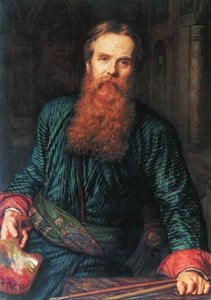
A Vida e a Arte de William Holman Hunt
William Holman Hunt, nascido em Cheapside, Londres, em 2 de abril de 1827, foi muito mais do que um simples pintor; ele personificava uma busca filosófica e espiritual, traduzindo suas convicções mais profundas em telas que buscavam transcender a mera representação visual. Sua infância, embora enraizada no dinâmico mundo comercial da fábrica de armazém de seu pai, abrigava um talento artístico que, eventualmente, desafiaria todas as expectativas. Inicialmente destinado a uma carreira semelhante à do pai, Hunt encontrou refúgio e propósito na arte, começando com esboços furtivos e, posteriormente, após alguma dificuldade, recebendo treinamento formal nas Escolas Reais de Arte. Este período de aprendizado, no entanto, se mostrou restritivo. Ele anseava por uma expressão artística que superasse as convenções acadêmicas predominantes – um desejo que logo o impulsionaria em direção a uma revolução. Sentia-se sufocado pela artificialidade da arte contemporânea e buscava retornar à sinceridade e ao detalhe encontrados nos mestres renascentistas, um sentimento central na formação da Irmandade Pré-Rafaelita. A jornada de Hunt não se limitava à estética; era uma busca por verdade, moralidade e ressonância espiritual dentro do domínio da representação visual.
O Nascimento de um Bando Revolucionário
Em 1848, ao lado de Dante Gabriel Rossetti e John Everett Millais, Hunt estabeleceu a Irmandade Pré-Rafaelita (IPR). Este coletivo não era apenas um movimento artístico; era uma rebelião contra o que eles viam como o declínio da arte desde Rafael. A IPR defendia um retorno à meticulosa atenção aos detalhes, cores vibrantes e temas sinceros característicos da pintura italiana primitiva – antes da artificialidade das ideias renascentistas de High Renaissance tomar conta. O compromisso de Hunt com essa filosofia permaneceu inabalável ao longo de sua carreira. Suas primeiras obras, como *The Hireling Shepherd*, pintada em 1851, exemplificam essa dedicação. A pintura, com seu realismo meticuloso – desde a textura da lã das ovelhas até cada único pedregulho do chão – era revolucionária para a época. Não se tratava apenas de uma representação da vida rural; era um esforço para transmitir significado moral e simbólico através da observação detalhada da natureza. *The Awakening Conscience*, também datada desse período, solidificou ainda mais a reputação de Hunt por cenas intensamente naturalistas imbuídas de profundidade psicológica e peso moral. Essas pinturas não eram apenas visualmente impressionantes; elas eram declarações sobre sua crença no poder da arte – para elevar, inspirar e guiar os espectadores em direção à iluminação espiritual. O bando buscava desafiar as normas estabelecidas da produção artística, rejeitando o que consideravam uma representação formulaica da pintura acadêmica em favor de um engajamento mais direto e honesto com o mundo ao seu redor.
Uma Jornada de Fé e Profunda Simbolização
A jornada artística de Hunt tomou uma reviravolta extraordinária com suas viagens à Terra Santa na década de 1850 e 1860. Impulsionado por um desejo de precisão histórica e topográfica, ele embarcou em uma peregrinação ao Levante, documentando meticulosamente paisagens, trajes e costumes. Essa dedicação à autenticidade influenciou profundamente suas obras posteriores, imbuindo-as com uma ressonância espiritual incomparável. *The Shadow of Death*, pintada durante este período, é um exemplo poderoso dessa síntese de fé e habilidade artística. A pintura representa a cena do sacrifício de Cristo de uma forma que era ao mesmo tempo visualmente impactante e profundamente simbólica, refletindo as convicções religiosas profundas de Hunt. Talvez sua obra mais icônica, *The Light of the World*, iniciada em 1851 e concluída em 1853, encapsulasse essa síntese de fé e habilidade artística. A imagem de Cristo batendo à porta, oferecendo salvação a aqueles que abrem seus corações, tornou-se incrivelmente popular e permanece uma das pinturas religiosas mais reconhecíveis do século XIX. O compromisso de Hunt se estendeu além da mera representação; ele buscava imbuir suas obras com camadas de significado simbólico, recorrendo aos textos bíblicos, à alegoria medieval e aos comentários sociais contemporâneos. Acreditava que a arte tinha um propósito moral – para elevar, inspirar e guiar os espectadores em direção à iluminação espiritual.
Legado Duradouro e Anos Posteriores
Apesar de enfrentar problemas de visão progressivamente mais graves na velhice – um revés devastador para um artista tão dedicado ao detalhe –, Hunt continuou a criar arte, frequentemente contando com a assistência de seu assistente, Edward Robert Hughes. Ele publicou uma autobiografia em 1905, oferecendo percepções valiosas sobre sua filosofia artística e vida pessoal. Seu compromisso foi reconhecido com a nomeação à Ordem do Mérito pelo Rei Eduardo VII no mesmo ano. A vida pessoal de Hunt foi marcada tanto pela alegria quanto pela tristeza; ele se casou duas vezes, primeiro com Fanny Waugh, que serviu como modelo para várias de suas obras, e mais tarde com sua irmã, Edith, após navegar pelas complexidades legais relacionadas ao casamento com uma falecida esposa. Ele faleceu em 7 de setembro de 1910 e foi homenageado com o sepultamento na Catedral de São Paulo – um testemunho de sua significativa contribuição para a arte e a cultura britânicas. O legado de William Holman Hunt transcende a beleza de suas pinturas. Ele revolucionou a arte vitoriana ao defender o realismo, o simbolismo e a profundidade espiritual, deixando uma marca indelével nas gerações de artistas e espectadores. Suas obras continuam a inspirar admiração e contemplação, lembrando-nos do poder da arte para iluminar a condição humana e explorar os mistérios da fé.
Influências Chave e Temas
- Influências: Escritos de John Ruskin sobre arte e moralidade; Pintura italiana renascentista primitiva (pré-Rafaelita); Textos bíblicos e alegorias medievais.
- Temas Principais: Fé religiosa, despertar moral, a beleza da natureza, comentário social, simbolismo. Hunt explorou consistentemente temas de redenção, sacrifício e a busca pela verdade espiritual em seu trabalho.
- Datas Chave: 2 de abril de 1827: Nascido em Cheapside, Londres; 1851-1853: Pintou *The Light of the World*; 7 de setembro de 1910: Faleceu e foi sepultado na Catedral de São Paulo, Londres.



 Visualizar em escala
 Alternar para Impressão
 Enviar
 Compartilhar
 Ver detalhes
 Guia
Guia

 Baixar imagem
 Semelhantes
 Raio X
 Apresentação de slides
 Estatísticas


 Ver mais