


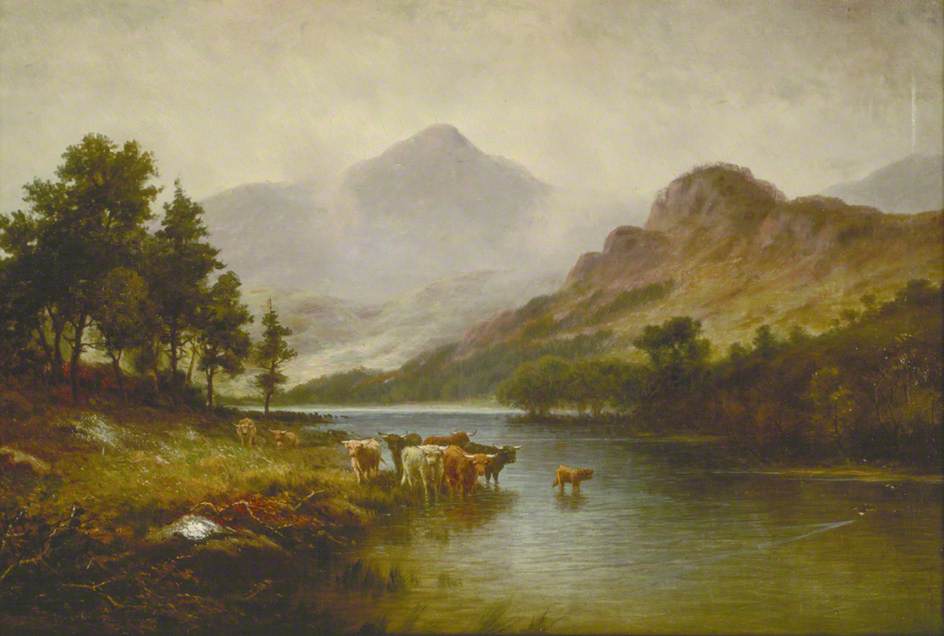
 51.0 x 77.0 cm
 Guildhall Art Gallery
Adquira uma imagem digital de alta resolução e aprimorada, muito superior à prévia online.
Cada arquivo é meticulosamente preparado por nossos especialistas internos, utilizando ferramentas avançadas e retoques manuais de alta precisão. Garantimos que cada imagem apresente clareza excepcional, fidelidade de cores e detalhes minuciosos.
O arquivo final é entregue por e-mail em até 72 horas, otimizado para uso imediato em ambientes profissionais, editoriais e de impressão. Esta é a mesma qualidade utilizada por estúdios de design de alto nível, editoras e galerias.
Baixe um arquivo de alta resolução para exibição pessoal, impressão e projetos criativos. ( Comprar impressão Comprar pintura feita à mão)
Ao escolher o WahooArt.com, você não está apenas adquirindo uma imagem — você está recebendo uma obra de arte digital profissionalmente aprimorada, elaborada com precisão e com garantia de satisfação. Aqui está tudo o que acompanha seu pedido, automaticamente:

O seu arquivo de imagem digital em alta resolução será enviado por e-mail em até 72 horas após o pedido — pronto para uso imediato.

Sua obra de arte é otimizada profissionalmente por meio de ferramentas avançadas de IA e edição manual, garantindo o máximo de detalhes, clareza e precisão de cores.

Apagou ou perdeu o seu ficheiro acidentalmente? Não se preocupe – nós reenviamos para si a qualquer momento, gratuitamente.

Desfrute da sua obra de arte instantaneamente, sem taxas alfandegárias, impostos ou custos de entrega — downloads digitais são sempre isentos de taxas.

Garantimos que sua imagem digital reflita as cores originais com a maior fidelidade possível, utilizando ferramentas profissionais e gerenciamento de cores.

Se você não estiver satisfeito com sua imagem digital, nós a revisaremos ou reembolsaremos 100% dentro de 100 dias — sem perguntas.

Não está satisfeito? Receba o reembolso total em até 100 dias após o recebimento do seu arquivo digital — sem perguntas.

Compre 3 imagens, economize 10% - Compre 5, economize 15% - Compre 10+, economize 20%. Ideal para projetos criativos, galerias e agências.

The history of Victorian Scotland is often told through the lens of industrial progress, yet there exists a parallel narrative written in the luminous oils and dramatic vistas of William Glover. Born on November 4, 1836, in Croydon, South London, to a family deeply rooted in the theatrical arts, Glover’s life was an intricate tapestry woven from the threads of stagecraft and fine art. Though his beginnings were in England, his soul became inextricably linked to the Scottish landscape. As the son of the esteemed actor and theatre manager Edmund Glover, William was raised amidst the magic of the footlights, a heritage that would later inform his unique ability to transform a flat canvas into a breathing, theatrical world.
Glover’s artistic journey was marked by a profound transition from the ephemeral beauty of the stage to the enduring permanence of landscape painting. After honing his skills through rigorous self-study and formal training at the Glasgow School of Art in 1859, he emerged as a master of visual storytelling. His early years were defined by an apprenticeship to light and shadow, a skill set perfected while working as a scenic painter. In this role, he learned to manipulate scale and perspective to create immersive environments for the theatre, a technique that would eventually breathe life into his most celebrated landscape works. His professional ascent in Glasgow’s theatrical scene was nothing short of meteoric; he became a pivotal figure in the management of the Glasgow Theatre Royal, helping to establish it as a cornerstone of British entertainment.
What distinguishes Glover from his contemporaries is the unmistakable presence of the theatrical within his naturalism. To gaze upon a Glover landscape is to witness a carefully composed drama where nature itself takes center stage. His experience as a stage manager allowed him to approach the Scottish Highlands not merely as a topographical subject, but as a set designed to evoke profound emotional responses. He possessed an uncanny ability to use color and light to direct the viewer's eye, much like a spotlight illuminating a protagonist in a darkened theatre.
His mastery of scenic painting provided him with a unique technical vocabulary. He understood how to create depth through atmospheric perspective, using soft, hazy tones to suggest distant mountains and sharp, vibrant details to ground the foreground. This duality—the ability to capture both the grand, sweeping vistas of the Highlands and the intimate, fleeting moments of light—allowed him to bridge the gap between the monumental and the mundane. His works often feature:
As his career progressed, Glover’s reputation as a landscape painter solidified, moving beyond the confines of the theatre into the prestigious galleries of Scotland. His paintings, such as The River Kelvin from the North at the Botanic Gardens and Meikle Earnock Village, serve as vital historical documents of a bygone era. Through his brush, we see the rural rhythms of the late 19th century—the horse-drawn carriages, the bustling village streets, and the serene, untouched beauty of the Scottish countryside before the full weight of industrialization took hold.
The significance of William Glover lies in his ability to have captured the sublime. He did not merely paint what he saw; he painted how it felt to stand amidst the grandeur of the Highlands. His work remains a testament to the Victorian era's fascination with nature and its romanticized connection to heritage. Though he passed away in 1916, his legacy persists in the collections of museums like the Low Parks Museum, where his canvases continue to invite viewers into a world of theatrical beauty and enduring Scottish spirit. He remains a singular figure—an artist who brought the drama of the stage to the quiet majesty of the earth.

1836 - 1916

 Visualizar na parede
 Compartilhar
 Compartilhar
 Detalhes

 Baixar imagem
 Semelhantes
 Raio X
 Slideshow
 Ler mais


