Consultoria de arte gratuita

x
Encomendar pintura Encomendar pinturaComprar imagem em alta resolução Comprar imagem em alta resolução EnviarEnviar
DetalhesDetalhes Adicionar aos favoritos Adicionar aos favoritos BaixarBaixar SemelhantesSemelhantes Raio XRaio X SlideshowSlideshow

Untitled 5

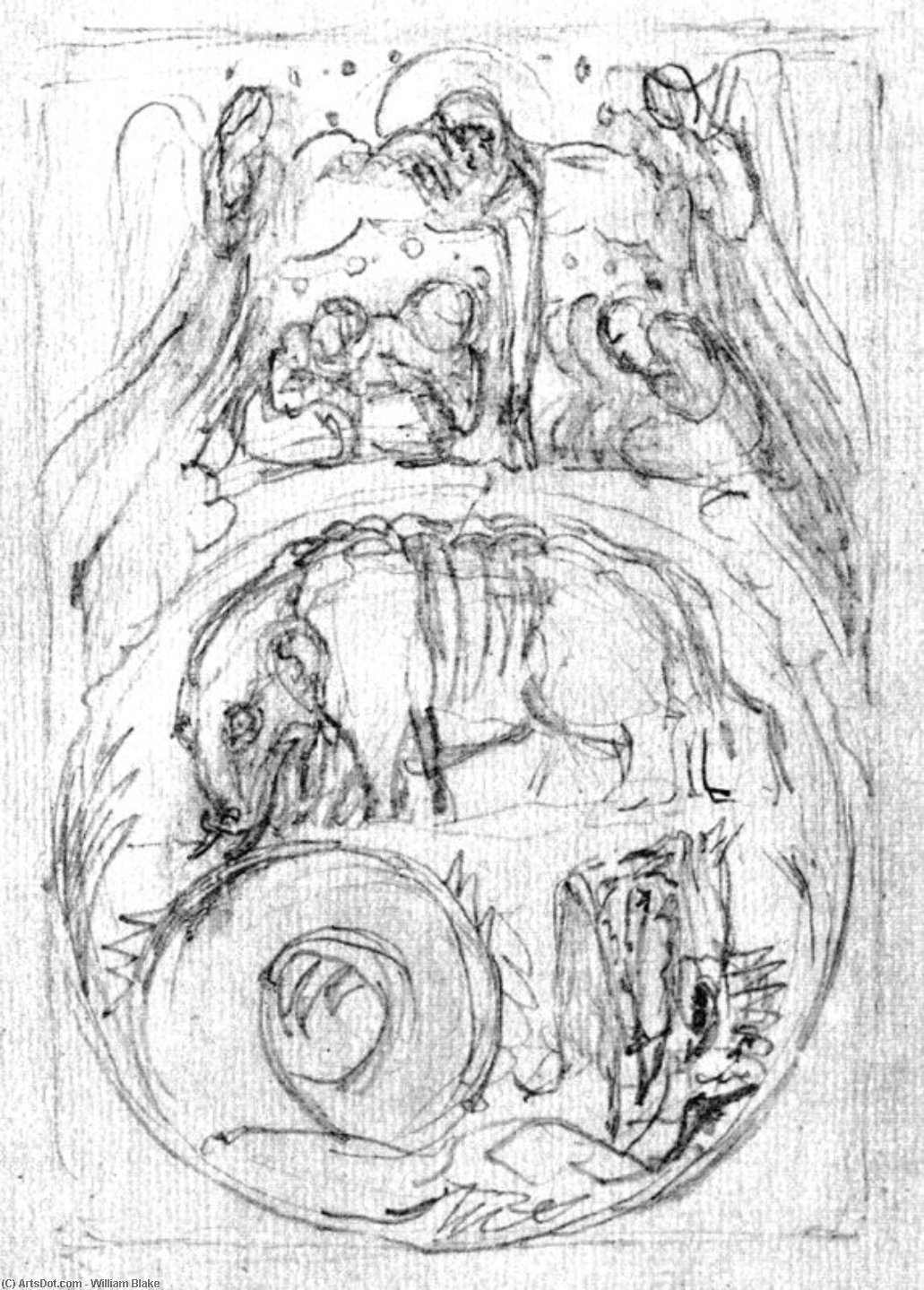
A chaotic, monochrome pencil sketch by William Blake depicting swirling figures and symbolic forms—a visionary study of energy, movement, and spiritual intensity.

Descubra 'Hecate' de William Blake: uma obra-prima da arte romântica que explora a figura mística da deusa grega, seus símbolos e a visão única do artista. Uma jornada visual e espiritual.

Giclê / Impressão de Arte

Impressão giclée ou em tela de qualidade de museu, com produção rápida e opções flexíveis de acabamento.

Standard
custom
CM
INCH

Escolha entre os nossos tamanhos pré-definidos que respeitam as proporções originais da obra de arte.

largura
altura

Você pode inserir suas próprias dimensões para se ajustar a uma moldura ou espaço específico. Se o tamanho selecionado não corresponder às proporções da imagem original, iremos recortar a obra de arte ou estender a imagem com uma borda espelhada ou preenchimento sólido. Um mockup digital será enviado para sua aprovação antes do início da produção.
Por favor, observe que a visualização na tela não reflete o recorte ou a extensão real. Apenas o mockup mostrará com precisão a composição final.
Embora tamanhos personalizados estejam disponíveis, recomendamos selecionar uma dimensão da lista predefinida para preservar as proporções originais.

Entrega mundial () em 2 semanas, em vez das 4/5 semanas padrão. (3 Julho)

why_choose_icon
Envio Expresso Gratuito para todo o Mundo
why_choose_icon
Tela de Linho Premium
why_choose_icon
Seguro de envio completo
why_choose_icon
Garantia de Reembolso de Impostos Alfandegários
why_choose_icon
Garantia de Fidelidade de Cores
why_choose_icon
Política de Devolução de 60 Dias (Apenas para Defeitos)
why_choose_icon
Garantia de 100% de Reembolso
why_choose_icon
Desconto para múltiplas unidades

Preço Total

-

reproduction

Untitled 5

Giclê / Impressão de Arte

Dimensões da Reprodução

-

Preço Total Final

-

Dados Rápidos

  • Movement: Romanticism, Expressionism
  • Medium: Pencil on paper
  • Title: Untitled 5
  • Influences:
    • Blake
    • Romanticism
  • Subject or theme: Abstract figures, chaos
  • Artistic style: Visionary, Symbolic

Teste de Arte

Cada pergunta possui apenas uma resposta correta.

Pergunta 1:
What is the dominant element in William Blake’s ‘Untitled 5’?
Pergunta 2:
The artwork primarily utilizes a what color palette?
Pergunta 3:
Which artistic movement does ‘Untitled 5’ most closely align with?
Pergunta 4:
What is the overall feeling or mood evoked by the swirling composition of ‘Untitled 5’?
Pergunta 5:
The lack of a clear focal point in ‘Untitled 5’ contributes to what effect?

Descrição da Obra

A Chaotic Vision: Unveiling William Blake's "Untitled 5"

William Blake’s “Untitled 5” isn’t merely a drawing; it’s an invitation to a deeply personal and profoundly unsettling realm. Created around the late 18th century, this monochrome study pulsates with a restless energy—a swirling vortex of figures trapped within a claustrophobic space. The work immediately arrests the eye, not with a clear focal point or narrative, but with its sheer density and the insistent movement conveyed through countless overlapping lines. It’s a sketch, undeniably, yet one brimming with symbolic weight, hinting at a visionary state captured in charcoal on paper.

The piece belongs firmly within Blake's distinctive oeuvre – a world where the rational is perpetually challenged by the mystical and the spiritual. He was a man deeply attuned to the currents of his time, grappling with the burgeoning Industrial Revolution and its impact on both society and the human psyche. This work reflects that tension: a sense of confinement juxtaposed against an overwhelming, almost ecstatic, energy. The lack of color amplifies this feeling, stripping away any distractions and forcing the viewer to confront the raw emotion and underlying chaos directly.

The Language of Line: Technique and Composition

Blake’s mastery lies in his command of line. It's not simply a tool for representation; it *is* the subject matter. Thick, assertive strokes define the contours of the figures, while delicate hatching creates texture and depth. The varying weights of the lines – from bold declarations to whisper-thin suggestions – contribute significantly to the work’s dynamic quality. There’s an undeniable sense of immediacy in these marks, as if Blake were capturing a fleeting vision rather than meticulously rendering it. The composition itself is deliberately unsettling; the figures are arranged within a circular structure that seems to pull the viewer inward, mirroring perhaps the descent into a dreamlike state.

  • Dominant Technique: Hatching and Cross-Hatching – creating texture and tonal variation.
  • Line Weight Variation: From bold outlines to subtle shading, adding depth and dynamism.
  • Gestural Marks: Reflecting spontaneity and a focus on capturing movement.

Symbolism and Emotional Resonance

Interpreting Blake’s work is an inherently subjective process, but certain elements consistently emerge as potent symbols. The enclosed space suggests confinement, perhaps representing the limitations of human perception or the constraints imposed by societal norms. The swirling forms evoke a sense of chaos and transformation – a journey through the subconscious. The figures themselves are often ambiguous, lacking clear identities, which allows them to represent universal archetypes rather than specific individuals. Many scholars believe that Blake was exploring themes of duality—light and darkness, good and evil—within this single image.

There’s a palpable sense of spiritual intensity within “Untitled 5.” It's not a comforting or reassuring scene; it’s unsettling and challenging. The work taps into primal fears and desires, inviting the viewer to confront their own inner turmoil. The overall effect is one of profound emotional resonance – a glimpse into a world where logic yields to intuition, and reason dissolves into imagination.

A Legacy of Vision: Blake's Influence

William Blake’s “Untitled 5” stands as a testament to his unique artistic vision. It exemplifies the Romantic movement’s fascination with the supernatural, the sublime, and the power of the imagination. His work continues to inspire artists and thinkers today, demonstrating the enduring relevance of his exploration of human consciousness and the mysteries of existence. Reproductions of this powerful sketch offer a remarkable opportunity to experience the intensity and complexity of Blake's artistic world – a world that remains as captivating and thought-provoking now as it was two centuries ago.

Obras Relacionadas


Biografia do Artista

A Visionary’s Journey: The Life and Art of William Blake

William Blake, born in London on November 28, 1757, was a figure perpetually out of step with his time, yet destined to become one of the most celebrated artists and poets of the Romantic Age. His life unfolded against the backdrop of a rapidly changing England—a world grappling with industrialization, political upheaval, and shifting spiritual beliefs. From humble beginnings as the son of a hosier, Blake’s early years were marked by an intensely vivid imagination and a propensity for visionary experiences that would profoundly shape his artistic trajectory. Though largely self-taught in formal academics, he received drawing instruction at a young age, quickly revealing a talent that hinted at the extraordinary path ahead. His apprenticeship with engraver James Basire proved pivotal, providing him not only with technical mastery but also an understanding of printmaking techniques he would later revolutionize. These early influences—the Gothic grandeur of Westminster Abbey, the classical forms of Raphael and Michelangelo—served as foundational elements in his developing aesthetic, though Blake was never one to remain bound by convention.

The Illuminated World: Technique and Innovation

Blake’s artistic innovation wasn't merely about subject matter; it resided fundamentally in *how* he created. Dissatisfied with conventional engraving methods, he developed a unique process known as “illuminated printing.” This involved etching both text and illustrations onto copper plates, then hand-coloring the resulting prints—a laborious but deeply personal approach that allowed for complete artistic control. This wasn’t simply illustration accompanying poetry; it was an integrated art form where image and verse were inextricably linked, each enhancing the meaning of the other. His relief etching technique, born from a claimed visionary experience following his brother's death, further distinguished his work, granting it a distinctive textural quality and allowing for greater artistic freedom than traditional methods. Beyond printmaking, Blake also worked with watercolors and tempera paints, often depicting biblical scenes or fantastical subjects imbued with symbolic weight. A key characteristic of his style was a deliberate rejection of linear perspective in favor of a more emotive, symbolic representation—a flattening of space that drew the viewer into the heart of his visionary world. He sought to capture not just what he saw but what he *felt*, channeling spiritual insight into every brushstroke and line of text.

Themes of Innocence, Experience, and Rebellion

The core of Blake’s artistic output lies in its exploration of profound themes: the duality of innocence and experience, the constraints of reason versus the liberating power of imagination, and a fierce critique of societal norms.
  • Songs of Innocence and of Experience (1794), perhaps his most accessible work, presents a contrasting vision of childhood—one idyllic and untainted, the other marked by hardship and corruption.
  • The Marriage of Heaven & Hell (1793) is a provocative prose poem that challenges conventional morality, celebrating energy, desire, and rebellion against restrictive doctrines.
  • His illustrations for Dante’s *Divine Comedy* showcase his dramatic vision and ability to translate complex narratives into powerful visual imagery.
Blake's symbolism is intensely personal yet universally resonant. The tiger, in his famous poem, embodies both the awe-inspiring beauty and terrifying power of creation. Jerusalem, a sprawling epic poem that occupied him for years, reflects his spiritual and political beliefs—a vision of a renewed Albion (ancient name for Britain) free from oppression. He wasn’t merely depicting stories; he was constructing an entire mythology, populated with archetypal figures representing states of mind, forces of nature, and the eternal struggle between good and evil.

A Legacy Rediscovered: Blake's Enduring Influence

During his lifetime, William Blake remained largely marginalized, misunderstood by many of his contemporaries. His work was often dismissed as eccentric or even mad. He struggled financially throughout much of his life, relying on commissions and the support of a small circle of patrons like Thomas Butts. However, in the decades following his death on August 12, 1827, Blake’s reputation began to grow steadily. The Pre-Raphaelites, captivated by his visionary style and symbolic imagery, embraced him as a kindred spirit. Later movements—Symbolism and Modernism—found resonance in his emphasis on imagination, subjective experience, and spiritual themes. Today, William Blake is recognized as a pivotal figure in the Romantic movement, an artist whose work continues to inspire poets, painters, and thinkers across disciplines. His exploration of complex philosophical and religious ideas through art remains profoundly relevant, challenging us to question conventional wisdom and embrace the power of individual vision. Blake’s legacy isn't simply about his artistic achievements; it is about his unwavering commitment to creative freedom—a testament to the enduring power of imagination in a world often dominated by reason and constraint.
William Blake

William Blake

1757 - 1827 , Reino Unido

Informações Rápidas

  • Artistic Movement Or Style: Romantismo
  • Artists Who Influenced This Artist:
    • Rafael
    • Michelangelo
  • Date Of Birth: 1757
  • Date Of Death: 1827
  • Full Name: William Blake
  • Nationality: Britânico
  • Notable Artworks:
    • Canções da Innocência e da Experiência
    • O Casamento do Céu e do Inferno
    • O Tigre
    • Jerusalém
  • Place Of Birth: Londres, Reino Unido
Explore obras de arte organizadas por temas, estilos e características.