Visualizar em escala Visualizar em RA Alternar para Impressão Ver Imagem Digital Enviar
Ver detalhes Guia de Obras do Aluno Adicionar aos favoritos Baixar imagem Semelhantes Raio X Apresentação de slides Estatísticas

Bouguereau Song of the Angels

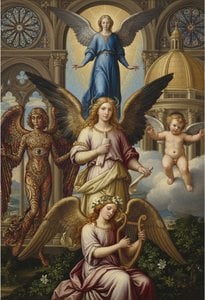
A serene celestial gathering of angels playing music around Mary and baby Jesus defines this exquisite Rococo masterpiece by François Boucher, inviting you to bring this peaceful moment of divine harmony into your home.

Descubra François Boucher (1703-1770), mestre do Rococó! Explore suas pinturas sensuais – cenas mitológicas, retratos e paisagens idílicas – definindo a arte francesa do século XVIII.

Reprodução em Óleo Feita à Mão

Óleo sobre tela pintado à mão no tamanho e moldura de sua escolha, feito sob encomenda pelos nossos artistas. ( Alternar para Impressão Ver Imagem Digital)

P118B $10
P118H $10
P118W $10
P438Z $10
P508JH $12
P508YH $12
P805H $10
P805Z $10
P919BZ $10
P919G $10
P919XJ $10
P959ZH $10
P968JZ $12
W106C $8
W218G $10
W218JH $8
W218Y $10
W307PJ $10
W316G $10
W316PJ $8
W316Y $10
W398PJ $8
W4111J $10
W500HY $15
W500JH $15
W692G $12
W849H $8
W940BG $15
W953PJ $8

Padrão
sob medida
CM
INCH

Escolha entre os nossos tamanhos pré-definidos que respeitam as proporções originais da obra de arte.

largura
altura

Pode inserir as suas próprias dimensões para se adequar a uma moldura ou espaço específico. Se o tamanho selecionado não corresponder às proporções da imagem original, iremos cortar a obra de arte ou estender a pintura com elementos adicionais pintados à mão. Um esboço digital será enviado para sua aprovação antes do início da produção.
Tenha em atenção que a pré-visualização no ecrã não reflete o corte ou extensão real. Apenas o esboço mostrará com precisão a composição final.
Embora tamanhos personalizados estejam disponíveis, recomendamos selecionar uma dimensão da lista predefinida para preservar as proporções originais.

Exemplos do que pode ser personalizado: Substituir o rosto pela foto do cliente; Adicionar um animal de estimação (ex: substituir gato por cão); Incluir uma mensagem oculta no fundo; Alterar a paisagem ou elementos do fundo.
Após o pedido, a equipa WahooArt.com enviará um e-mail ao cliente para solicitar instruções e fornecer uma prévia do esboço.

Entrega mundial () em 3 a 4 semanas, em vez das 5 semanas padrão. (25 Setembro). Sem comprometer a qualidade.

why_choose_icon
Envio expresso gratuito para todo o mundo
why_choose_icon
Tela de Linho Premium
why_choose_icon
Seguro de transporte total
why_choose_icon
Garantia de Reembolso de Impostos Alfandegários
why_choose_icon
Garantia de Fidelidade de Cor
why_choose_icon
Política de Devolução em 100 Dias (Apenas para Defeitos)
why_choose_icon
Garantia de reembolso de 100%
why_choose_icon
Desconto para múltiplas unidades

Preço Total

$ 272

reproduction

Bouguereau Song of the Angels

Técnica de Reprodução

Dimensões da Reprodução

-

Preço Total

$ 272

Detalhes Rápidos

  • Artist: François Boucher
  • Notable elements or techniques: Luminous textures and pastel palette
  • Subject or theme: Mary, infant Jesus, and heavenly angels
  • Title: Song of the Angels
  • Movement: French Rococo

A Celestial Symphony in Color

In the ethereal realm of 18th-century French Rococo, few scenes capture the divine harmony of the heavens as tenderly as Bouguereau Song of the Angels. This breathtaking composition invites the viewer into a sacred moment where the boundaries between the earthly and the celestial dissolve. At the heart of this masterpiece lies a profound sense of peace, centered around the intimate presence of Mary and the infant Jesus. Surrounded by a choir of heavenly beings, the scene is not merely a religious depiction but a sensory experience. The angels, positioned with graceful precision across the canvas, play their instruments—lyres, flutes, and strings—creating an invisible melody that seems to vibrate through the very air of the painting. It is a moment frozen in time, where the music of the spheres meets the quiet devotion of motherhood.

The visual language of the piece is defined by a masterful use of light and soft, luminous textures that are characteristic of the era's most refined aesthetics. The artist employs a delicate palette of pastels, creams, and gentle golds to bathe the figures in a divine glow. Each brushstroke serves to soften the edges of reality, lending a dreamlike quality to the angelic forms. The way light dances upon the silk-like drapery and the porcelain skin of the infant Jesus evokes a sense of purity and innocence. For the discerning collector or interior designer, this technique offers an unparalleled ability to transform a space, bringing a sense of airy elegance and sophisticated warmth to any room. The composition guides the eye in a rhythmic dance, from the seated figure of Mary to the fluttering wings of the musicians, ensuring that every glance reveals a new layer of detail.

Beyond its aesthetic splendor, the painting carries deep symbolic weight, making it a profound choice for those seeking art with spiritual or emotional resonance. The instruments played by the angels are not merely props; they represent the cosmic order and the harmony of creation. The presence of the bench in the foreground and the soft landscape in the background ground this heavenly event in a sense of pastoral tranquility, suggesting that the divine is present even in the simplest of settings. This interplay between the monumental and the intimate makes the work incredibly versatile for high-end decor, serving as a focal point that inspires contemplation and serenity. To possess a reproduction of such a piece is to invite a permanent sense of grace and classical beauty into one's personal sanctuary.


Biografia do Artista

François Boucher: A Master of Rococo’s Delicate Embrace

François Boucher (1703-1770) stands as a monumental figure in the history of French art, inextricably linked to the opulent and sensual world of the Rococo. More than simply a painter, he was a master decorator, a designer of elegance, and an interpreter of aristocratic desires – a true embodiment of the era’s refined aesthetic. His work, characterized by a breathtaking blend of technical skill, mythological grandeur, and playful eroticism, continues to captivate viewers centuries later.

Early Years and Artistic Foundations

Born on September 29th, 1703, in the heart of Paris, François Boucher’s artistic journey began within a family steeped in creative tradition. His father, Jean Boucher, was himself a painter, providing young François with his initial exposure to the world of art. This early influence laid the groundwork for a career that would ultimately define an entire style. At the tender age of seventeen, Boucher caught the discerning eye of François Lemoyne, a prominent artist at the time, and became his apprentice. This brief but formative period instilled in him fundamental techniques and artistic principles. Further honing his skills with Jean-François Cars, a renowned engraver, broadened his technical repertoire and introduced him to the world of printmaking – a skill that would later prove invaluable.

However, the defining moment in Boucher’s early career arrived in 1720: he secured the prestigious Grand Prix de Rome. This competition, fiercely contested by aspiring artists, offered the winner the opportunity to study at the renowned Academy of France in Rome – a crucial stepping stone for any ambitious artist seeking recognition. Boucher's victory signaled his immense talent and set him on a path toward artistic greatness. His time in Italy was transformative, exposing him to the classical masterpieces of the Renaissance and Baroque periods, particularly the frescoes of Michelangelo in the Vatican’s Sistine Chapel. He meticulously studied these works, absorbing their grandeur, dynamism, and masterful use of color and composition – influences that would profoundly shape his own style.

Return to France and Ascendancy

Upon his return to Paris in 1731, Boucher was immediately welcomed into the Académie Royale de Peinture et de Sculpture. His debut work, “Rinaldo and Armida” (1734), instantly established him as a leading figure of the Rococo style. This monumental painting showcased his burgeoning talent – a masterful command of color, composition, and dramatic storytelling. The piece was so successful that it propelled Boucher to immediate fame and solidified his position within the Parisian art scene.

Boucher’s career truly flourished under the patronage of Madame de Pompadour, mistress of King Louis XV. She recognized his exceptional talent and became a devoted patron, commissioning numerous works from him – portraits, mythological scenes, landscapes, and decorative designs for her lavish chateaux. Her influence elevated Boucher to the highest echelons of French society, granting him unprecedented access to royal circles and solidifying his reputation as the foremost painter of the court.

A Flourishing Career: Themes and Techniques

Boucher’s oeuvre is remarkably diverse, encompassing a vast range of subjects. He excelled in mythological scenes – transforming classical narratives into exquisitely beautiful and sensual compositions. His “Triumph of Venus” (1740-1751), a series of paintings depicting the goddess Venus, stands as a testament to his mastery of color, form, and dramatic lighting. He also produced numerous portraits, often capturing the elegance and charm of aristocratic figures. Landscape painting was another significant aspect of his work, characterized by idyllic settings and a lyrical quality that evoked a sense of peace and tranquility.

Boucher’s technique was equally remarkable. He employed delicate brushwork, pastel palettes, and a masterful use of light and shadow to create an atmosphere of ethereal beauty. His figures were often depicted with a voluptuousness and grace that embodied the ideals of Rococo aesthetics – emphasizing pleasure, sensuality, and refined elegance. His designs for tapestries and porcelain further demonstrated his versatility as a decorator, contributing significantly to the opulent aesthetic of French aristocratic interiors.

Legacy and Historical Significance

François Boucher’s influence extended far beyond his own lifetime. He was not merely a painter; he was a cultural icon, embodying the tastes and values of 18th-century France. His work reflected the aristocratic culture of the era – characterized by luxury, refinement, and a pursuit of pleasure. He remains a significant figure in art history, celebrated for his technical skill, artistic innovation, and enduring contribution to the Rococo style. While some critics later questioned the perceived superficiality of Rococo art, Boucher’s legacy endures as one of the most influential and beloved artists of the French Baroque period.

François Boucher

François Boucher

1703 - 1770 , França

Informações Rápidas

  • Artistic Movement Or Style: Rococó
  • Artists Or Movements Influenced By This Artist: ['Jean-Honoré Fragonard']
  • Artists Who Influenced This Artist:
    • François Lemoyne
    • Jean-François Cars
  • Date Of Birth: 29 de Setembro de 1703
  • Date Of Death: 30 de Maio de 1770
  • Full Name: François Boucher
  • Nationality: Francês
  • Notable Artworks:
    • Rinaldo e Armida
    • O Café
    • Triumpha de Vênus
  • Place Of Birth: Paris, França
Explore obras de arte organizadas por temas, estilos e características.