Biografia do Artista
A Vida Forjada na Abstração
Willem de Kooning, um nome sinônimo da energia crua e da profundidade emocional do Expressionismo Abstrato, nasceu em Rotterdam, Holanda, em 1904. Sua vida inicial foi marcada por uma separação familiar – seus pais se divorciaram quando ele era jovem – o que talvez tenha plantado nele um senso de busca incessante que permearia sua jornada artística. Abandonando a escola aos doze anos, De Kooning aprendeu com uma empresa de artes gráficas, estabelecendo as bases para sua habilidade técnica ao mesmo tempo em que alimentava um desejo de romper com as restrições convencionais. As aulas noturnas na Academie van Beeldende Kunsten en Technische Wetenschappen em Rotterdam forneceram treinamento adicional fundamental, mas anseio por algo mais – uma linguagem mais ousada e expressiva – impulsionou-o a buscar os Estados Unidos em 1926. Sua chegada não foi fácil; ele se escondeu em um navio, personificando o espírito de um outsider buscando novos horizontes. Nova York City se tornou sua casa adotiva, e sua energia vibrante, muitas vezes áspera, moldou profundamente seu estilo em evolução. Ele navegou por vários empregos – pintor de paredes, carpinteiro – enquanto perseguia incansavelmente sua visão artística, absorvendo o pulso da cidade em seu trabalho.
Das Cenas Urbanas à Fúria Abstrata
As primeiras pinturas de De Kooning refletiam seu entorno imediato: paisagens urbanas e retratos que capturavam a dinâmica da vida nova-iorquina. No entanto, essas foram apenas degraus rumo a uma exploração mais profunda de forma e emoção. Um momento crucial foi sua conexão com Arshile Gorky, cuja influência se mostrou transformadora. Gorky encorajou a experimentação de De Kooning com a abstração, fomentando a disposição de desmantelar a representação tradicional em busca de algo mais profundo. Os anos 1930 viram De Kooning engajado com o realismo social e projetos murais através da WPA (Works Progress Administration), um período que aperfeiçoou suas habilidades, mas também destacou as limitações do arte puramente representacional. Ele se sentiu atraído pelo trabalho de Stuart Davis e John Graham, artistas que estavam desafiando os limites em seus próprios termos. Essa convergência de influências gradualmente o afastou da representação literal e em direção a um vocabulário cada vez mais abstrato. Não foi uma mudança repentina, mas sim uma lenta ascensão – uma dissecação deliberada das normas estabelecidas, impulsionada pela curiosidade intelectual e por uma busca incessante pela verdade artística.
A Série Mulheres: Uma Conquista Notável
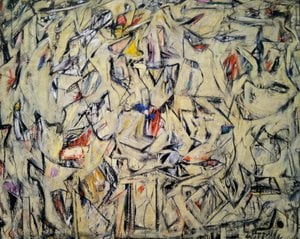
Após a Segunda Guerra Mundial, De Kooning emergiu como uma figura central no emergente movimento do Expressionismo Abstrato. Este período marcou um ponto de virada, culminando em sua icônica série “Mulheres” (1950-1953). Essas pinturas – incluindo o monumental *Mulher I* – não são meras representações de figuras femininas; são explorações viscerais da feminilidade, sexualidade e das complexidades das emoções humanas. Caracterizadas por pinceladas agressivas, formas fragmentadas e uma justaposição dissonante de cores, a série “Mulheres” desafiou as noções convencionais de beleza e representação. Elas foram controversas, até mesmo chocantes para alguns, mas seu poder residia precisamente em sua recusa em se conformar. De Kooning não estava interessado em criar imagens idealizadas; ele buscava capturar a essência crua e indomada de seus assuntos. Além da série “Mulheres”, obras como *O Artista* e *A Escavação* demonstraram ainda mais sua dinâmica abordagem à pintura, exibindo um domínio magistral de textura, cor e composição. Ele não hesitava em abraçar o caos ou a ambiguidade; em vez disso, os incorporava como componentes integrantes de sua linguagem artística.
Evolução dos Paisagens e Legado Duradouro
Nas décadas de 1960, o estilo de De Kooning passou por uma evolução significativa outra. Embora a abstração permanecesse central em seu trabalho, elementos de paisagem começaram a desempenhar um papel mais proeminente, muitas vezes apresentados com uma paleta mais brilhante e um pincelada mais fluida. Ele continuou a experimentar incansavelmente ao longo de sua vida, explorando diferentes técnicas e materiais, nunca contente em descansar sobre suas conquistas. Suas obras posteriores demonstram uma notável capacidade de se reinventar enquanto permanecia fiel aos seus princípios artísticos fundamentais. Willem de Kooning’s importância histórica é inegável. Ele ajudou a estabelecer Nova York como um centro global para as artes, desafiando a hegemonia das tradições europeias e abrindo caminho para que futuras gerações de artistas seguissem seus passos. Sua obra continua a inspirar admiração e provocar debate, lembrando-nos do poder da abstração para transmitir verdades emocionais profundas. De Kooning faleceu em 1997, deixando para trás um vasto e influente corpo de trabalho que é um testemunho de seu compromisso inabalável com a inovação artística e de seu legado duradouro como um dos artistas americanos mais importantes do século XX. *Seu impacto ainda ressoa.*



 Visualizar em escala
 Encomendar reprodução pintada à mão
 Enviar
 Compartilhar
 Ver detalhes
 Guia
Guia

 Baixar imagem
 Semelhantes
 Raio X
 Apresentação de slides
 Estatísticas

 Ver mais






































 A opção de vidro está disponível apenas para tamanhos inferiores a 110 cm