A Life Painted in Shadows and Light
Walter Richard Sickert, born in Munich in 1860, was a figure perpetually caught between worlds – German by birth, British by adoption, and an artist forever oscillating between the established traditions of painting and the burgeoning currents of modernism. His early life was marked by movement; the family’s relocation to England in 1868, prompted by political shifts in Europe, instilled within him a sense of displacement that perhaps fueled his lifelong fascination with outsiders and marginalized figures. Though descended from a lineage of artists – his father, Oswald Sickert, was a Danish painter – young Walter initially harbored ambitions for the stage, briefly treading the boards as an actor alongside the renowned Sir Henry Irving. This early exposure to performance, to the art of illusion and character, would profoundly shape his artistic vision, imbuing his paintings with a theatricality and psychological depth that set him apart from his contemporaries. However, the allure of visual expression proved stronger, leading him to enroll at the Slade School in 1881 and subsequently become a devoted pupil of James Abbott McNeill Whistler. This mentorship was formative, instilling in Sickert a preference for tonal studies painted *alla prima*, directly from nature, and a refined aesthetic sensibility that would underpin his early work. The influence of Whistler wasn’t merely technical; it fostered an appreciation for artistic independence and a willingness to challenge conventional norms.
London's Underbelly and the Allure of Modern Life
Sickert’s artistic compass quickly gravitated towards the vibrant, often gritty realities of London life. He became captivated by the atmosphere of the city’s music halls – spaces teeming with energy, spectacle, and a diverse cross-section of society. His paintings from this period, such as
Katie Lawrence at Gatti's, are remarkable for their unflinching portrayal of these environments and their inhabitants. These weren’t simply depictions; they were explorations of modern urban existence, capturing the fleeting moments and raw emotions experienced within those walls. He sought to paint life as it was lived, not as it was idealized, a radical departure from Victorian artistic conventions. The figures in his paintings—often women performers, street vendors, or casual observers—were rendered with a keen eye for detail and an understanding of their social context. Critics of the time often dismissed these scenes as vulgar and unsettling, but Sickert’s work offered a starkly honest portrayal of London's underbelly – a world largely ignored by mainstream art. His fascination with this milieu continued throughout his career, informing many of his most iconic works.
The Influence of Whistler and the Pursuit of Tone
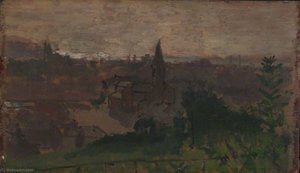
James Abbott McNeill Whistler profoundly shaped Sickert’s artistic approach. The American painter championed *tonality*—the use of color and light to create mood and atmosphere—over detailed representation. This philosophy resonated deeply with Sickert, who developed a distinctive style characterized by subtle gradations of tone and a deliberate avoidance of sharp outlines. He favored *alla prima* painting—working directly onto the canvas without preliminary sketches—to capture the fleeting effects of light and shadow. Whistler’s emphasis on “art for art's sake” encouraged Sickert to prioritize aesthetic expression over narrative or moralistic themes, a principle that would become central to his artistic practice. This commitment to tonal harmony and atmospheric effect is evident in many of his early works, particularly those depicting landscapes and interiors.
The Camden Town Group and the Embrace of Modernism
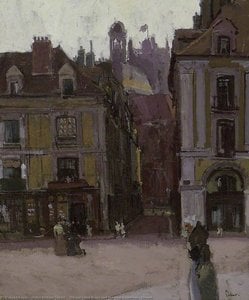
As the 20th century dawned, Sickert became a central figure in the burgeoning British avant-garde movement. He joined the New English Art Club in 1888, aligning himself with artists who embraced French Impressionist principles. Later, he played a pivotal role in establishing the Camden Town Group in 1911 – a collective of artists dedicated to portraying modern life with unflinching honesty and stylistic innovation. Sickert’s influence on this group was profound, encouraging them to break away from traditional academic constraints and explore new forms of expression. He championed an unromanticized vision of the urban landscape, focusing on everyday scenes and ordinary people. His paintings during this period often featured unsettling subject matter, such as his
Camden Town Murder series, reflecting a growing fascination with crime and psychological tension. This willingness to confront difficult themes cemented his reputation as a provocative and challenging artist.
Legacy and Lingering Mysteries
Walter Richard Sickert’s legacy extends far beyond his prolific output. He was a catalyst for change in British art, paving the way for subsequent generations of artists to embrace modernism and explore new avenues of expression. His influence can be seen in the work of numerous painters who followed, particularly those associated with the London Group and other avant-garde movements. Sickert’s pioneering spirit, his commitment to realism, and his willingness to challenge societal norms continue to resonate with artists today. While controversies surrounding his life – including speculation about his potential involvement in the Jack the Ripper murders – have added layers of intrigue to his story, they do not diminish his artistic achievements. These theories, though largely dismissed by scholars, speak to the unsettling quality of his work and its preoccupation with themes of violence and urban decay. His paintings remain powerful testaments to a changing world, offering glimpses into the lives and experiences of those often overlooked by traditional art history.
He was an artist who dared to look beyond the surface, to confront the uncomfortable truths of modern life, and to capture them on canvas with unflinching honesty.
Key Details & Influences
- Born: May 31, 1860, Munich, Bavaria
- Died: January 22, 1942, Bathampton, England
- Key Influences: James Abbott McNeill Whistler, Edgar Degas
- Associated Groups: New English Art Club, Camden Town Group
Sickert’s work can be found in major museums worldwide, ensuring that his vision continues to inspire and provoke audiences for years to come. He remains a pivotal figure in the history of British art, an artist who dared to challenge conventions and to paint the world as he saw it – in all its beauty, ugliness, and complexity.



 Visualizar em escala
 Alternar para Impressão
 Enviar
 Compartilhar
 Ver detalhes
 Guia
Guia

 Baixar imagem
 Semelhantes
 Raio X
 Apresentação de slides
 Estatísticas


 Ver mais