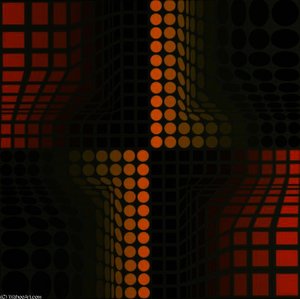
A obra de arte exibida nesta página é protegida por leis de direitos autorais, o que significa que não podemos criar ou vender legalmente uma reprodução idêntica. Esta proteção é aplicada por meio de acordos internacionais, tais como a Convenção de Berna e pelas leis nacionais, incluindo as estabelecidas por Lei de Direitos Autorais dos EUA - Título 17.
Este método cumpre plenamente as regulamentações de direitos autorais, pois não envolve a cópia ou duplicação da obra protegida. Em vez disso, trata-se de uma reinterpretação criativa — uma nova pintura que é influenciada pela original, mas não idêntica a ela.
Impressão giclée ou em tela de qualidade de museu, com produção rápida e opções flexíveis de acabamento. ( Comprar pintura feita à mão Alternar para Imagem Digital)





























Escolha entre os nossos tamanhos pré-definidos que respeitam as proporções originais da obra de arte.

Insira a largura e a altura desejadas para se ajustarem à sua moldura ou parede. Uma impressão pode ser apenas cortada, nunca ampliada além da imagem original; portanto, um tamanho com proporções diferentes resultará na perda de parte da imagem. Enviamos uma maquete digital para sua aprovação antes de realizarmos a impressão. A imagem exibida nesta página não mostra o corte real — apenas a maquete o faz.
Entrega mundial () em 2 semanas, em vez das 4/5 semanas padrão. (9 Novembro)
Syry
Tamanho da Reprodução
Victor Vasarely's "Syry" is not merely a painting; it’s an invitation – an invitation to question the very nature of visual perception. This vibrant artwork, dominated by a colossal sphere encircled by a constellation of smaller circles, embodies the core tenets of Op Art and represents a pivotal moment in 20th-century art history. Created by a man initially destined for a medical career, Vasarely’s journey reflects a profound fascination with geometry and its ability to manipulate our senses. Born Károly Vaszary in 1906 in Pécs, Croatia – then part of Austria-Hungary – his early life foreshadowed little of the groundbreaking artistic path he would ultimately forge. His initial studies in medicine were abruptly abandoned in favor of a pursuit far more captivating: the exploration of visual form and its impact on human perception.
Vasarely’s artistic evolution was inextricably linked to the intellectual currents of his time. His enrollment at Sándor Bortnyik’s “Műhely” workshop, profoundly influenced by the Bauhaus movement, proved instrumental. This environment fostered a deep understanding of functional design and geometric abstraction – principles that would become the bedrock of his signature style. The Bauhaus emphasis on reducing form to its essential elements—primarily lines, shapes, and colors—directly informed Vasarely’s approach. He wasn't interested in depicting recognizable objects; instead, he sought to create visual experiences that directly stimulated the viewer’s eye and challenged their assumptions about space and depth. “Syry,” with its meticulously arranged circles, is a quintessential example of this pursuit.
The creation of "Syry" exemplifies Vasarely's mastery of Op Art techniques. The large sphere, rendered in bold, contrasting colors – likely utilizing layering and glazing—appears to float within a dynamic field of smaller circles. These circles aren’t simply decorative elements; they are carefully calibrated to create an optical illusion. Through precise placement and color variations, Vasarely generates a sense of movement and depth that seems to defy the two-dimensional surface of the canvas. The technique relies heavily on the viewer's eye actively processing the visual information, creating a dynamic and shifting perception. Vasarely’s meticulous attention to detail ensures that the artwork is not static but rather an active participant in the viewing experience.
"Syry" transcends mere optical illusion; it carries symbolic weight. The sphere itself can be interpreted as representing wholeness, unity, or even the cosmos – a fundamental building block of existence. The surrounding circles evoke a sense of infinite expansion, mirroring the boundless possibilities of perception. Vasarely’s work isn't about creating beautiful images in the traditional sense; it’s about provoking thought and stimulating emotional responses through the manipulation of visual elements. The artwork’s vibrant colors and dynamic composition generate a feeling of excitement, energy, and perhaps even a slight disorientation – a deliberate effect designed to engage the viewer on a visceral level. It's a testament to Vasarely's belief that art could be both intellectually stimulating and emotionally resonant.
"Syry" pertence ao Op Art da carreira de Victor Vasarely. Esta classificação relaciona a obra ao desenvolvimento do artista.
Dentro do movimento Op Art, "Syry" possui um nível de popularidade Iconic.
Em "Syry", cores de Dark acompanham um sentimento Calm.

1906 - 1997 , Croácia

Explore the profound spiritual depth of geometric abstraction. From Malevich's Suprematism to modern masters, our expert guide reveals how pure form and color command presence in fine art collections.

Explore the profound evolution of Neo-Abstract art. Discover how bold geometric forms, vibrant chromatic depth, and tactile textures redefine modern expression for the discerning collector seeking sophisticated, high-impact masterpieces for contemporary interiors.

Discover the profound beauty of abstract art. Our expert guide explores geometric abstraction, Op Art, and Expressionism, offering connoisseurs deep insights into collecting and curating powerful, non-representational masterpieces for sophisticated interiors.
 Visualizar na parede
 Compartilhar
 Compartilhar
 Detalhes
 Guia
Guia

 Baixar imagem
 Semelhantes
 Raio X
 Ver diaporama
 Perguntas e Respostas
 Estatísticas

 Ler mais









 A opção de vidro está disponível apenas para tamanhos inferiores a 110 cm