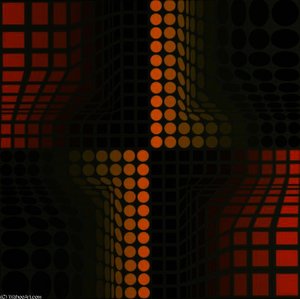
A obra de arte exibida nesta página é protegida por leis de direitos autorais, o que significa que não podemos criar ou vender legalmente uma reprodução idêntica. Esta proteção é aplicada por meio de acordos internacionais, tais como a Convenção de Berna e pelas leis nacionais, incluindo as estabelecidas por Lei de Direitos Autorais dos EUA - Título 17.
Este método cumpre plenamente as regulamentações de direitos autorais, pois não envolve a cópia ou duplicação da obra protegida. Em vez disso, trata-se de uma reinterpretação criativa — uma nova pintura que é influenciada pela original, mas não idêntica a ela.
Impressão giclée ou em tela de qualidade de museu, com produção rápida e opções flexíveis de acabamento. ( Comprar pintura feita à mão Alternar para Imagem Digital)





























Escolha entre os nossos tamanhos pré-definidos que respeitam as proporções originais da obra de arte.

Insira a largura e a altura desejadas para se ajustarem à sua moldura ou parede. Uma impressão pode ser apenas cortada, nunca ampliada além da imagem original; portanto, um tamanho com proporções diferentes resultará na perda de parte da imagem. Enviamos uma maquete digital para sua aprovação antes de realizarmos a impressão. A imagem exibida nesta página não mostra o corte real — apenas a maquete o faz.
Entrega mundial () em 2 semanas, em vez das 4/5 semanas padrão. (10 Novembro)
Maamor II
Tamanho da Reprodução
Victor Vasarely (1906-1997), a Hungarian-French artist, stands as an undeniable titan of 20th-century art, recognized globally as the “grandfather” and undisputed leader of Op Art – Optical Art. His legacy transcends mere visual aesthetics; it represents a radical reimagining of perception itself, challenging viewers to question how they see and experience the world.
Born Károly Vaszary in Pécs, Croatia, Vasarely’s artistic journey began unexpectedly amidst the intellectual fervor of Budapest’s avant-garde scene. Initially pursuing medical studies at Eötvös Loránd University, he swiftly abandoned scientific pursuits for the vibrant realm of painting, enrolling at Sándor Bortnyik’s influential Műhely – a school deeply rooted in Bauhaus principles.
This formative encounter with functional design and geometric abstraction proved transformative. Bortnyik's workshop instilled in Vasarely a fundamental understanding that would underpin his distinctive style: the belief that art could communicate ideas beyond traditional representation, prioritizing visual impact and stimulating intellectual engagement. The Bauhaus ethos championed simplicity and clarity—values that would become central to Vasarely’s artistic vision.
A pivotal moment arrived with Vasarely's enrollment in Bortnyik’s workshop – Műhely – a school deeply influenced by the Bauhaus movement. Here, Vasarely absorbed the tenets of functional design and geometric abstraction, seeds that would blossom into his signature style: the belief that art could communicate ideas beyond traditional representation, prioritizing visual impact and stimulating intellectual engagement.
Vasarely’s artistic breakthrough occurred in 1937 with “Zebras,” a groundbreaking work that is considered by many to be one of the earliest examples of Op Art. This movement sought to exploit optical illusions—the way our eyes perceive color, shape, and depth—to create mesmerizing visual experiences.
Throughout his prolific career, Vasarely meticulously crafted artworks characterized by repetitive geometric forms arranged in complex patterns. Acrylic on canvas became his favored medium, allowing him to achieve remarkable textural effects and luminosity. His meticulous attention to detail ensured that each piece conveyed a profound sense of order amidst apparent chaos—a deliberate strategy designed to provoke contemplation and disrupt conventional visual assumptions.
Vasarely’s influence extended far beyond the confines of artistic circles. He championed accessibility in art, believing that its transformative power should be available to all. His work continues to inspire designers, architects, and artists alike, demonstrating the enduring relevance of geometric abstraction as a tool for exploring the human experience.
Obras semelhantes a "Maamor II" estão listadas na página de Obras semelhantes desta obra.
Uma imagem digital de "Maamor II", de Victor Vasarely pode ser adquirida em sua página de Imagem Digital de Alta Resolução: download de imagem digital em alta resolução.
"Maamor II", de Victor Vasarely transmite um sentimento Sereno em uma atmosfera geral Sereno.

1906 - 1997 , Croácia
Explore the mesmerizing world of Victor Vasarely. Discover how his Bauhaus-inspired Op Art masters the science of perception through geometric abstraction and vibrant color. A sophisticated guide for discerning art collectors seeking to understand the legacy of optical illusion.

Explore the profound evolution of Neo-Abstract art. Discover how bold geometric forms, vibrant chromatic depth, and tactile textures redefine modern expression for the discerning collector seeking sophisticated, high-impact masterpieces for contemporary interiors.

Explore the profound spiritual depth of geometric abstraction. From Malevich's Suprematism to modern masters, our expert guide reveals how pure form and color command presence in fine art collections.

Embark on a visual journey through the mesmerizing world of Op Art. Discover the masters of optical illusion, explore geometric abstraction, and learn how to curate high-impact kinetic works for your private collection with expert guidance from art professionals.

Discover the profound beauty of abstract art. Our expert guide explores geometric abstraction, Op Art, and Expressionism, offering connoisseurs deep insights into collecting and curating powerful, non-representational masterpieces for sophisticated interiors.
 Visualizar na parede
 Compartilhar
 Compartilhar
 Detalhes
 Guia
Guia

 Baixar imagem
 Semelhantes
 Raio X
 Ver diaporama
 Perguntas e Respostas
 Estatísticas
 Ler mais









 A opção de vidro está disponível apenas para tamanhos inferiores a 110 cm