Unkoku Tōgan (1547–1618) was a Japanese painter born into a privileged family in Nagasaki. He began his artistic career in the studio of Kano Shōei before turning to the works of Sesshū Tōyō, becoming one of the most admired ink painters of the Momoyama period.
The Painting: Bodhidharma
This imagined portrait by
Unkoku Tōgan depicts Daruma (Sanskrit: Bodhidharma), the monk credited with transmitting Chan Buddhism from India to China in the fifth century. The painting, ink on paper, showcases Tōgan's mastery of minimalist composition and expressiveness, reflecting Zen beliefs in direct experience and rejection of superfluous ornamentation.
Historical Context
The Zen art movement, influenced by Sarvastivada meditation practice, Mahayana thought, Madhyamaka thought, and Taoist philosophy, emphasizes meditation, intuition, simplicity, and expressiveness. The Suiboku ga art movement, a type of Chinese ink brush painting, emerged during the Tang dynasty (618–907) and overturned earlier, more realistic techniques. It is typically monochrome, using only shades of black, with great emphasis on virtuoso brushwork and conveying the perceived "spirit" or "essence" of a subject.
Ink Wash Painting
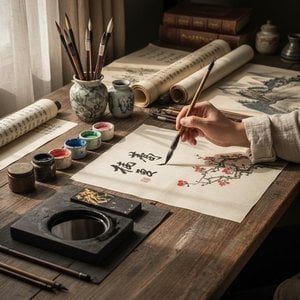
Wash, a visual arts technique resulting in a semi-transparent layer of color, is often applied in combination with drawing, creating pen and wash, wash drawing, or ink and wash. The classic East Asian tradition of ink wash painting uses black ink in various levels of dilution, historically associated with Zen art.
Zen Art Today
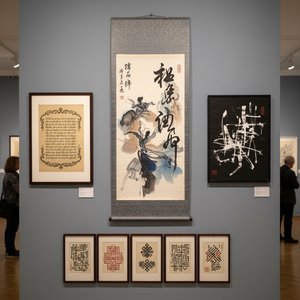
Today, Zen art continues to inspire artists and collectors worldwide. Museums such as the Boston Museum of Fine Arts and the Metropolitan Museum of Art feature extensive collections of Zen art, showcasing its enduring appeal and relevance.
Discover our hand-made oil painting reproductions of Unkoku Tōgan's 'Bodhidharma' at WahooArt.com. Experience the profound and enduring vision of reality embodied in this masterpiece. Sources:
Perguntas e Respostas
Como posso visualizar uma reprodução de "Bodhidharma", de Unkoku Togan?
A página de Pré-visualização de "Bodhidharma" permite visualizar a obra de arte antes de fazer o pedido.
"Bodhidharma", de Unkoku Togan está em domínio público?
Quanto aos direitos autorais, "Bodhidharma" está em em domínio público — seus direitos autorais expiraram.
Posso usar realidade aumentada para ver "Bodhidharma", de Unkoku Togan no meu ambiente?
"Bodhidharma" possui uma prévia em realidade aumentada: a página de Prévia em RA da obra permite visualizá-la no seu próprio espaço através de um dispositivo compatível.



 Visualizar na parede
 Alternar para Impressão
 Compartilhar
 Compartilhar
 Detalhes
 Guia
Guia

 Baixar imagem
 Semelhantes
 Raio X
 Ver diaporama
 Estatísticas


 Ler mais






































 A opção de vidro está disponível apenas para tamanhos inferiores a 110 cm